Ready to swap your daily grind for rhododendron forests and Himalayan sunrises? In just 9 days, this unforgettable Annapurna trek with Touch The Himalaya serves up breathtaking mountain views, warm cultural encounters, and the iconic sunrise from… Text-only version of this trek page, with the full itinerary, prices, departures and inclusions in Markdown: https://touchthehimalaya.com.np/annapurna-trek-9-days.md
Highlights
Enjoy breathtaking views of snowy Himalayan peaks.
Trek through a variety of landscapes including forests and meadows.
See different plants and animals along the way.
Learn about local culture and meet friendly villagers.
Relax in the natural hot springs at Jhinu Village.
Visit traditional Gurung villages like Chhomrong and Sinuwa.
Reach Annapurna Base Camp at 4,130 meters.
Watch the sunrise over Annapurna South and Machapuchare.
Annapurna Trek : 9 Days
Annapurna Trek at a Glance
Duration: 9 days
Highest point: 4,130 m (13,550 ft) Annapurna Base Camp
Difficulty: Challenging
Start / end: Kathmandu / Kathmandu
Accommodation: 2/3 Star Hotel, Guest house\Lodge
Meals: Breakfast/Lunch\Dinner
Best season: March-May/ September-December
Group size: Minimum: 2 PAX
Price: from USD 750 per person
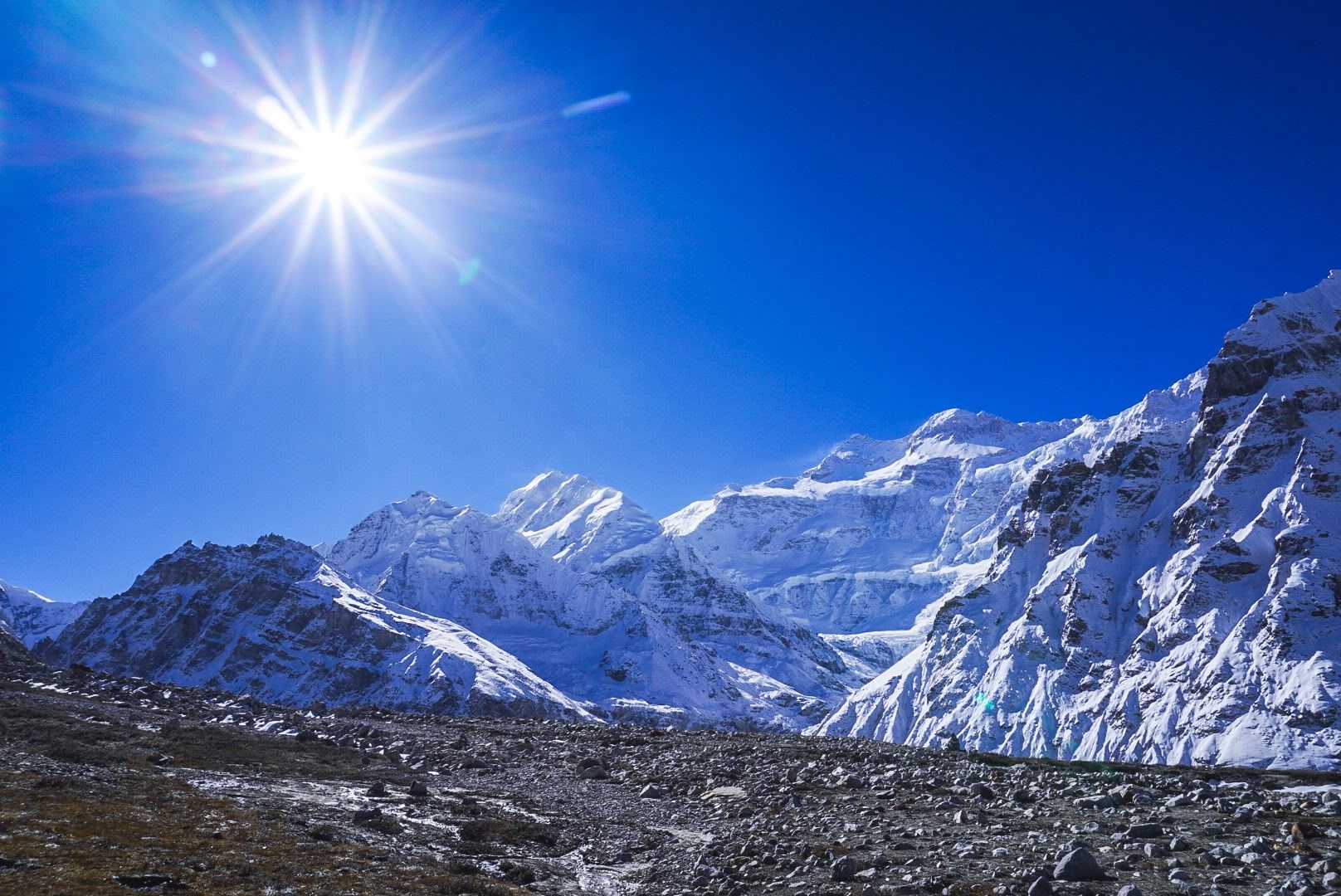
Massive snowy mountain wall with glaciers on the Annapurna Circuit
Annapurna Trek: Where Adventure Meets Himalayan Beauty
Touch The Himalaya Treksand Expedition welcomes you to a memorable 9-day Annapurna Trek. This adventure gives you a taste of the Annapurna region’s stunning landscapes and rich culture, all in a short time. It’s a moderate trek perfect for those who want incredible mountain views without a long journey. You start from Kathmandu to Pokhara, a beautiful Lakeside city that acts as the entrance to the Annapurna trails. From Pokhara, a scenic drive takes you to Nayapul, the starting point.
As you begin trekking, you’ll walk through charming villages and lush, terraced fields that offer a peek into Nepal’s countryside. The trail continues through breathtaking rhododendron forests especially in spring when they’re in full bloom. You’ll catch glimpses of the Annapurna South, Hiunchuli, and Machapuchare (Fishtail) peaks through the trek. A major highlight is the early morning climb to Poon Hill (3,210m), where the sunrise creates a spectacular view of the Dhaulagiri and Annapurna ranges.
The trek wraps up as you return to Nayapul and then drive to Pokhara, where you can unwind and reflect on your journey. Local guides from Touch The Himalaya Treksand Expedition will ensure your trek is safe and enjoyable. They handle everything, including permits, transportation, and places to stay, so you don’t have to worry. This 9-day trek is perfect for anyone wanting to experience the Annapurna region’s beauty and Nepalese culture’s warmth. It offers the perfect mix of breathtaking nature and meaningful cultural encounters, leaving you with amazing memories of majestic mountains and friendly people.
Best Season And Time For Annapurna Trek.
The best time for the Annapurna Trek is during Spring (March to May) and Autumn (September to November). These seasons bring clear skies, pleasant temperatures, and stunning views of the Himalayan peaks. In spring, the trails are filled with blooming rhododendron forests, making the landscape colorful and lively. The mild weather adds to the overall enjoyment, perfect for exploring both nature and the local culture. Autumn is a great time, known for its stable weather. During these months, you will get the best visibility, and the mountains stand out beautifully against clear, blue skies.
Trekking in winter (December to February) is also an option, but it comes with much colder temperatures, especially at higher altitudes. With proper gear, though, it can still be a rewarding experience. The monsoon season in summer (June to August) brings heavy rain, making trails slippery and less ideal. However, the scenery becomes lush and green, appealing to those who enjoy a more peaceful, off-season adventure.
Culture In the Annapurna Trekking Region.
The Annapurna region is not only known for its breathtaking landscapes but also its rich and diverse cultural heritage. The area is home to various ethnic groups, each with unique traditions, languages, and lifestyles. Among the most prominent communities are the Gurung, Magar, Thakali, and Tamang people.
The Gurung community is one of the largest in the region, known for its warm hospitality and vibrant culture. They have a deep connection to the land and their traditional lifestyle, which includes Farming and Animal Herding. The Magar people, another major ethnic group, are known for their strong warrior history, with many Magars serving in the Nepali army. The Thakali people, often seen in the villages of Jomsom, are known for their unique Thakali cuisine, which blends Tibetan and Nepali flavors.
Religious beliefs in the Annapurna region are mainly influenced by Hinduism and Buddhism. Many villages have small temples and stupas, with prayer flags fluttering in the breeze. The iconic Poon Hill is not only a stunning viewpoint but also holds spiritual significance for the locals, as they often perform traditional rituals to honor the mountain gods.
In addition to their spiritual practices, the people of the Annapurna region are known for their traditional festivals, such as Dashain, Tihar, and Lhosar, which are celebrated with music, dance, and feasts. Dress is another important cultural aspect, with people wearing colorful, hand-woven clothes that reflect their identity and heritage.
The blend of mountain life, spiritual practices, and local traditions gives the Annapurna region its unique cultural charm, making it a fascinating destination for trekkers to explore.
Food And Beverages Available In Annapurna Trek.
The food in theAnnapurna region is simple but delicious, giving trekkers the energy needed for their journey. The most common dish you’ll find is dal bhat, which consists of lentil soup (dal), rice (bhat), and side dishes like vegetables, pickles, and sometimes curd. It’s filling and nutritious, and many locals eat it twice a day. For breakfast, people usually have porridge, bread, or eggs, often with a warm cup of tea or coffee. A popular snack on the trail is momos, which are dumplings filled with vegetables or meat. You’ll also find Tibetan bread, which is perfect and tasty for a quick snack.
At higher altitudes, food becomes simpler but still hearty. Noodle soups like Thukpa are common, especially in colder weather, as they are warm and comforting. Potatoes are a staple in many dishes since they grow well in the region, often served fried, boiled, or roosted.
When it comes to drinks, tea is the most common, and you can try milk tea or butter tea, especially in higher areas. Coffee is also available for those who need a caffeine boost. If you want something stronger, you can find local drinks like rakshi (a homemade alcoholic drink) or chhaang (a fermented barley or rice drink).
The food and drinks found in this region are not only tasty but also help keep you energized during your trek.
Accommodations and Logistics in Annapurna Trek.
When trekking in the Annapurna region, accommodations are mainly in teahouses or guesthouses, which provide a comfortable and affordable place to stay along the trail. These teahouses offer basic amenities such as beds, blankets, and sometimes heated rooms. The higher you go, the simpler the accommodations become, but they are still welcoming.
Most teahouses offer shared rooms with fellow trekkers, although you can sometimes find private rooms for an extra cost. The rooms are basic but clean, with common bathrooms that you may have to share with other trekkers. It’s a good idea to bring your sleeping bag for extra warmth, especially at higher altitudes.
In terms of logistics, the trek is well-supported with easy access to food and water along the trail. Most teahouses serve traditional Nepali meals, and you can refill your water bottles at each stop. However, it’s recommended to bring your water purifier or buy bottled water as the altitude increases, and the water quality may vary.
Porters and guides are available to help carry your luggage or provide support during your trek. The services are affordable, and hiring them can make your experience more enjoyable and less stressful.
Transportation to and from the Annapurna region is convenient. You can reach Pokhara by bus, private vehicle, or even flights. From there, a short drive will take you to Nayapul, the starting point of the trek.
Overall, the accommodations and logistics in the Annapurna region are designed to make your trek comfortable, allowing you to focus on the beautiful journey ahead.
Climate In the Annapurna Trekking Region.
The Climate in the Annapurna Trek varies greatly dependingon the altitude and the season. In Lower Altitudes, like in Pokhara and Nayapul, the weather is generally warm and Pleasant, with temperatures ranging from 20°C to 30°C during the day. It can get cooler at night but remains comfortable.
As you climb higher into the Mid-Latitudes, such as Ghorepani and Tadapani, the temperature drops, with daytime temperatures around 10°C to 15°C. Nights can get quite cold, especially during Winter months, when temperatures can drop to Freezing.
At the higher altitudes, like near Annapurna Base Camp and Machapuchare Base Camp, the weather becomes much colder. During the day, temperatures may stay around 0°C to 5°C, but at night, it can drop below -10°C. Snow is common in the winter months, from December to February, and trekking above 3000 meters during this time can be very cold.
The Monsoon Season, from (June to August), brings heavy rain, especially in the lower areas, making trails slippery and harder to navigate. However, Autumn form (September to November) and Spring (March to May) seasons are considered the best for trekking, as the weather is usually clear, with mild temperatures and Minimal Rainfall.
The Climate in the Annapurna region varies with altitude, but understanding these patterns helps you plan your trek better and ensures you are prepared for the changing conditions.
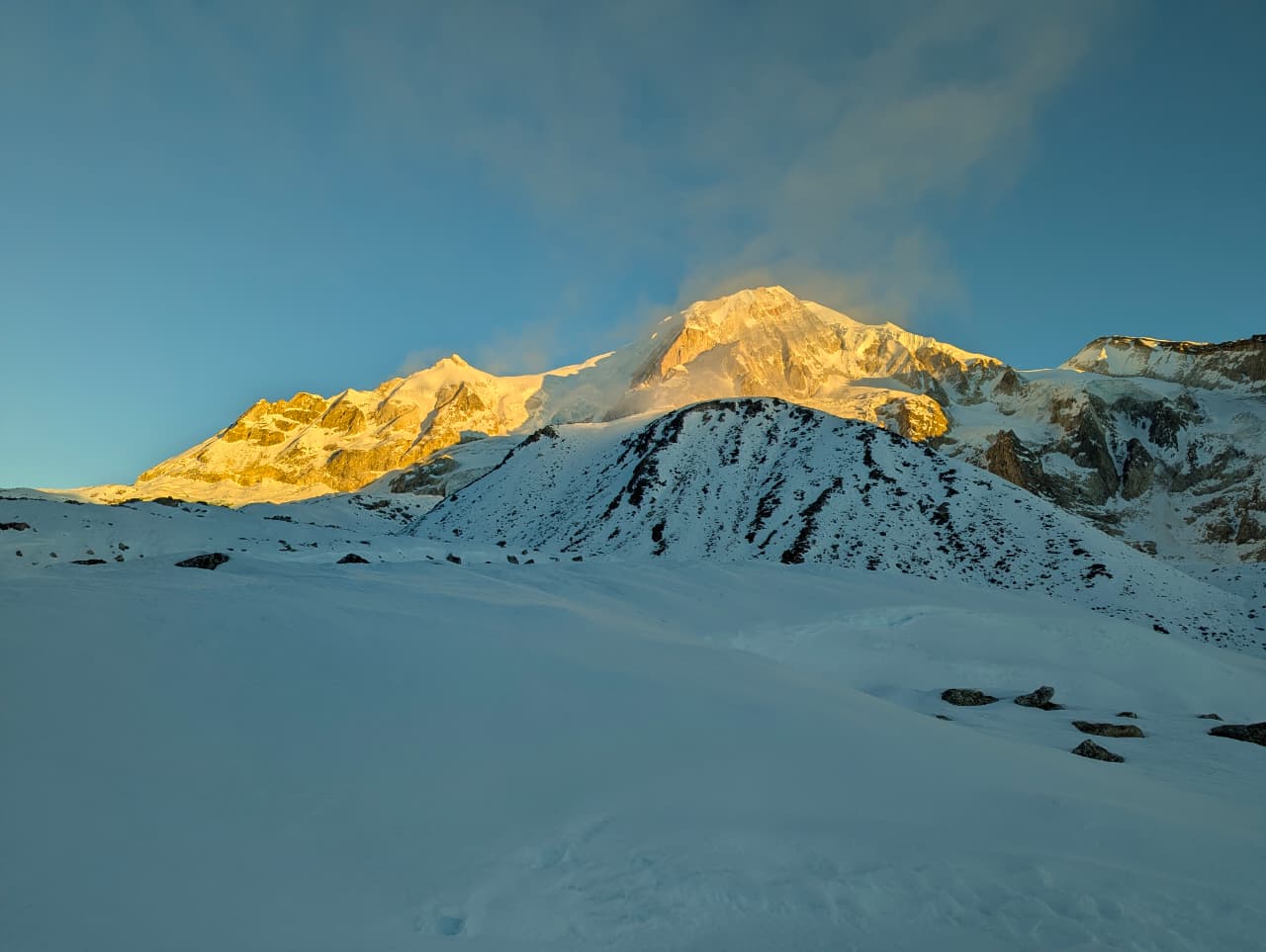
Snow-capped range above brown slopes with prayer flags on the Annapurna Circuit
How difficult is the Annapurna Trek?
The Annapurna Trek is a moderate trek suitable for trekkers with basic fitness, involving Steep Ascents, Altitude challenges (up to 4,130 meters), and Uneven Terrain with daily trekking hours of 5-7 hours, but it is achievable with gradual acclimatization, proper preparation, and a steady pace.
What essential equipment is required for the Annapurna Base Camp (ABC) trek?
For the Annapurna Base Camp trek, you’ll need several essential equipment items to ensure a comfortable and safe journey. These include sturdy and comfortable hiking boots to tackle the varied terrain, lightweight and moisture-wicking clothing to keep you dry and comfortable, a waterproof and windproof jacket and pants to protect against the elements, and a sleeping bag suitable for cold temperatures.
Trekking poles can provide stability and support, while a backpack will be necessary to carry your personal belongings and essentials. Other important items include a water bottle with water purification tablets, sunscreen, sunglasses, and a hat to protect against the sun, a first aid kit with necessary medications, a headlamp or flashlight for nighttime visibility, a trekking map or guidebook, and cash for permits, accommodations, and meals.
Why Choose Touch The Himalaya For This Trek?
Touch The Himalaya Treks and Expedition for the Annapurna Trek because of their Local Expertise, personalized service, and commitment to Safety. As a family-operated business, We provide a more Authentic Experience with Knowledgeable Guides from the region who ensure you understand the culture and Environment. We assist with all Permits, offer Reliable Support, and prioritize Comfortable Accommodations throughout the trek. Our focus on Responsible Tourism and Excellent Customer Care ensures a smooth and memorable experience, allowing trekkers to fully enjoy the breathtaking beauty of the Annapurna region without stress.
‘Touch the Himalayas’ offers experienced trekking guides who are well-versed in the (ABCtrek) and the local terrain. Our guides are knowledgeable about the route, safety precautions, and cultural aspects, and can provide language translation if needed. They will accompany trekkers throughout the journey, ensuring a smooth and enjoyable experience. Our guides are trained to handle emergencies and unexpected situations that may arise during the trek, Ensuring The Safety and well-being of the trekkers.
Required Permits For Annapurna Trek.
To trek to Annapurna Base Camp (ABC), you need two permits:
Annapurna Conservation Area Permit (ACAP): This permit is needed to enter the Annapurna Conservation Area where the trek is located. It helps support conservation in the region.
TIMS (Trekkers’ Information Management System) Card: This card is required for all trekkers in Nepal and helps the authorities keep track of your location for safety. It’s issued by the Nepal Tourism Board.
You can easily get both permits in Kathmandu or Pokhara through a trekking agency. Touch The Himalaya Treks and Expedition will help you with all the permits to ensure you have everything you need for your trek.
Altitude and Acclimatisation
The itinerary gains height gradually. You spend about 1 day above 3,000 m, 1 of them above 4,000 m. Altitude sickness can affect anyone, regardless of fitness, so we follow a few simple rules on every departure:
Walk slowly, drink 3–4 litres of water a day and avoid alcohol at altitude.
Tell your guide about any headache, nausea, dizziness or unusual tiredness straight away.
Our guides carry a first-aid kit and a pulse oximeter and check your oxygen levels at higher camps.
If symptoms get worse, the only cure is to descend; helicopter evacuation can be arranged, which is why travel insurance covering high-altitude rescue is essential.
Trip Difficulty
Moderate Trek Trek combines stunning landscapes with cultural experiences, making it ideal for trekkers seeking a balanced adventure. Pass through lush forests, traditional Gurung and Magar villages, and terraced farmland while enjoying panoramic views of the Annapurna and Dhaulagiri ranges. With a moderate difficulty level, it suits those with basic fitness who want to experience the beauty of nature and local traditions including a breathtaking sunrise from Poon Hill and walking through vibrant rhododendron forests. The trek reaches up to 3,210 meters and typically takes 7 to 9 days, with all logistics expertly managed.
we will leave early in the morning for a scenic drive to Pokhara. The route passes through lush hills, terraced fields, and riverside landscapes.
Upon arriving in Pokhara, check in to your hotel and spend the evening exploring the vibrant Lakeside area.
Overnight2/3 Star Hotel
MealsLunch & Dinner
Day2 of 9
Drive to Nayapul and trek to Tikhedhunga
TikhedhungaAltitude 1,540 mDrive & trek
Max altitude1,540 m / 5,052 ft
A morning drive takes you to Nayapul, the trek’s starting point.
Begin trekking along the Modi Khola River, passing through charming villages and farmlands until reaching Tikhedhunga. The trek is gentle and passes waterfalls and suspension bridges.
OvernightGuest house\Lodge
MealsBreakfast/Lunch\Dinner
Day3 of 9
Trek from Tikhedhunga to Ghorepani
GhorepaniAltitude 2,860 mTrek
Max altitude2,860 m / 9,383 ft
The day starts with a challenging climb up a stone staircase to Ulleri village, followed by a gradual ascent through forests filled with rhododendron and oak trees.
Arrive at Ghorepani, where the views of the surrounding peaks are magnificent, and rest in this popular mountain village.
OvernightGuest house\Lodge
MealsBreakfast/Lunch\Dinner
Day4 of 9
Hike to Poon Hill for Sunrise, then trek to Tadapani
TadapaniAltitude 2,630 mDay hike
Max altitude2,630 m / 8,629 ft
An early morning hike to Poon Hill (3,210m) rewards you with stunning sunrise views over the Annapurna and Dhaulagiri ranges.
Return to Ghorepani for breakfast, then trek to Tadapani through a forested path, enjoying views of the Himalayas along the way.
OvernightGuest house\Lodge
MealsBreakfast/Lunch\Dinner
Day5 of 9
Trek from Tadapani to Chhomrong
ChhomrongAltitude 2,170 mTrek
Max altitude2,170 m / 7,119 ft
The trail descends through dense forests, with occasional river crossings.
Ascend to Chhomrong, a Gurung village that offers a stunning view of Annapurna South and Machapuchare. Chhomrong is the entrance point to the Annapurna Sanctuary.
OvernightGuest house\Lodge
MealsBreakfast/Lunch\Dinner
Day6 of 9
Trek from Chhomrong to Dovan
DovanAltitude 2,600 mTrek
Max altitude2,600 m / 8,530 ft
The day starts with a descent to a river, crossing a suspension bridge, and then an uphill climb through bamboo forests and small clearings to reach Dovan.
OvernightGuest house\Lodge
MealsBreakfast/Lunch\Dinner
Day7 of 9
Trek from Dovan to Annapurna Base Camp
Annapurna Base CampAltitude 4,130 mTrekBase campHighest point
Max altitude4,130 m / 13,550 ft
Ascend gradually, passing Machapuchare Base Camp (3,700m), where the landscape becomes more rugged and dramatic.
Continue to Annapurna Base Camp, surrounded by the towering peaks of the Annapurna massif. Enjoy breathtaking panoramic mountain views.
OvernightGuest house\Lodge
MealsBreakfast/Lunch\Dinner
Day8 of 9
Trek from Annapurna Base Camp to Bamboo
BambooAltitude 2,310 mTrek
Max altitude2,310 m / 7,579 ft
Retrace your steps, descending through the same trail to Bamboo.
The trek is downhill, so it will be less strenuous but still requires careful navigation through rocky and forested paths.
OvernightGuest house\Lodge
MealsBreakfast/Lunch\Dinner
Day9 of 9
Trek from Bamboo to Nayapul, then drive to Pokhara and return to Kathmandu
KathmanduAltitude 820 mDrive & trek
Max altitude820 m / 2,690 ft
Continue descending to Nayapul, where your vehicle will be waiting.
Drive to Pokhara for a short break, then proceed back to Kathmandu, marking the end of your trek.
Overnight2/3 Star Hotel
MealsBreakfast/Lunch\Dinner
What is included in this trek package?
Transportation
✓Airport pick up and drop off by Car, jeep, Hiace, or Bus. Depends on the number of arrives.
✓Internal transport and flight within Nepal as per the itinerary
Food Meals
✓Complimentary welcome or farewell dinner according to the suitability of our client’s time.
✓OPTIONAL: Three meals a day during the trek (If required, we provide meals during the trekking)
Accommodation
✓Beginning two-night stay on arrival in Kathmandu in a tourist standard hotel with breakfast included (twin share basis)
✓OPTIONAL: All accommodation during the trek (If required we arrange all accommodation)
Trekking Permits
✓All necessary trekking and area permits & fees, (National Park area special permit and TIMS cards).
Guide Porter
✓An experienced, English-speaking, government-licensed, first aid-trained trekking guide and assistant guide (5 trekkers: 1 assistant guide)
✓An expert local porters (2 trekkers: 1 porter)
✓Basic First-aid kit (carried by trekking guide)
Other
✓Duffel bag, (to be returned after trip completion), complementary trekking maps. If needed down jacket and sleeping bag will be provided in rent.
✓All government and local taxes for Trekking, Agency service charges, and government tax/VAT.
✓Achievement Certificate.
Travel Insurance
✓Staff costs including their salary, insurance, Equipment, transport, food, and accommodations
✓Rescue arrangements if necessary.
What is excluded
International Flights
×International airfare and Nepal visa fee.
Accommodation
×Lunch and Dinner in Kathmandu
×Extra night accommodation in Kathmandu because of early arrival, late departure, or early return from the mountain (due to any reason) than in the scheduled itinerary
×Meal and accommodations. (can be arranged by the company as per the package agreement )
Travel Insurance
×Personal insurance which covers medical, emergency evacuation, loss, or theft of property.
Clothing Personal Gear
×Personal gear and equipment.
Other Expenses
×Personal expenses such as laundry, hot showers, battery charging, Wifi, etc
×Entry fees and costs for sightseeing (temples, monasteries, etc)
Tips Gratuities
×Tips and gratitude were provided to the guide and porter.
The packing list below will guide you on what to bring for the trek.
Clothing
8 itemsCollapse allExpand all
Down jacket rated for sub-zero temperaturesRequired
Fleece jacket or warm mid layerRequired
Waterproof and windproof jacketRequired
Moisture-wicking base layersRequired
Trekking trousersRequired
Thermal base layers for nightsRequired
Warm hat, gloves and buffRequired
Waterproof overtrousers
Footwear
4 itemsCollapse allExpand all
Broken-in waterproof trekking bootsRequired
Trekking socksRequired
Light shoes or sandals for the teahouseRequired
Gaiters for snow on the passes
Gear
7 itemsCollapse allExpand all
Daypack (25–35 litres) with rain coverRequired
Sleeping bag rated to about −10 °CRequired
Trekking polesRequired
Head torch with spare batteriesRequired
Refillable water bottlesRequired
Sunglasses with UV protectionRequired
Power bank
Health and Hygiene
6 itemsCollapse allExpand all
Personal medication and a small first-aid kitRequired
Sunscreen (SPF 50) and lip balmRequired
Water purification tablets or filterRequired
Hand sanitiser and biodegradable wet wipesRequired
Altitude medication after advice from your doctor
Quick-dry towel and toiletries
Documents and Money
5 itemsCollapse allExpand all
Passport valid for at least 6 monthsRequired
Passport photos (4–6) for permitsRequired
Travel insurance details, covering trekking altitude and rescueRequired
Cash in Nepali rupees for the trailRequired
Copies of passport and insurance, kept separately
A checklist for this trip. Your guide will review it with you in Kathmandu, and most bulky items can be rented there.
FAQs For Annapurna Trek : 9 Days
General Information
Does this trek include Poon Hill?
Yes. You hike to Poon Hill for sunrise before continuing through Tadapani and Chhomrong into the Annapurna Sanctuary.
Trek Difficulty
How difficult is the 9-day Annapurna trek?
It is a moderate trek. Days involve 5–7 hours of walking with many stone steps, and the highest point is Annapurna Base Camp at 4,130 m. No technical skills are needed.
Permits
What permits do I need?
An ACAP permit and a TIMS card. We arrange both before the trek.
Guides & Porters
Do I need a guide?
A licensed guide is now required in the Annapurna Conservation Area. Our guides are local and experienced on this route.
Weather
When is the best time to go?
October–November and March–May. Spring brings rhododendrons in bloom along the Ghorepani section.
Any of our treks can be booked as a private trek on the dates you choose. Only your own group walks with your guide — we never add other travellers. Prefer company? Join a fixed group departure instead.
Why Choose A Private Trek?
Personalized itineraries
Tailor your trek to fit your schedule and preferences.
Dedicated guide & porter
Expert guidance with personal attention on restricted trails.
Safety & health
Custom acclimatisation and emergency support from Kathmandu.
Flexible schedule
Trek at your pace without the pressure of a mixed group.
Privacy & comfort
Perfect for couples, families, and small private groups.