

Guide
Trip Grades: How Hard Is Your Trek?
Every Touch The Himalaya trip is graded Easy, Moderate, Challenging, Strenuous or Extreme. Here is what each grade means for altitude, daily walking, terrain and fitness – with example treks.
Updated November 22, 2026
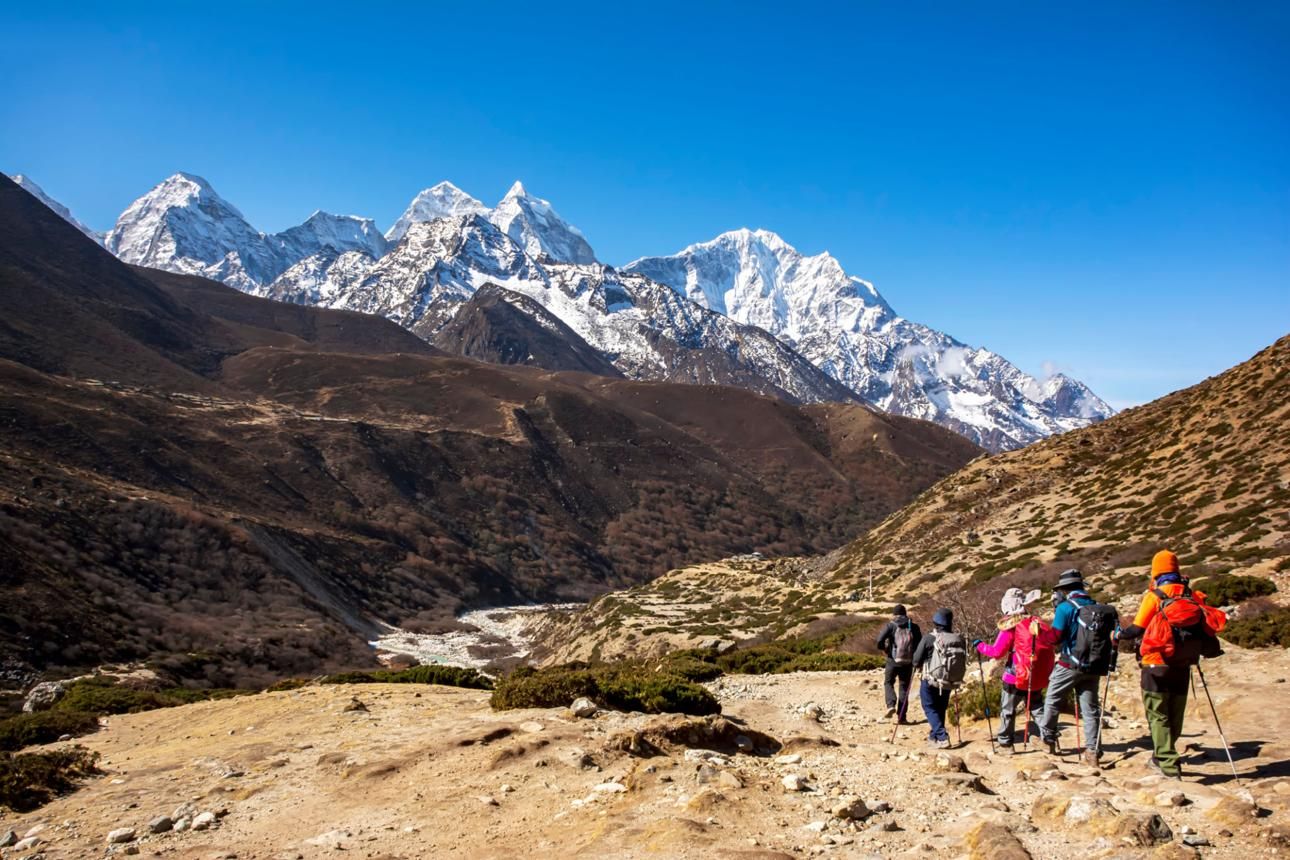
Every trip on our website carries a difficulty grade. It combines altitude, daily walking time, terrain, remoteness and the number of days to give you a quick idea of how demanding the trip is. Use it as a guide – and talk to us if you are unsure which grade suits you.
The Five Grades at a Glance
Grade | Max altitude | Daily walking | Fitness needed | Examples |
|---|---|---|---|---|
Easy | Up to about 3,200 m | 3–5 hours | Basic, regular walker | Poon Hill, Chisapani–Nagarkot, day hikes |
Moderate | Up to about 4,500 m | 5–6 hours | Good, some hiking experience | Annapurna Base Camp, Langtang Valley, Mardi Himal |
Challenging | Up to about 5,600 m | 6–8 hours | Very good, multi-day trekking | Everest Base Camp, Annapurna Circuit, Manaslu Circuit |
Strenuous | Above 5,000 m, several passes | 7–9 hours | Excellent, prior high-altitude trekking | Everest Three Passes, Upper Dolpo, Kanchenjunga |
Extreme | 6,000 m and above | Long, technical days | Top fitness and climbing skills | Peak climbing and expeditions |
Easy
Short treks and tours at lower altitude, on good trails with comfortable lodges. Ideal for beginners, families and travellers with limited time. No previous trekking experience is needed.
Moderate
Longer days with steeper ascents and descents, reaching 4,000–4,500 m. Some uphill sections and rocky trails. Suitable for reasonably fit people who enjoy hiking; acclimatisation becomes important.
Challenging
Multi-week treks reaching high altitude, often with a high pass or base camp above 5,000 m. Expect long days, cold nights and basic teahouses higher up. You should be fit and prepared with regular training before your trip.
Strenuous
Long, remote treks with several high passes, rough terrain and sometimes camping. Previous high-altitude trekking experience is strongly recommended.
Extreme
Climbing peaks and expeditions with ropes, crampons and ice axes, often above 6,000 m. Requires excellent fitness, mountaineering training and, for bigger peaks, prior climbing experience. Our guides will assess your experience before confirming an expedition.
How to Prepare
- Start training 6–8 weeks before your trip: hiking, stair climbing, cycling or running.
- Practise walking with a loaded day pack.
- Build up to back-to-back long walks to simulate trekking days.
- See a doctor before high-altitude trips, especially if you have heart, lung or blood-pressure conditions.
Altitude affects everyone differently, regardless of fitness. Always follow your guide's advice and never ignore symptoms of altitude sickness.
Not Sure Which Grade Suits You?
Tell us about your fitness and experience, and we will recommend the right trek. Every itinerary can be adjusted with extra rest days.