
Guide
Nepal Information: A Traveller's Guide
Essential Nepal information for travellers: geography, history, people, languages and religion, climate, visas, money, food and drink, accommodation, trekking and adventure activities, and cultural experiences.
Updated November 22, 2026
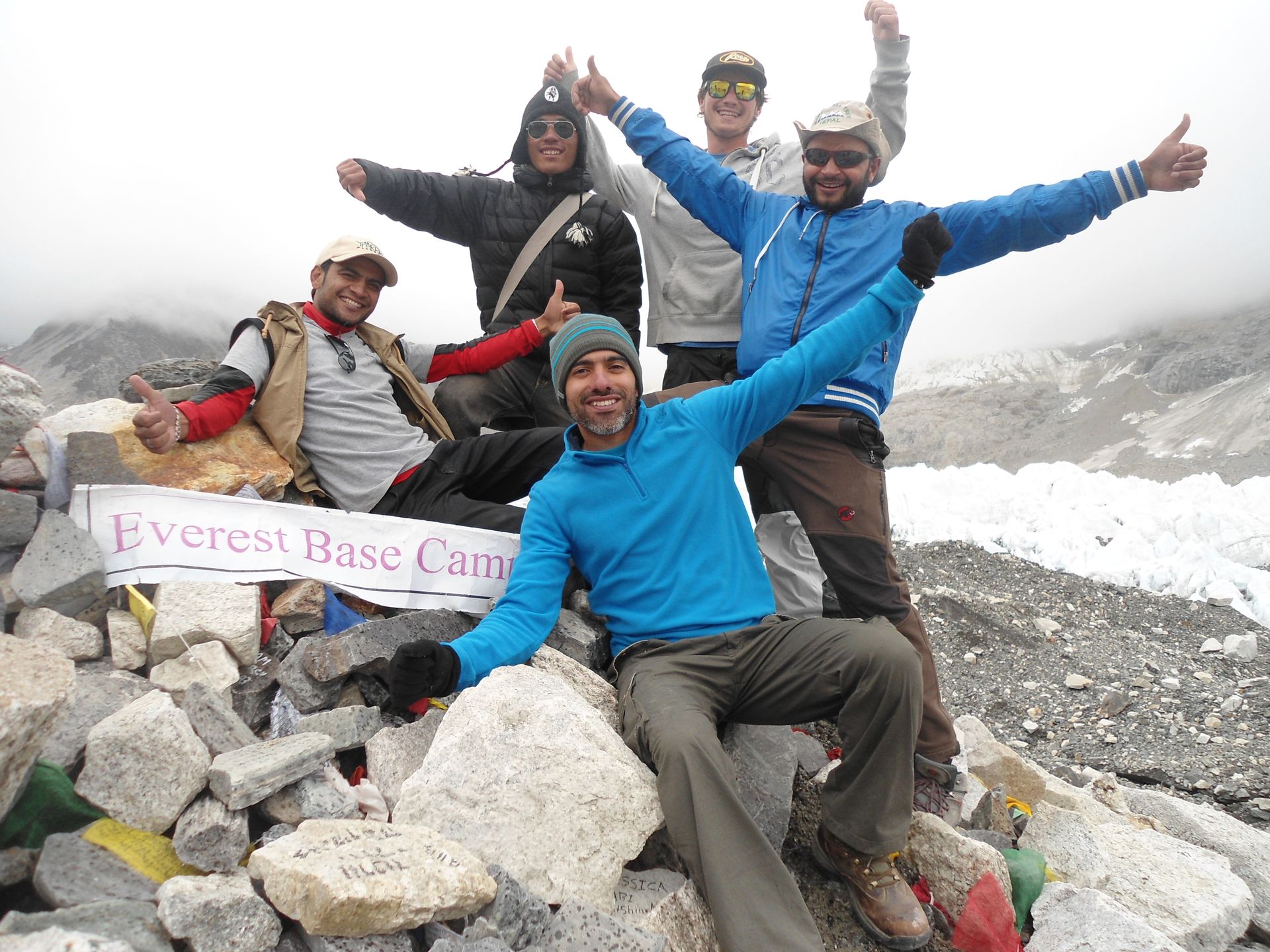
Nepal is a small country with an enormous variety of landscapes, peoples and experiences. In a few hundred kilometres the land rises from the hot plains of the Terai, under 100 m above sea level, to the summit of Mount Everest at 8,849 m. This guide gives you the essentials before you travel.
Nepal at a Glance
Capital | Kathmandu |
|---|---|
Area | About 147,500 km² |
Population | About 29 million (2021 census) |
Government | Federal democratic republic (since 2008), seven provinces |
Official language | Nepali – over 120 languages are spoken |
Main religions | Hinduism, Buddhism; also Islam, Kirat and Christianity |
Currency | Nepalese rupee (NPR) |
Time zone | UTC +5:45 |
Electricity | 230 V; plug types C, D and M |
Highest point | Mount Everest, 8,849 m |
Geography and Regions
Nepal is divided into three broad belts running east to west:
- The Terai – fertile lowland plains bordering India, with jungles and national parks such as Chitwan and Bardiya.
- The Hills – terraced middle hills and valleys, home to Kathmandu, Pokhara and most of the population.
- The Mountains – the high Himalaya, including eight of the world's fourteen 8,000 m peaks: Everest, Kanchenjunga, Lhotse, Makalu, Cho Oyu, Dhaulagiri, Manaslu and Annapurna.
A Brief History
The Kathmandu Valley was ruled for centuries by the Licchavi and then the Malla kings, whose Newar artisans built the temples and palaces of Kathmandu, Patan and Bhaktapur. In the 18th century Prithvi Narayan Shah of Gorkha unified the many small kingdoms into modern Nepal, conquering the Kathmandu Valley in 1768. Nepal was never colonised. The Rana family ruled as hereditary prime ministers from 1846 to 1951, followed by the return of royal power, a multi-party democracy in 1990, and the end of the monarchy in 2008, when Nepal became a federal democratic republic.
People, Languages and Religion
Nepal is home to more than 120 ethnic and caste groups. Among the best known are the Newars of the Kathmandu Valley, famed for their art and festivals; the Sherpas of the Everest region; the Gurungs, Magars and Thakalis of the Annapurna region; the Tamangs north of Kathmandu; the Rai and Limbu of the east; and the Tharu of the Terai.
Hinduism and Buddhism are deeply intertwined – many temples are shared, and festivals are celebrated by both communities. Lumbini, the birthplace of the Buddha, is in southern Nepal.
Climate
Season | Months | What to expect |
|---|---|---|
Spring | Mar–May | Warm, rhododendrons, good trekking |
Monsoon | Jun–Aug | Hot and wet; rain-shadow regions stay dry |
Autumn | Sep–Nov | Clear skies, the best trekking season |
Winter | Dec–Feb | Cool, clear days; cold in the mountains |
Temperatures depend more on altitude than on season: subtropical in the Terai, mild in Kathmandu and Pokhara, arctic on the high passes. See our guide to the best time to trek in Nepal.
Main Cities and Places to Visit
- Kathmandu – the capital, with seven UNESCO World Heritage monument zones.
- Pokhara – lakeside city and gateway to the Annapurnas.
- Chitwan – jungle safaris to see rhinos and tigers.
- Lumbini – birthplace of the Buddha.
- Bandipur, Nagarkot and Dhulikhel – hill towns with Himalayan views.
Visas and Entry
Most nationalities can get a multiple-entry tourist visa on arrival or online. Fees are USD 30 for 15 days, USD 50 for 30 days and USD 125 for 90 days, and your passport must be valid for six months. Indian nationals do not need a visa. Read more in our travel guidelines.
Money, Banks and ATMs
The currency is the Nepalese rupee. ATMs are widely available in Kathmandu, Pokhara and larger towns, and credit cards are accepted in many hotels and shops (often with a fee). There are very few ATMs on trekking routes – withdraw enough cash before you go. Money changers in Thamel and Lakeside exchange major currencies.
Food and Drink
The national dish is dal bhat – rice, lentil soup, vegetable curry and pickle, with free refills. Other favourites include momo (dumplings), thukpa (noodle soup), Newari feasts, Thakali sets and Tibetan bread. Popular drinks are milk tea (chiya), lassi, local beer and the millet drink tongba. Drink only boiled, filtered or purified water.
Accommodation
Kathmandu and Pokhara offer everything from international hotels to boutique heritage houses and budget guesthouses. On trekking routes you stay in teahouses – simple lodges with twin rooms and a warm dining room. Village homestays are a great way to experience local life.
Things to Do
Activity | Where |
|---|---|
Trekking | Everest, Annapurna, Manaslu, Langtang, Mustang and more |
Peak climbing and expeditions | Island Peak, Mera Peak, Everest, Manaslu |
White-water rafting | Trisuli, Bhote Koshi, Seti and others |
Paragliding | Sarangkot, Pokhara |
Bungee jumping and canyoning | Near the Tibetan border and around Pokhara |
Jungle safari | Chitwan, Bardiya, Koshi Tappu |
Mountain flights | Kathmandu – Everest panorama |
Mountain biking and motorcycling | Kathmandu Valley rim, Annapurna and Mustang |
Trekking styles
Choose from teahouse trekking on popular routes, camping treks in remote regions, and organised group or private treks. A licensed guide is now required on most trekking routes in Nepal, and restricted areas need special permits arranged through a registered agency.
Learn and Relax in Nepal
- Buddhism and meditation – courses at monasteries around Kathmandu.
- Yoga retreats – in Kathmandu, Pokhara and on yoga treks.
- Thangka painting – learn about this detailed Buddhist art in Bhaktapur and Boudha.
- Cooking classes – make your own momo and dal bhat.
- Massage and Ayurveda – perfect after a trek.
Responsible Travel
Support local businesses, respect local customs, reduce plastic and treat guides and porters fairly. Read about our eco-friendly tourism approach.
Plan Your Trip
Whatever kind of journey you are dreaming of, our local team can help you plan it. Contact us to get started.