

Conservation area
Sagarmatha National Park
सगरमाथा राष्ट्रिय निकुञ्ज
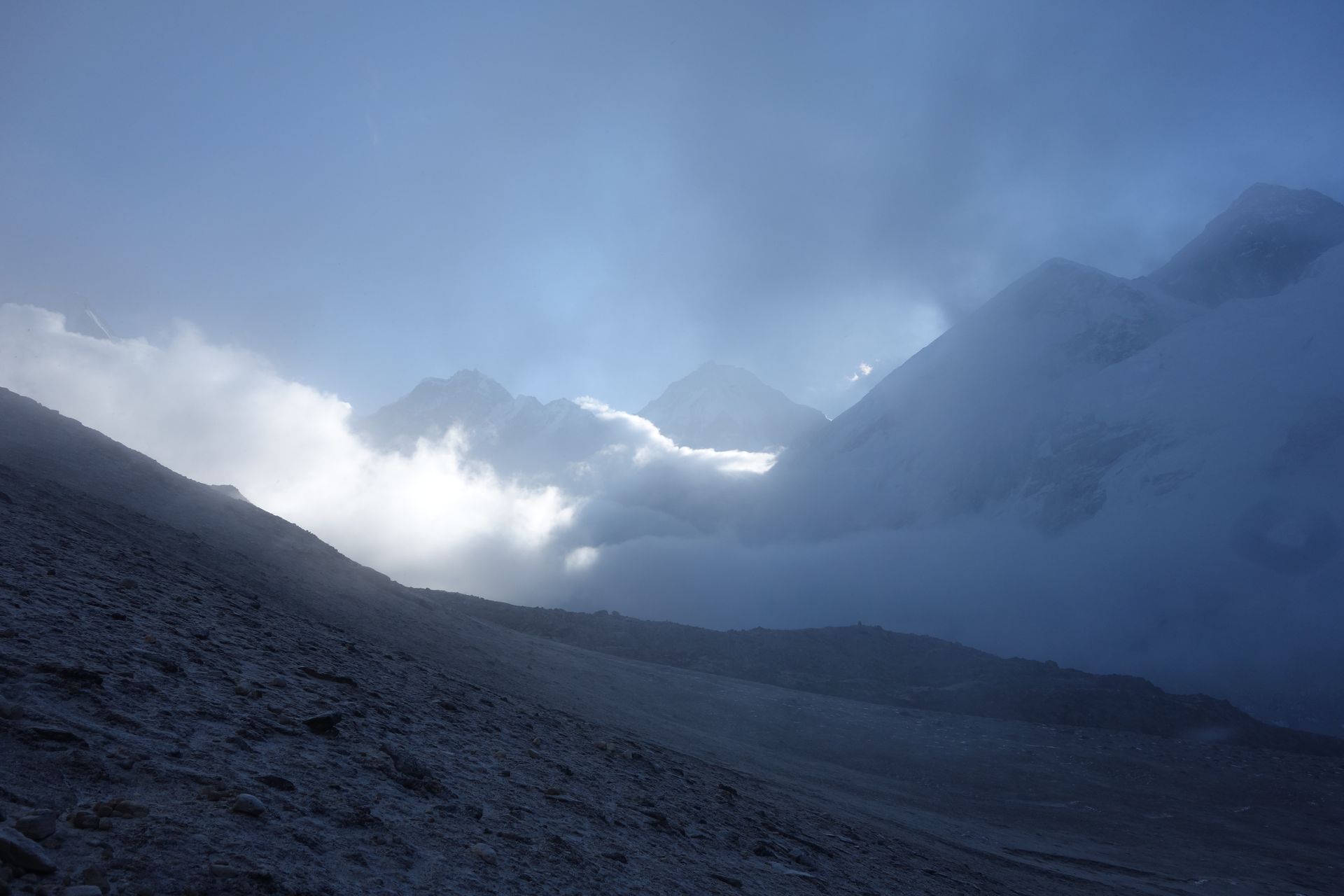
Sagarmatha National Park protects the upper Khumbu, including Mount Everest, Lhotse, Cho Oyu and Ama Dablam. Established in 1976 and listed as a UNESCO World Heritage Site in 1979, it covers about 1,148 km² of glaciers, high valleys and Sherpa villages.
- Elevation: ~2,845–8,849 m
- Type: Protected area
- Region: Everest Region
- District: Solukhumbu
- UNESCO World Heritage Site since 1979
- Established 1976, ~1,148 km²
- Treks: Everest Base Camp Trek, Gokyo Lakes Trek, Everest Three Passes Trek
About Sagarmatha National Park
Sagarmatha National Park is one of Nepal's most famous protected areas, located in the Khumbu region of northeastern Nepal. Established in 1976, the park is home to Mount Everest (Sagarmatha), the world's highest mountain, along with spectacular Himalayan peaks, glaciers, deep valleys, alpine forests and traditional Sherpa settlements. It covers an area of approximately 1,148 square kilometres in Solukhumbu District.
Recognized as a UNESCO World Heritage Site in 1979, Sagarmatha National Park is internationally important for its outstanding natural landscapes, rare wildlife and distinctive Sherpa culture. It is a major destination for trekking, mountaineering, nature exploration and cultural experiences, attracting visitors from around the world.
Location and Altitude
Sagarmatha National Park is situated in the northern part of Solukhumbu District, Koshi Province, Nepal, within the Himalayan ecological region near the border with Tibet, China. The park stretches from approximately 2,845 metres at Monjo to 8,848 metres at the summit of Mount Everest.
Treks in Sagarmatha National Park
Everest Base Camp Trek: One of Nepal's most popular trekking adventures, this route takes visitors through Namche Bazaar, Tengboche, Dingboche and Gorak Shep towards Everest Base Camp, offering incredible views of the world's highest mountains.
Gokyo Lakes Trek: This scenic route explores the beautiful turquoise glacial lakes of the Gokyo Valley and offers panoramic Himalayan views from Gokyo Ri.
Everest Three Passes Trek: A challenging circuit connecting the high mountain passes of Kongma La, Cho La and Renjo La, with spectacular views of Everest, Lhotse, Makalu and surrounding peaks.
Namche Bazaar and Tengboche Trek: A shorter trekking experience that introduces visitors to Sherpa villages, Buddhist monasteries, mountain landscapes and local traditions.
Best Time to Visit Sagarmatha National Park
The best seasons to visit Sagarmatha National Park are spring (March to May) and autumn (September to November). Spring offers pleasant trekking conditions, blooming rhododendrons and clear mountain scenery. Autumn is especially popular because of its generally stable weather and excellent mountain visibility.
Winter (December to February) can bring heavy snowfall and very cold temperatures at higher elevations, while the monsoon season (June to August) often brings rain, clouds and challenging trail conditions.
Main Attractions in Sagarmatha National Park
Mount Everest: The park's most famous attraction is Mount Everest, known locally as Sagarmatha, which rises to approximately 8,848.86 metres above sea level.
Khumbu Glacier: One of the region's major glaciers, the Khumbu Glacier forms part of the dramatic high-altitude landscape below Everest.
Gokyo Lakes: A beautiful collection of high-altitude glacial lakes known for their striking turquoise and blue colours. The Gokyo wetlands are also recognized under the Ramsar Convention.
Sherpa Culture and Traditions: The park is home to Sherpa communities whose traditions, Buddhist beliefs and mountain lifestyles are an important part of the region's cultural heritage.
Tengboche Monastery: A well-known Buddhist monastery surrounded by Himalayan scenery and an important spiritual centre for the local Sherpa community.
Rare Himalayan Wildlife: The park provides habitat for endangered and rare animals, including the snow leopard, red panda and musk deer.
High Himalayan Peaks: Besides Everest, the park features magnificent mountains such as Lhotse, Cho Oyu, Nuptse, Thamserku, Ama Dablam and Pumori.
Alpine Forests and Vegetation: Visitors can explore forests of pine, hemlock, fir, birch, juniper and rhododendron across different elevations.
How to Reach Sagarmatha National Park
The most common way to reach Sagarmatha National Park is by flying from Kathmandu to Tenzing-Hillary Airport in Lukla and continuing on foot along the trekking trail. The journey passes through villages such as Phakding and Monjo before reaching Namche Bazaar.
Another option is to travel by road towards Jiri or other trailheads and trek into the Everest region. Visitors must obtain the required park entry permit and follow the applicable local trekking regulations.
Where is Sagarmatha National Park?
The exact point on the Himalaya trail, with nearby places for context.
On this map
Nearby places
Village
Monjo
मोन्जो
2,835 m
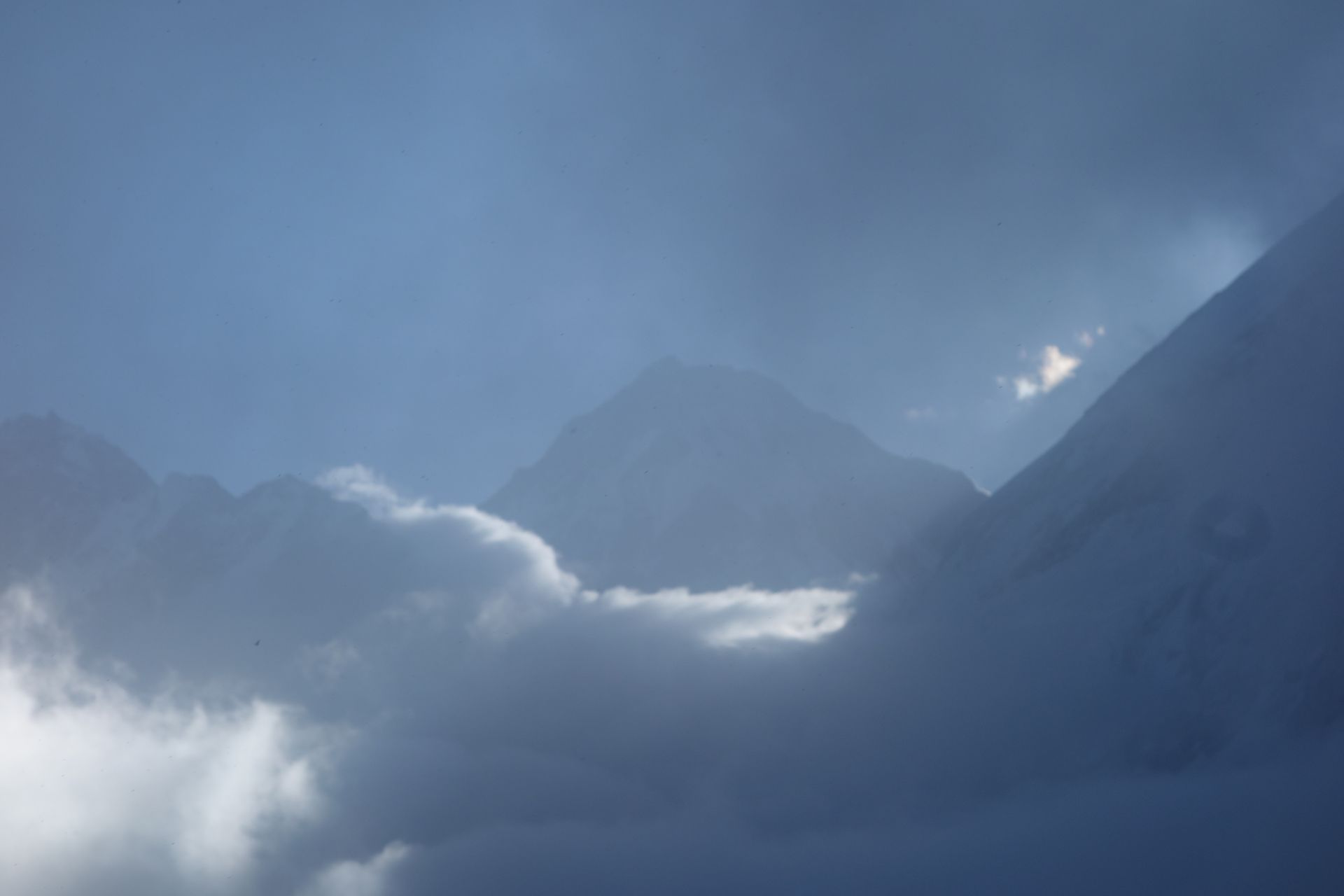
Monjo is a small village just below the entrance to Sagarmatha National Park, where trekkers show their park permit and local area entry card. Some itineraries stay here instead of Phakding to shorten the climb to Namche.
Read place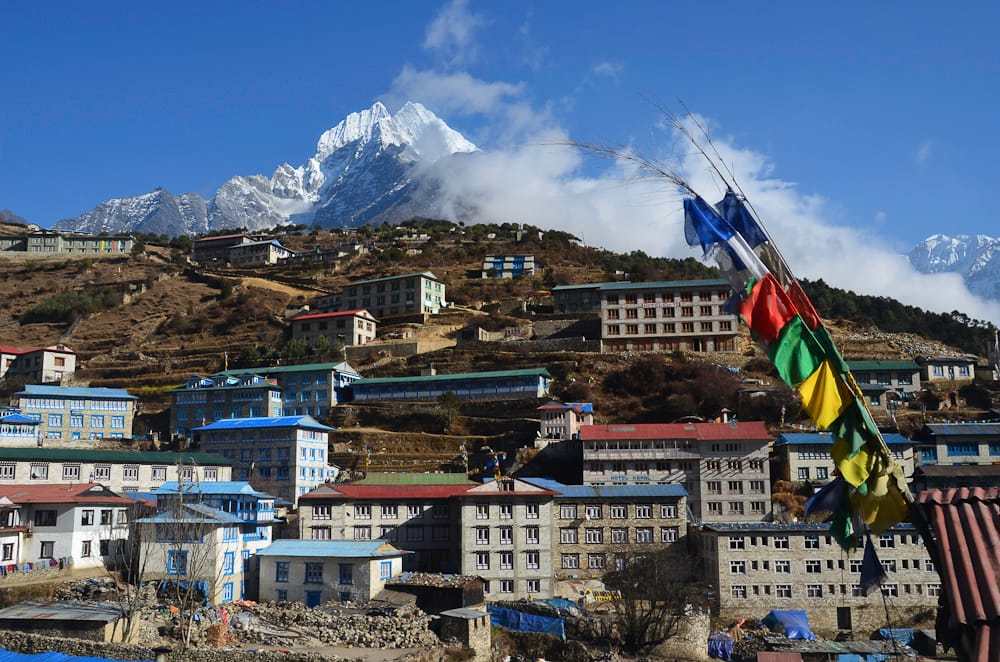
Town / city
Namche Bazaar
नाम्चे बजार
3,440 m
Namche Bazaar is the Sherpa capital of the Khumbu, a horseshoe-shaped town built into a hillside high above the Dudh Koshi. It is the region’s main trading hub, with lodges, bakeries, gear shops, banks and a Saturday market.
Read place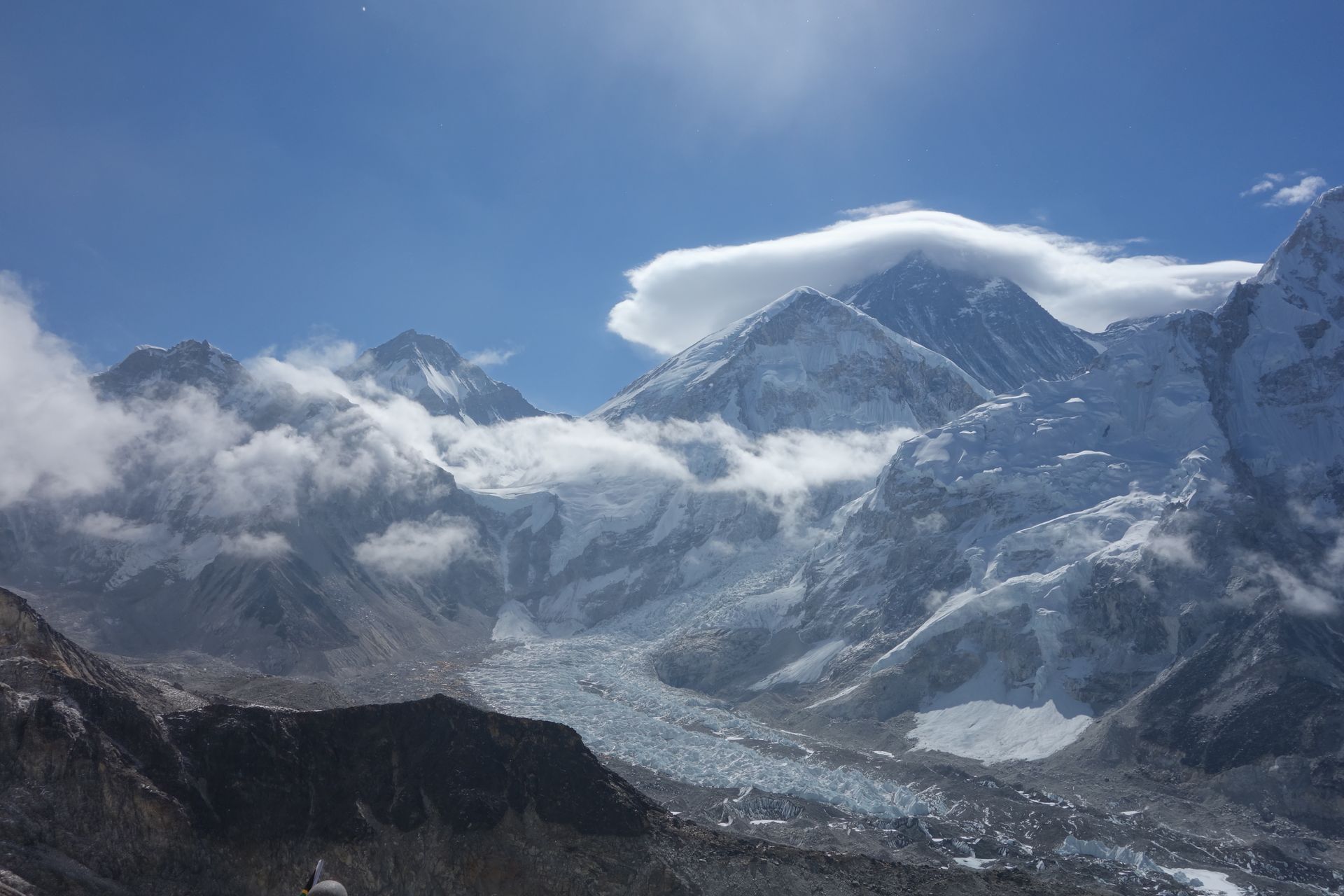
Mountain peak
Mount Everest
सगरमाथा (Sagarmatha) / Chomolungma
8,849 m
Mount Everest, known in Nepal as Sagarmatha and in Tibetan as Chomolungma, is the highest mountain on Earth at 8,849 m. It stands on the Nepal–Tibet border at the head of the Khumbu valley and is the centrepiece of every Everest Region trek.
Read place