

Mountain peak
Kongde Ri
कोङ्दे री
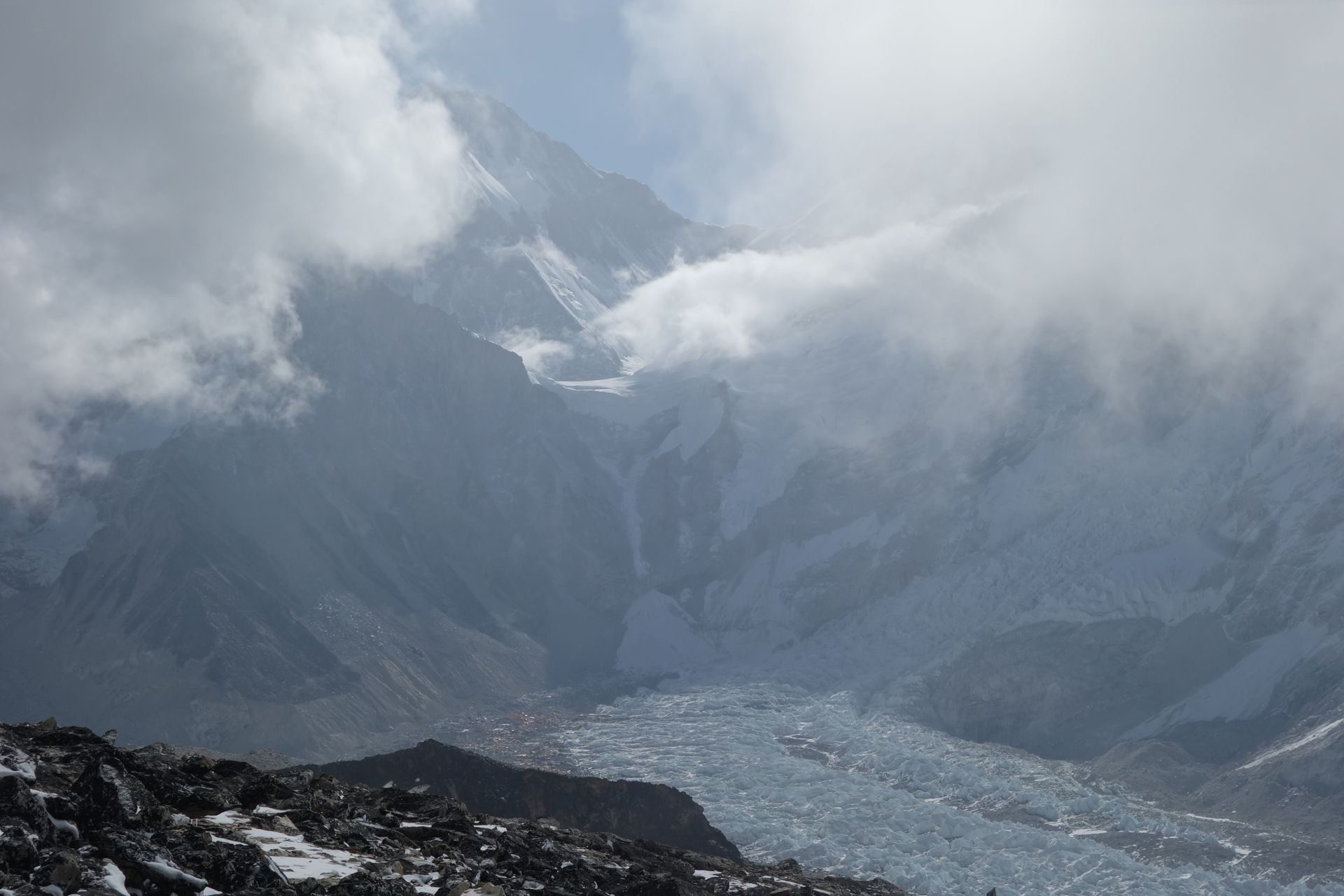
Kongde Ri is a 6,187 m peak that rises above Namche Bazaar to the west. Its glaciated north face is a familiar sight from Namche. The Kongde Ridge Trek follows the shoulder below it for wide views over the Khumbu.
- Summit: 6,187 m / 20,299 ft
- Type: Mountain
- Region: Everest Region
- District: Solukhumbu
- Treks: Kongde Ridge Trek
About Kongde Ri
Kongde Ri (कोङ्दे री), also known as Kwangde Ri or Kwande Ri, is a spectacular multi-summit mountain massif in the Khumbu region of Solukhumbu District, eastern Nepal. Rising to approximately 6,187 metres (20,299 feet), it stands west of Namche Bazaar and forms one of the most distinctive mountain silhouettes in the Everest region.
Kongde Ri is part of the Lumding mountain area, near the boundary between the Khumbu and Rolwaling Himalayan landscapes. The massif is recognised for its steep rocky faces, snow-covered ridges, glaciers and challenging climbing routes. Although it is sometimes described as a trekking peak, reaching its summit requires technical mountaineering skills and specialised equipment.
The mountain is also a prominent landmark for trekkers travelling around Namche Bazaar, Thame and the Bhote Koshi Valley. Its dramatic appearance and relatively remote climbing approaches make it an important destination for mountaineers seeking a less frequently climbed Himalayan peak.
Location and Altitude
Kongde Ri is situated approximately four kilometres west of Namche Bazaar, overlooking the Khumbu Valley. Its mountain ridges extend across the Lumding area, with glaciers and high valleys on its southern and western sides.
- Name: Kongde Ri
- Nepali Name: कोङ्दे री
- Alternative Names: Kwangde Ri, Kwande Ri
- Location: Khumbu region, Solukhumbu District, Nepal
- Province: Koshi Province
- Highest Elevation: Approximately 6,187 metres (20,299 feet)
- Mountain Region: Lumding Himal, within the wider Himalayan system
- Nearest Major Settlement: Namche Bazaar
- Nearby Villages: Thame and Namche Bazaar
- Nearby Valley: Lumding Valley
- Coordinates: Approximately 27.7930° N, 86.6427° E
The mountain's highest point is generally listed at 6,187 metres, although different sources use different elevations for its individual summits.
Mountain Structure and Major Summits
Kongde Ri is not a single isolated summit but a mountain massif made up of several prominent peaks and connecting ridges. Historical climbing reports describe three principal summits: Kongde Nup, Kongde Shar and Kongde Lho.
Kongde Lho: The highest of the three principal summits, generally listed at approximately 6,187 metres. It forms the western high point of the massif.
Kongde Shar: A prominent central summit, approximately 6,093 metres according to historical expedition records. Its steep faces and ridges have attracted technical climbing expeditions.
Kongde Nup: Another recognised summit within the massif, contributing to the rugged multi-peak skyline.
The different summits have separate climbing histories and routes. Historical expedition reports describe glaciers on the southern side and steep rock and snow terrain on the mountain's faces.
First Ascent and Climbing History
Kongde Ri has a varied mountaineering history, with different records referring to different summits of the massif.
- 1973: A German team climbed the eastern peak of the Kongde massif.
- 1975: Some climbing records report a successful ascent of Kongde Ri by a Nepalese team.
- 1978: Other mountain references list a Japanese team as making the first ascent of Kongde Ri on 11 November.
- 1981: A British expedition completed a new route on the northeast face of Kongde Shar.
- 1982: A notable ascent of the difficult north face of Kongde Lho was completed by Jeff Lowe and Dave Breashears.
Because these records sometimes refer to different summits, the first-ascent history should be treated carefully rather than assigning one date to every peak in the massif.
Treks and Climbing Routes Around Kongde Ri
Kongde Ri offers different experiences for trekkers and mountaineers. Visitors can enjoy views of the massif from nearby villages and viewpoints, while summit attempts require a separate technical expedition.
Kongde Ridge Trek: The ridge area below the mountain offers a high-altitude trekking experience with panoramic views of the Khumbu Himalayas. It is different from climbing the 6,187-metre summit.
Thame to Lumding Valley Route: This approach explores the quieter western side of the Khumbu and provides access towards the remote valleys and climbing areas around Kongde.
Namche Bazaar Viewpoint Hike: Trekkers can admire Kongde Ri from Namche Bazaar and nearby viewpoints without undertaking a demanding mountain climb.
Kongde Ri Climbing Expedition: A summit expedition involves technical rock, snow and ice terrain. Climbers need suitable mountaineering experience, permits, professional support and appropriate equipment.
Lumding Valley Approach: Historical climbing expeditions have used the remote Lumding Valley to access the southern glaciers and high camps of the massif.
Tea Houses and Accommodation Around Kongde Ri
There are no ordinary tea houses or permanent accommodation facilities on the summit of Kongde Ri. However, trekkers exploring the mountain's lower ridge and surrounding valleys can find accommodation in nearby settlements.
Kongde Ridge Lodge: The lower Kongde ridge area is known for a high-altitude mountain lodge offering accommodation and panoramic mountain views. It is a trekking destination rather than a summit climbing base. Confirm its current operating status before travelling.
Namche Bazaar: Namche offers a wide selection of hotels, tea houses, restaurants and guesthouses. It is the main accommodation and supply centre for visitors exploring the western Khumbu.
Thame Village: Thame has traditionally provided basic trekking lodges and tea houses. However, the village was seriously affected by the August 2024 glacial lake outburst flood, so travellers should check which facilities have reopened.
Lumding Valley: There is no dependable network of commercial tea houses in the remote climbing areas. Mountaineering expeditions generally use organised tented base camps and high camps.
In the surrounding villages, tea houses generally serve dal bhat, noodles, soups, rice, potatoes and hot drinks. Accommodation is usually simple, with facilities varying according to location and season.
Nature and Landscape of Kongde Ri
Kongde Ri is surrounded by a dramatic Himalayan landscape featuring glaciers, rocky mountain ridges, alpine valleys and snow-covered peaks. Its remote setting provides a different natural experience from the more frequently visited Everest Base Camp trail.
Glaciers and Snowfields: The massif contains glacial terrain, particularly on its southern side, where a large glacier descends towards the Lumding Valley. Snow and ice cover much of its upper mountain slopes.
Rocky Mountain Ridges: Kongde Ri has steep rock faces, narrow ridges and rugged mountain formations. These features make its climbing routes technically demanding.
Lumding Valley: The remote valley below the mountain is characterised by rocky slopes, glacial streams, alpine pastures and dramatic mountain scenery.
Alpine Vegetation: Lower elevations around the surrounding valleys contain juniper, rhododendron, birch and alpine grasses. Vegetation becomes increasingly sparse towards the rocky upper slopes.
Himalayan Wildlife: The wider Khumbu ecosystem provides habitat for wildlife such as snow leopards, musk deer and red pandas. These animals are elusive, and sightings are uncommon.
Mountain Panoramas: From suitable viewpoints around Kongde, trekkers can enjoy views of the Everest region's major peaks, including Everest, Lhotse, Ama Dablam, Thamserku and other surrounding mountains.
Best Time to Visit Kongde Ri
The best seasons for exploring the Kongde ridge and surrounding trekking areas are generally spring (March to May) and autumn (September to November). These periods usually offer better mountain visibility and more favourable trekking conditions.
- Spring: Warmer daytime temperatures and improving trail conditions make this a popular season for trekking and climbing.
- Autumn: Clear skies and excellent Himalayan views make this one of the best periods for visiting the area.
- Summer/Monsoon: Rain, cloud and slippery trails can make access more difficult.
- Winter: Heavy snowfall, icy terrain and extreme cold can affect trekking routes and climbing conditions.
For summit expeditions, the best climbing window depends on the specific route, snow conditions, weather and expedition planning. Climbers should consult experienced mountaineering professionals before attempting the mountain.
Main Attractions Around Kongde Ri
- Kongde Lho: The highest principal summit of the massif, rising to approximately 6,187 metres and known for its steep climbing terrain.
- Kongde Shar: A prominent summit with a history of technical climbing expeditions and challenging mountain faces.
- Kongde Nup: One of the recognised peaks contributing to the distinctive multi-summit structure of the massif.
- Kongde Ridge: A scenic high-altitude area offering panoramic views of the Khumbu mountains.
- Lumding Valley: A remote Himalayan valley with glaciers, alpine landscapes and traditional mountain trails.
- Namche Bazaar: The famous Sherpa trading town below Kongde, known for its markets, lodges, museums and mountain views.
- Thame Village: A traditional Sherpa settlement with historic cultural and mountaineering connections.
- Everest Mountain Views: The surrounding viewpoints provide impressive panoramas of Everest, Lhotse, Ama Dablam and neighbouring Himalayan peaks.
Cultural and Historical Importance
Kongde Ri is part of the traditional Sherpa homeland in the Khumbu region. The surrounding mountains and valleys form an important part of the local cultural landscape, where mountain traditions, Buddhist beliefs and pastoral activities have shaped community life.
Nearby Namche Bazaar and Thame are significant Sherpa settlements with longstanding connections to Himalayan mountaineering and trade. The area also reflects the history of exploration in the Lumding Himal, where climbers have attempted challenging routes on the mountain's different summits.
Kongde Ri is therefore important not only as a climbing destination but also as a recognisable landmark of the wider Khumbu landscape.
Climbing Difficulty and Safety
Although Kongde Ri is sometimes included in lists of Nepal's trekking peaks, it should not be considered an ordinary trekking mountain. Its steep rock faces, snow slopes, glaciers and exposed ridges require technical mountaineering ability.
Climbers should have experience with crampons, ice axes, rope systems, glacier travel and high-altitude climbing. Proper acclimatisation, weather planning, suitable equipment and experienced mountain guides are essential.
The remote climbing approaches also mean that rescue and emergency support may be limited. A summit attempt should only be undertaken with appropriate preparation and the necessary climbing permissions.
Where is Kongde Ri?
The exact point on the Himalaya trail, with nearby places for context.
On this map
Nearby places
Village
Kongde
कोङ्दे
4,250 m
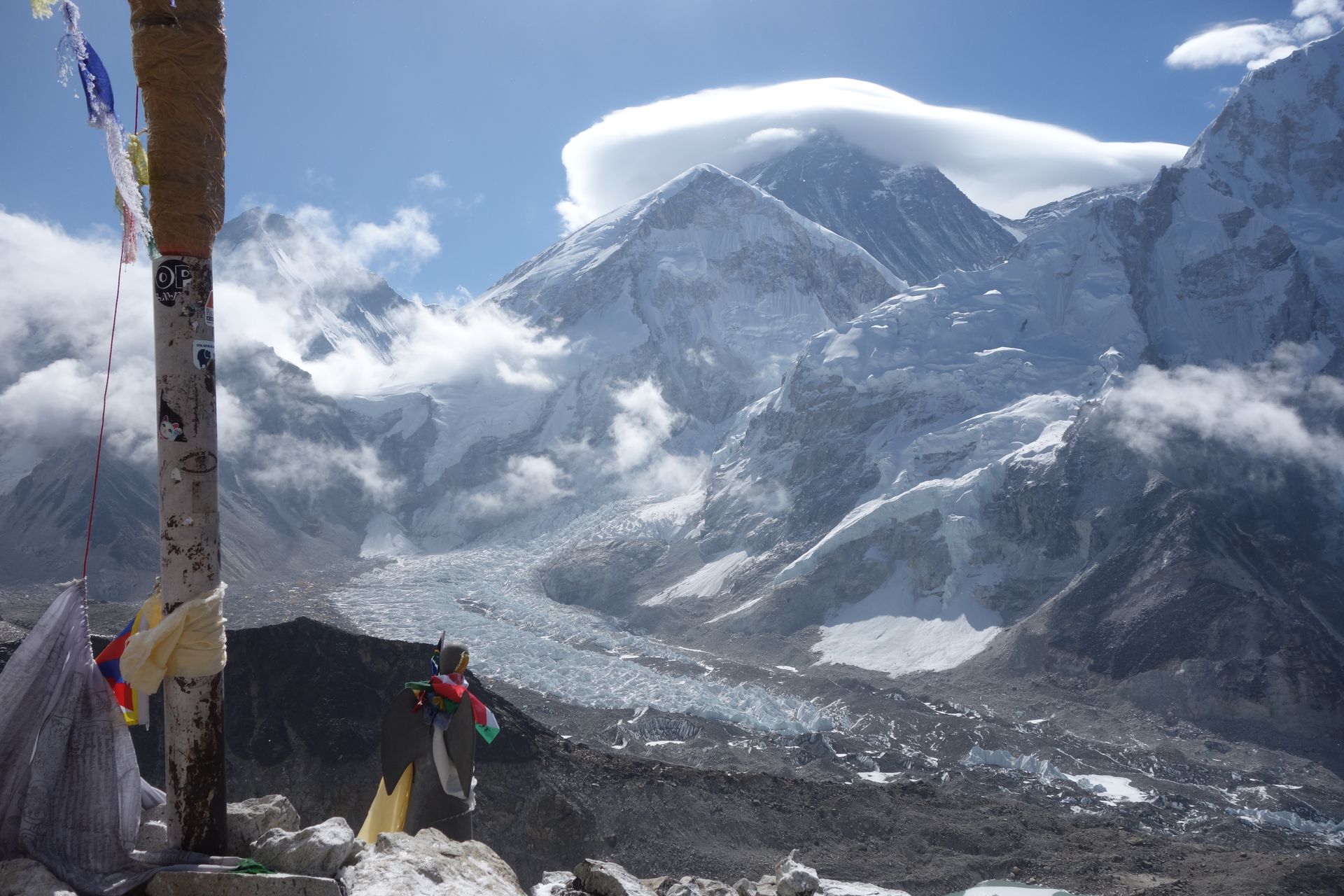
Kongde is a high ridge-top lodge settlement west of Namche, reached by a steep climb from Thame or Thamo. It looks straight across the Dudh Koshi valley to Everest, Lhotse and Ama Dablam. It is the highlight of the Kongde Ridge Trek, a quiet alternative to the main Everest trail.
Read place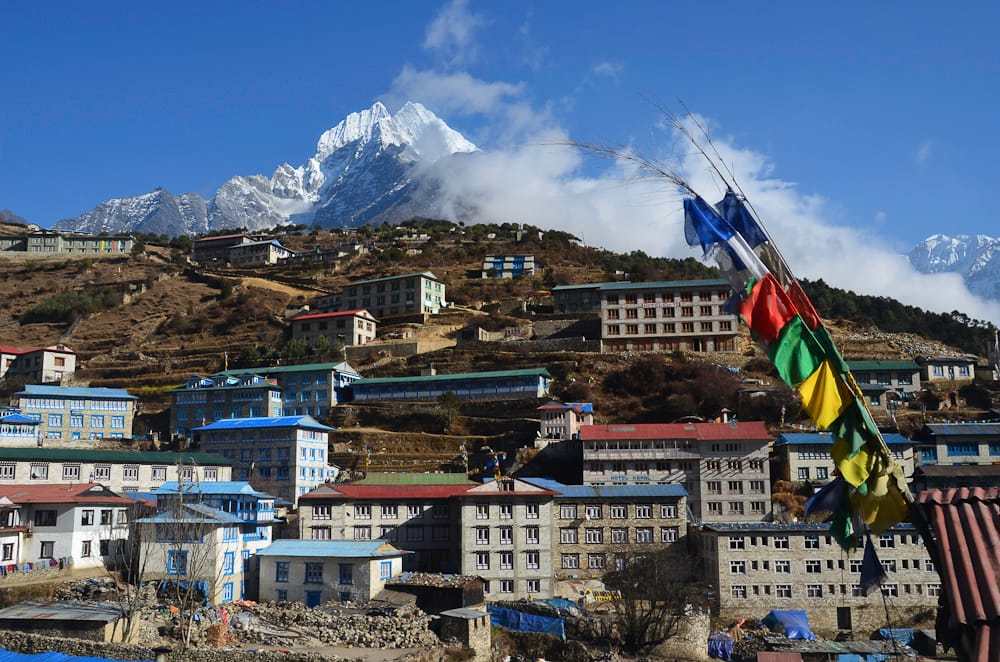
Town / city
Namche Bazaar
नाम्चे बजार
3,440 m
Namche Bazaar is the Sherpa capital of the Khumbu, a horseshoe-shaped town built into a hillside high above the Dudh Koshi. It is the region’s main trading hub, with lodges, bakeries, gear shops, banks and a Saturday market.
Read place