

Viewpoint
Gokyo Ri
गोक्यो री
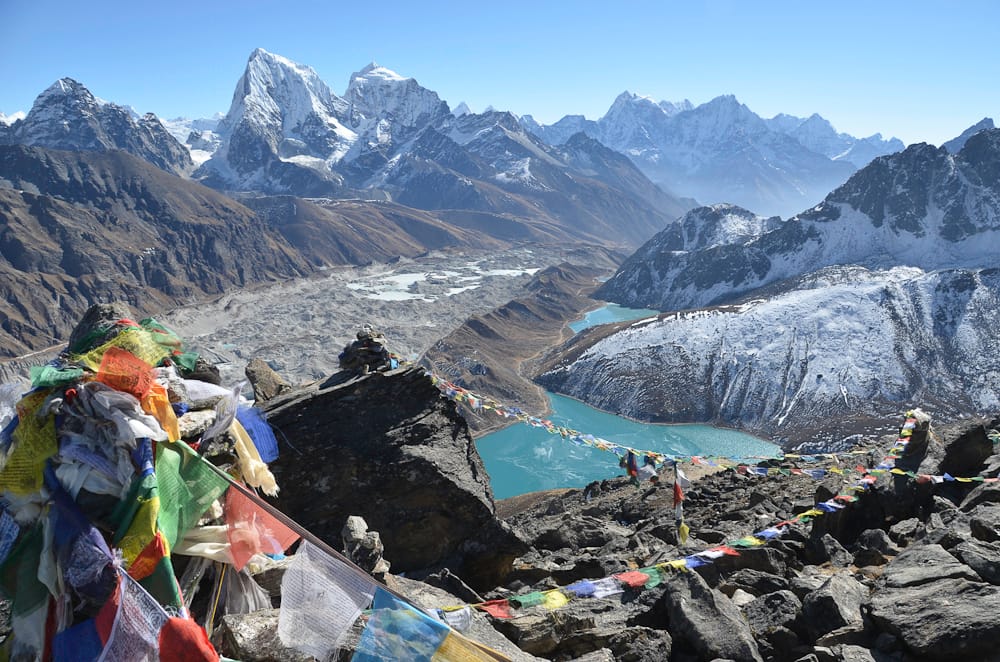
Gokyo Ri is the summit above Gokyo village, reached in a steep two- to three-hour climb. Its panorama takes in four 8,000 m peaks: Everest, Lhotse, Makalu and Cho Oyu. Below, the Gokyo lakes and the vast Ngozumpa Glacier make it one of the finest viewpoints in Nepal.
- Elevation: ~5,357 m / 17,575 ft
- Type: Viewpoint
- Region: Everest Region
- District: Solukhumbu
- Treks: Gokyo Lakes Trek, Gokyo Lakes Renjo La Pass Trek
About Gokyo Ri
Gokyo Ri, also known as Gokyo Peak, is a famous high-altitude viewpoint in the Khumbu region of Nepal's Everest area. Standing at approximately 5,357 metres (17,575 feet) above sea level, it rises above Gokyo village and the turquoise Gokyo Lakes inside Sagarmatha National Park. The viewpoint is one of the most rewarding destinations on the Gokyo Lakes Trek, attracting trekkers with its spectacular panoramic views of the Himalayan mountains.
Gokyo Ri is particularly famous for offering views of four of the world's highest mountains above 8,000 metres: Mount Everest, Lhotse, Makalu and Cho Oyu. From its summit, visitors can also admire the beautiful Gokyo Lakes, the enormous Ngozumpa Glacier and the rugged landscapes of the upper Gokyo Valley. The climb is steep and physically demanding because of the altitude, but it does not normally require technical mountaineering equipment.
Location and Altitude
- Location: Above Gokyo village, Gokyo Valley, Khumbu, Nepal
- Altitude: Approximately 5,357 m (17,575 ft)
- District: Solukhumbu District
- Province: Koshi Province, Nepal
- Protected Area: Sagarmatha National Park
- Mountain Range: Himalayas
- Nearest Settlement: Gokyo village
- Nearby Natural Features: Gokyo Lakes and Ngozumpa Glacier
- Main Trekking Route: Gokyo Lakes Trek and Everest Three Passes Trek
Gokyo Ri is located directly above Gokyo village, on the western side of the Ngozumpa Glacier. Trekkers generally begin the climb from the village, following a steep rocky trail towards the summit.
Treks That Pass Through Gokyo Ri
Gokyo Ri is a major viewpoint reached through several trekking itineraries in the Everest region.
- Gokyo Lakes Trek: The classic route passes through Lukla, Phakding, Namche Bazaar, Dole and Machhermo before reaching Gokyo village. Trekkers usually spend an additional morning climbing Gokyo Ri.
- Everest Three Passes Trek: This challenging circuit includes Gokyo Ri and connects the Gokyo Valley with the wider Khumbu region through Renjo La, Cho La and Kongma La.
- Gokyo and Everest Base Camp Trek: Trekkers can combine the Gokyo Lakes and Gokyo Ri with Everest Base Camp by crossing Cho La Pass towards Dzongla and Lobuche.
- Gokyo and Renjo La Trek: This route combines the Gokyo Valley with a crossing of Renjo La Pass, providing extensive mountain views and a challenging high-altitude trekking experience.
Gokyo village to Gokyo Ri: The uphill climb generally takes around 2–3 hours, followed by approximately 1.5–2 hours to descend. Actual times vary with fitness, altitude, weather and trail conditions.
Tea Houses and Accommodation Near Gokyo Ri
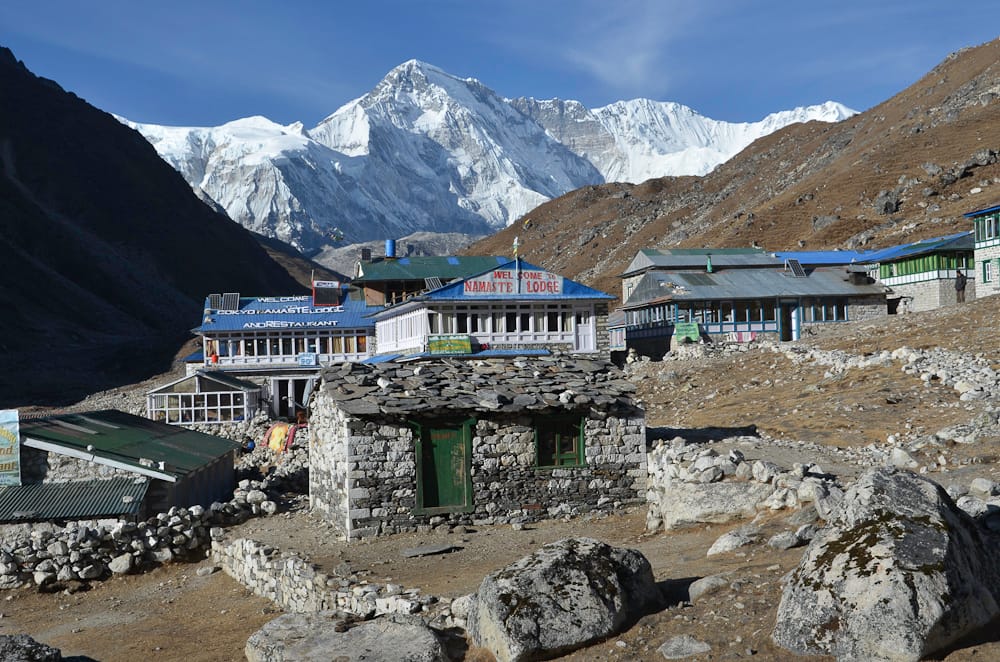
There are no permanent tea houses or accommodation facilities on the summit of Gokyo Ri. Trekkers stay in Gokyo village, which has several family-run tea houses and mountain lodges beside the Third Gokyo Lake.
- Accommodation: Basic private and shared rooms with beds, mattresses and blankets. A warm sleeping bag is recommended.
- Food and Meals: Dal bhat, noodles, fried rice, soups, potatoes, eggs, porridge and hot drinks are commonly available.
- Dining Areas: Communal dining rooms offer a place to relax and warm up before or after the summit hike.
- Facilities: Some lodges provide hot showers, electricity, charging facilities and Wi-Fi for additional fees, depending on availability.
- Early Morning Services: Trekkers can arrange breakfast or hot drinks before starting the sunrise climb, depending on the lodge.
- Seasonal Operations: Most tea houses operate during spring and autumn, while some may close during winter.
Staying overnight in Gokyo village allows trekkers to begin the summit hike early and return to the village for meals and rest.
Nature and Landscape of Gokyo Ri
Gokyo Ri is surrounded by a dramatic high-altitude Himalayan environment featuring rocky ridges, snow-covered peaks, glaciers and turquoise glacial lakes. Its elevated position provides one of the widest panoramic views in the Everest region.
- Himalayan Mountains: The summit offers views of Everest, Lhotse, Makalu and Cho Oyu, along with numerous surrounding Himalayan peaks.
- Gokyo Lakes: The chain of blue and turquoise glacial lakes spreads across the valley below the viewpoint.
- Ngozumpa Glacier: Nepal's longest glacier dominates the western side of the valley, creating a vast landscape of ice, rocks and glacial moraine.
- Alpine Vegetation: Sparse grasses, mosses and hardy high-altitude plants grow on the lower slopes, while the upper summit terrain is mostly rocky and barren.
- Mountain Wildlife: The wider Sagarmatha National Park provides habitat for Himalayan tahr, musk deer, snow leopards and high-altitude birds, although sightings are uncommon.
- Mountain Weather: Strong winds, freezing temperatures and rapidly changing weather are common at this elevation.
The landscape around Gokyo Ri changes with the seasons. In spring and autumn, clear mornings often reveal spectacular mountain views, while winter brings snow and extremely cold summit conditions.
Best Time to Visit Gokyo Ri
The best times to climb Gokyo Ri are spring (March to May) and autumn (September to November). These seasons generally offer better visibility, more favourable trekking conditions and excellent opportunities to enjoy sunrise over the Himalayas.
- Spring (March–May): Pleasant daytime conditions and good opportunities for clear mountain views, particularly during early mornings.
- Autumn (September–November): Often the best season for panoramic views, with clearer post-monsoon skies and relatively stable weather.
- Winter (December–February): Very cold temperatures, snow and icy sections can make the climb more difficult.
- Monsoon (June–August): Clouds, rain and poor visibility may affect the summit experience and trekking conditions.
Best time of day: Many trekkers start around 4:00–4:30 AM to reach the summit around sunrise. The early start offers a chance to see the first sunlight illuminate Everest and the surrounding peaks.
Main Attractions of Gokyo Ri
Gokyo Ri is famous for its panoramic mountain scenery and spectacular views of the Gokyo Valley.
- Mount Everest: Enjoy a wide view of the world's highest mountain from the summit on clear days.
- Mount Lhotse: Admire the massive Himalayan peak standing beside Everest.
- Mount Makalu: See the distinctive pyramid-shaped summit of the world's fifth-highest mountain.
- Mount Cho Oyu: Enjoy impressive views of this 8,188-metre Himalayan peak to the northwest.
- Gokyo Lakes: Look down over the beautiful turquoise lakes spread across the upper valley.
- Ngozumpa Glacier: Observe the extensive glacial landscape and rocky moraine from above.
- Sunrise Photography: Capture the changing colours of the Himalayan peaks as the first sunlight reaches the summit.
- Prayer Flags and Summit Cairns: Experience the traditional mountain atmosphere at the viewpoint's prayer-flag-decorated summit.
Gokyo Ri Sunrise Viewpoint
Sunrise from Gokyo Ri is one of the most memorable experiences in the Everest region. Trekkers usually leave Gokyo village before dawn and follow the steep trail towards the summit with headlamps.
As daylight approaches, the surrounding mountains gradually become visible. The first sunlight illuminates the high Himalayan peaks, creating beautiful colours across Everest, Lhotse, Makalu and Cho Oyu. Below the summit, the Gokyo Lakes and Ngozumpa Glacier create an impressive panoramic landscape.
The sunrise hike generally takes around 2–3 hours uphill. Trekkers should dress warmly, carry a headlamp, bring drinking water and allow enough time for a slow ascent.
Difficulty and Altitude Safety
Gokyo Ri is considered a strenuous high-altitude hike. Although the route is generally non-technical, the steep rocky trail and thin air make the climb physically demanding. The ascent from Gokyo village involves approximately 570 metres of elevation gain.
Trekkers should:
- Spend sufficient time acclimatizing in the Everest region before attempting the climb.
- Walk slowly and take regular breaks.
- Carry warm clothing, gloves, a headlamp and enough water.
- Avoid continuing upward if symptoms of altitude sickness develop or worsen.
- Descend immediately and seek medical assistance if serious symptoms occur.
A climbing permit is generally not required for Gokyo Ri because it is a trekking viewpoint rather than a technical mountaineering expedition. However, trekkers must meet the applicable entry and local trekking permit requirements for Sagarmatha National Park and the Khumbu region.
Where is Gokyo Ri?
The exact point on the Himalaya trail, with nearby places for context.
On this map
Nearby places
Village
Gokyo
गोक्यो
4,790 m
Gokyo is a lakeside village on the shore of Dudh Pokhari, the third Gokyo lake, beside the Ngozumpa Glacier. It is the main base for climbing Gokyo Ri and exploring the upper lakes. Gokyo is the hub of the western Khumbu, linked to Everest Base Camp by the Cho La and to Thame by the Renjo La.
Read place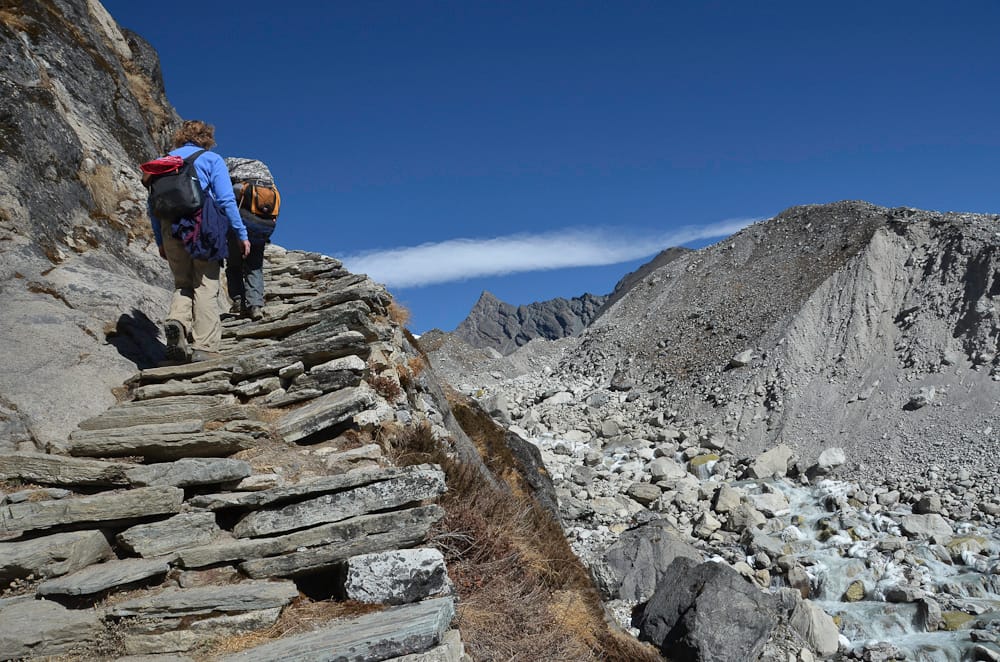
Lake
Gokyo Lakes
गोक्यो ताल
4,700 m
The Gokyo Lakes are a chain of six turquoise glacial lakes in the upper Dudh Koshi valley, among the highest freshwater lake systems in the world. They were designated a Ramsar wetland in 2007 and are sacred to both Hindus and Buddhists.
Read place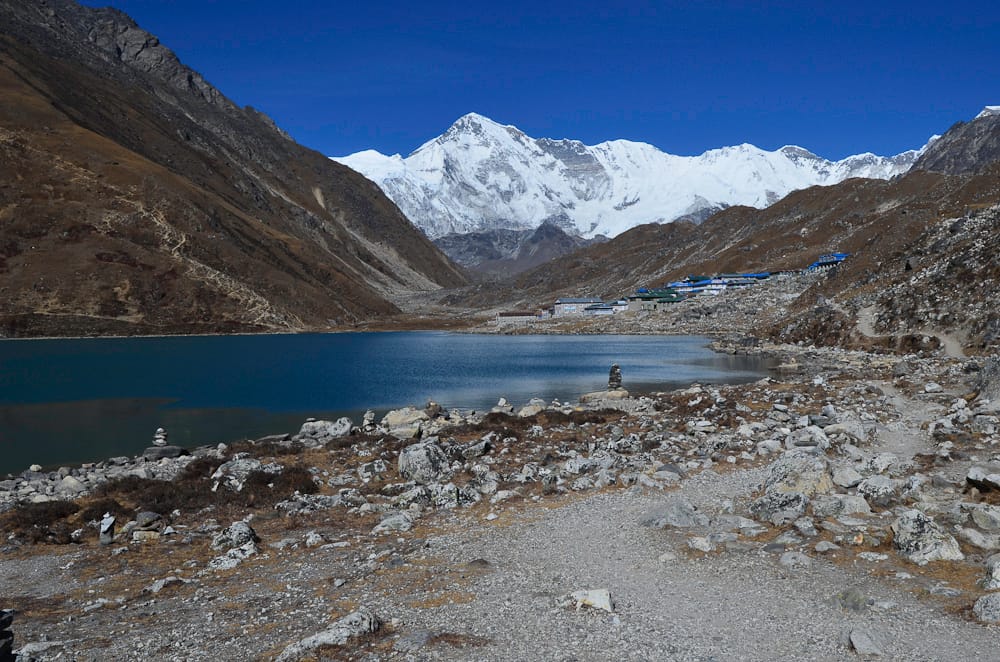
Mountain peak
Cho Oyu
चो ओयु
8,188 m
Cho Oyu, the “turquoise goddess”, is the sixth-highest mountain in the world at 8,188 m, on the Nepal–Tibet border west of Everest. It towers over the head of the Gokyo valley. Trekkers see it at its best from Gokyo, Gokyo Ri and the Ngozumpa Glacier.
Read place