

Lake
Gokyo Lakes
गोक्यो ताल
The Gokyo Lakes are a chain of six turquoise glacial lakes in the upper Dudh Koshi valley, among the highest freshwater lake systems in the world. They were designated a Ramsar wetland in 2007 and are sacred to both Hindus and Buddhists.
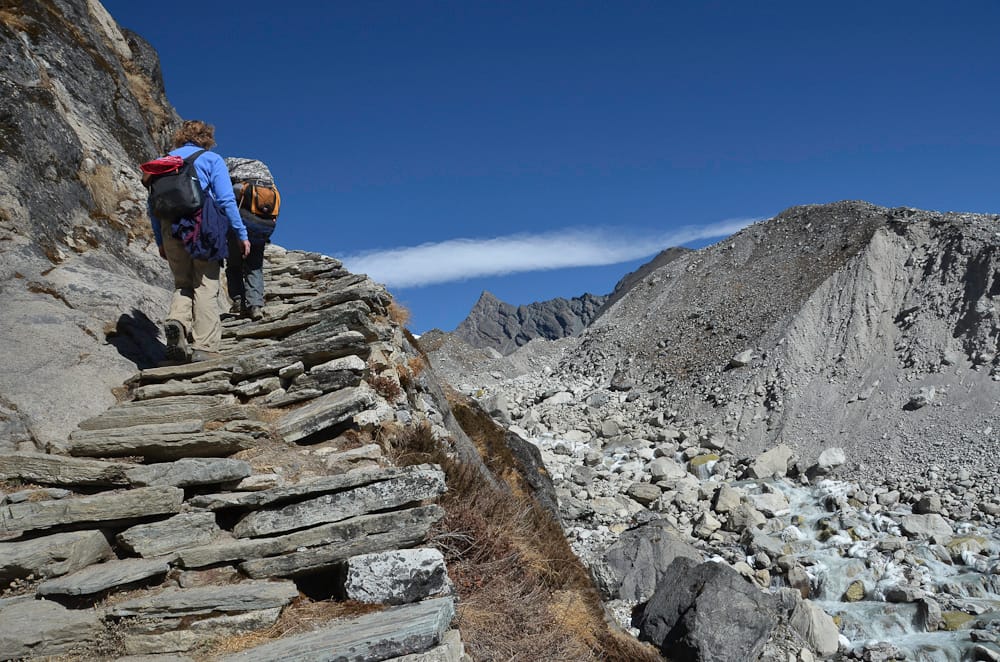
- Elevation: ~4,700–5,000 m
- Type: Lake
- Region: Everest Region
- District: Solukhumbu
- Ramsar wetland site (2007)
- Six main lakes
- Treks: Gokyo Lakes Trek, Gokyo Lakes Renjo La Pass Trek
About Gokyo Lakes
Gokyo Lake is one of the most beautiful high-altitude glacial lakes in the Everest region of Nepal. Located in the Gokyo Valley of the Khumbu region, inside Sagarmatha National Park, it is famous for its striking turquoise water, peaceful mountain surroundings and spectacular Himalayan scenery. The lake commonly known as Gokyo Lake is the Third Gokyo Lake, locally called Dudh Pokhari or Gokyo Cho, situated at approximately 4,734 metres (15,531 feet) above sea level beside Gokyo village.
The Gokyo Lakes are a group of sacred alpine lakes surrounded by rugged mountains, glaciers and rocky moraines. The area lies beside the enormous Ngozumpa Glacier and offers breathtaking views of Cho Oyu and other Himalayan peaks. Recognised as a wetland of international importance under the Ramsar Convention, Gokyo is an important destination for nature lovers, photographers, pilgrims and trekkers exploring the Everest region.
Location and Altitude
- Location: Gokyo Valley, Khumbu region, Solukhumbu District, Nepal
- Main lake: Third Gokyo Lake (Dudh Pokhari / Gokyo Cho)
- Main lake altitude: Approximately 4,734 m (15,531 ft)
- Gokyo Lakes elevation range: Approximately 4,700–5,000 m
- Province: Koshi Province, Nepal
- Protected area: Sagarmatha National Park
- Nearby settlement: Gokyo village
- Major glacier: Ngozumpa Glacier
- Famous viewpoint: Gokyo Ri
The Six Gokyo Lakes
The Gokyo Valley contains a system of six main glacial lakes, extending across an elevation range of approximately 4,700 to 5,000 metres. Each lake has its own natural character, with turquoise and blue water surrounded by alpine mountain scenery.
- First Lake – Longpanga Tsho: A small high-altitude lake encountered on the trail towards Gokyo from the Machhermo area.
- Second Lake – Taujung Tsho: Another beautiful glacial lake along the upper valley trekking route.
- Third Lake – Dudh Pokhari (Gokyo Cho): The best-known lake, beside which Gokyo village is located. It is the main destination for most trekkers visiting the valley.
- Fourth Lake – Thonak Cho: A larger and more remote lake surrounded by dramatic mountain terrain.
- Fifth Lake – Ngozumpa Tsho: A high-altitude lake offering impressive views of the surrounding glacial landscape.
- Sixth Lake – Gyazumpa Cho: One of the more remote lakes in the upper Gokyo Valley, visited by trekkers exploring farther beyond the main village.
Lake names and numbering can vary between maps and local or published sources. The official Ramsar information sheet provides the lake names and measurements used for the wetland record.
Treks That Pass Through Gokyo Lake
Gokyo Lake is a major highlight of several trekking routes in Nepal's Everest region.
- Gokyo Lakes Trek: The main trekking route begins at Lukla and passes through Phakding, Namche Bazaar, Dole and Machhermo before reaching Gokyo village and the Third Lake.
- Everest Three Passes Trek: This challenging route includes the Gokyo Valley and connects it with the wider Everest region through Renjo La, Cho La and Kongma La passes.
- Gokyo to Everest Base Camp Trek: Trekkers can continue from Gokyo across Cho La Pass towards Dzongla, Lobuche and Everest Base Camp.
- Gokyo and Renjo La Trek: This route combines the lakes with a crossing of Renjo La Pass, offering spectacular views of the Gokyo Valley and surrounding Himalayan mountains.
The walk from Machhermo to Gokyo generally takes around 3–5 hours, depending on walking pace, weather and trail conditions.
Tea Houses and Accommodation Near Gokyo Lake
Several tea houses and mountain lodges are located beside the Third Gokyo Lake in Gokyo village. These establishments provide accommodation and meals for trekkers exploring the lakes, climbing Gokyo Ri and continuing towards the high mountain passes.
- Accommodation: Basic private and shared rooms with beds, mattresses and blankets. A warm sleeping bag is recommended.
- Food and Meals: Dal bhat, noodles, fried rice, soups, potatoes, eggs, porridge and hot drinks are commonly available.
- Dining Areas: Communal dining rooms offer a warm place to relax, eat and meet other trekkers.
- Facilities: Some lodges provide hot showers, charging facilities and Wi-Fi for additional fees, depending on availability.
- Lake Access: Staying in Gokyo village makes it convenient to explore the Third Lake and begin early-morning hikes to Gokyo Ri.
- Seasonal Services: Most lodges operate during the spring and autumn trekking seasons, while some may close during winter.
There are no commercial tea houses beside every lake. Trekkers exploring the more remote upper lakes generally return to Gokyo village for accommodation and meals.
Nature and Landscape of Gokyo Lake
Gokyo Lake is surrounded by an extraordinary alpine environment shaped by glaciers, snowmelt and high Himalayan mountains. Its clear blue-green water contrasts beautifully with the grey rocky slopes, snow-covered peaks and vast glacial formations of the upper valley.
- Turquoise Glacial Water: The lake's distinctive colour comes from its glacial environment and the fine rock particles carried by meltwater.
- Ngozumpa Glacier: Nepal's longest glacier lies alongside the Gokyo Valley, creating an impressive landscape of ice, moraine and glacial deposits.
- Alpine Mountains: The lake is surrounded by rugged Himalayan terrain, with views towards Cho Oyu and nearby mountain ranges.
- High-Altitude Vegetation: Hardy grasses, mosses, small flowering plants and alpine vegetation grow in the short summer season.
- Birdlife: The wetland provides habitat for high-altitude and migratory birds, including ruddy shelducks.
- Mountain Wildlife: The wider Sagarmatha National Park ecosystem supports Himalayan tahr, musk deer and the elusive snow leopard.
The Gokyo wetland system covers approximately 7,770 hectares and includes lakes, alpine pastures and surrounding mountain terrain.
Best Time to Visit Gokyo Lake
The best time to visit Gokyo Lake is during spring (March to May) and autumn (September to November). These seasons generally offer better trekking conditions, clearer skies and excellent opportunities to enjoy the lake and surrounding Himalayan scenery.
- Spring: Pleasant daytime conditions, seasonal alpine flowers and generally good mountain views.
- Autumn: Clear mountain visibility, relatively stable weather and popular trekking conditions.
- Winter: Very cold temperatures, possible snowfall and frozen or partially frozen lake surfaces. Some tea houses may close.
- Monsoon: Rain, clouds and slippery trails can make the journey more difficult and reduce mountain visibility.
Early morning is often the best time for photography because the lake can be calm, reflecting the surrounding mountains.
Main Attractions Around Gokyo Lake
Gokyo Lake and its surrounding valley offer several remarkable natural and trekking attractions.
- Third Gokyo Lake (Dudh Pokhari): The famous turquoise lake beside Gokyo village is the main attraction and a favourite place for photography.
- First and Second Gokyo Lakes: These smaller alpine lakes lie along the approach trail and introduce trekkers to the beautiful lake system.
- Fourth Gokyo Lake (Thonak Cho): A larger and more remote lake surrounded by rugged mountain scenery.
- Fifth Gokyo Lake: A beautiful high-altitude lake that offers impressive views of the Ngozumpa Glacier and surrounding peaks.
- Sixth Gokyo Lake: A remote lake in the upper valley for trekkers seeking a quieter alpine experience.
- Gokyo Ri: A famous viewpoint above the village, offering panoramic views of Mount Everest, Lhotse, Makalu, Cho Oyu and the Gokyo Lakes.
- Ngozumpa Glacier: A spectacular glacial landscape beside the lakes, featuring rocky moraine and extensive ice formations.
- Mountain Reflections: On calm mornings, the surrounding peaks and sky can be reflected beautifully in the lake's clear water.
Religious and Cultural Significance of Gokyo Lake
Gokyo Lake is sacred to both Hindu and Buddhist communities. Local people and pilgrims regard the lakes as spiritually important, and the area has long been associated with religious beliefs, traditional practices and respect for nature.
The lakes are not only a natural attraction but also an important part of the cultural landscape of the Khumbu region. Visitors are encouraged to respect local customs, avoid littering and refrain from disturbing the water and surrounding environment.
Ramsar Wetland and Conservation Importance
The Gokyo Lakes and associated wetlands were designated a Ramsar Site on 23 September 2007, recognising their international ecological importance. The protected wetland covers approximately 7,770 hectares within Sagarmatha National Park.
The lake system is important for freshwater resources, high-altitude biodiversity and migratory birds. Its fragile ecosystem is also influenced by glacial changes, tourism and environmental conditions.
Visitors can help protect Gokyo Lake by:
- Carrying rubbish back to designated disposal areas.
- Avoiding plastic pollution and leaving no waste behind.
- Respecting the religious importance of the lakes.
- Staying on established trekking trails.
- Avoiding disturbance to wildlife and natural habitats.
Where is Gokyo Lakes?
The exact point on the Himalaya trail, with nearby places for context.
On this map
Nearby places
Village
Gokyo
गोक्यो
4,790 m
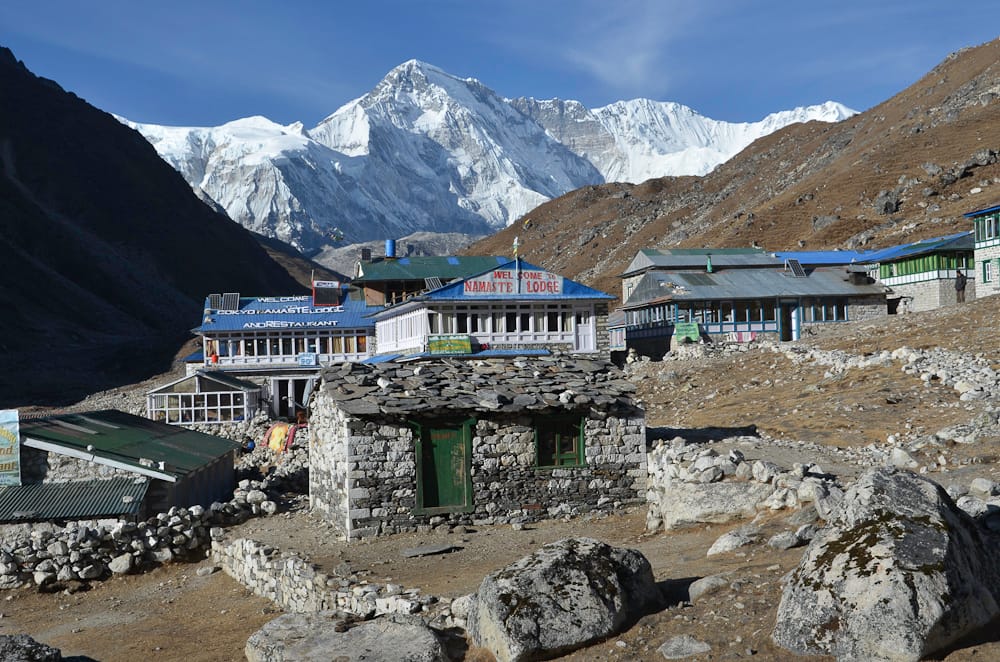
Gokyo is a lakeside village on the shore of Dudh Pokhari, the third Gokyo lake, beside the Ngozumpa Glacier. It is the main base for climbing Gokyo Ri and exploring the upper lakes. Gokyo is the hub of the western Khumbu, linked to Everest Base Camp by the Cho La and to Thame by the Renjo La.
Read place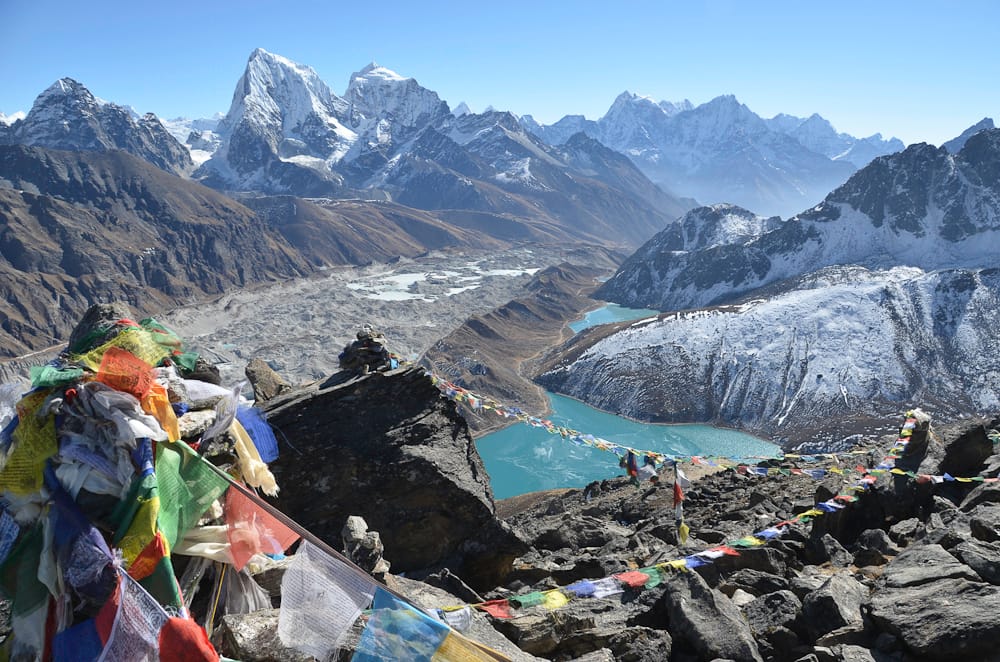
Viewpoint
Gokyo Ri
गोक्यो री
5,357 m
Gokyo Ri is the summit above Gokyo village, reached in a steep two- to three-hour climb. Its panorama takes in four 8,000 m peaks: Everest, Lhotse, Makalu and Cho Oyu. Below, the Gokyo lakes and the vast Ngozumpa Glacier make it one of the finest viewpoints in Nepal.
Read place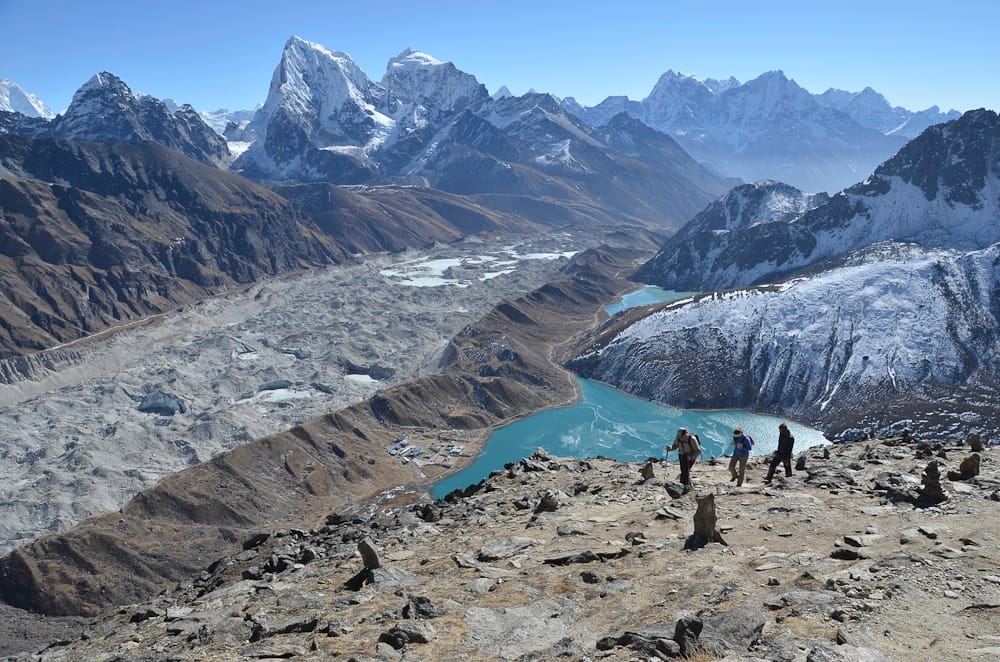
Glacier
Ngozumpa Glacier
ङोजुम्पा हिमनदी
4,600 m
The Ngozumpa Glacier is the longest glacier in Nepal, flowing about 36 km south from Cho Oyu. Its rubble-covered surface lies right next to Gokyo village. Trekkers crossing between Gokyo and the Cho La walk across the glacier on a shifting rocky trail.
Read place