

Glacier
Ngozumpa Glacier
ङोजुम्पा हिमनदी
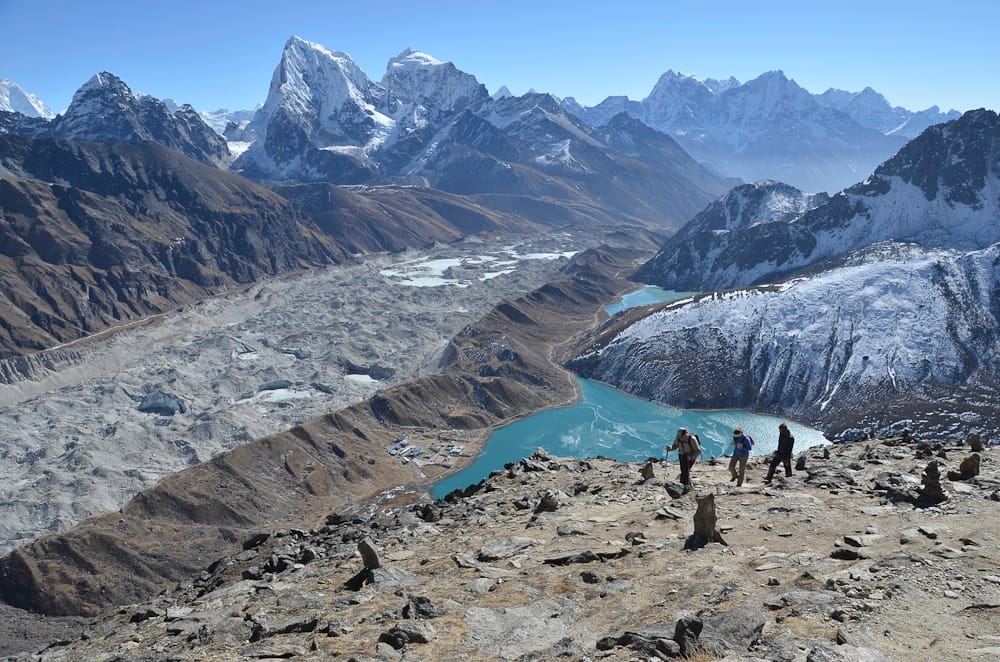
The Ngozumpa Glacier is the longest glacier in Nepal, flowing about 36 km south from Cho Oyu. Its rubble-covered surface lies right next to Gokyo village. Trekkers crossing between Gokyo and the Cho La walk across the glacier on a shifting rocky trail.
- Elevation: ~4,600–5,200 m
- Type: Glacier
- Region: Everest Region
- District: Solukhumbu
- Longest glacier in Nepal (~36 km)
- Treks: Gokyo Lakes Trek, Everest Three Passes Trek, EBC Gokyo Lakes Trek
About Ngozumpa Glacier
Ngozumpa Glacier is one of the most spectacular natural features of Nepal's Everest region and is widely recognised as the longest glacier in Nepal. Located in the upper Dudh Koshi Valley of the Khumbu region, it flows southward from the high mountain slopes beneath Cho Oyu and Gyachung Kang. The glacier extends for approximately 18–20 kilometres and forms a vast landscape of ice, rocky moraine, glacial ponds and mountain valleys.
Ngozumpa Glacier is a major highlight of the Gokyo Lakes Trek and Everest Three Passes Trek. It lies beside Gokyo village and the famous turquoise Gokyo Lakes, creating an impressive contrast between glacial ice and clear alpine water. Its changing surface, debris-covered lower section and glacial lakes also make it an important location for scientific research into Himalayan glaciers and climate change.
Location and Altitude
- Location: Gokyo Valley, Khumbu region, Solukhumbu District, Nepal
- Glacier Length: Approximately 18–20 km, depending on measurement and mapping method
- Lowest Terminus Elevation: Approximately 4,650–4,700 m
- Upper Accumulation Area: Beneath Cho Oyu and Gyachung Kang
- Mountain Range: Himalayas
- Protected Area: Sagarmatha National Park
- Nearby Settlement: Gokyo village
- Nearby Lakes: Gokyo Lakes
- Main Trekking Routes: Gokyo Lakes Trek and Everest Three Passes Trek
Ngozumpa Glacier flows south from the high mountain slopes beneath Cho Oyu (8,188 m) and Gyachung Kang (7,952 m). Its lower section extends towards the Gokyo Valley, where the glacier's rocky margins and glacial lakes create a distinctive landscape.
Treks That Pass Through Ngozumpa Glacier
Ngozumpa Glacier is an important natural landmark along several trekking routes in the Everest region.
- Gokyo Lakes Trek: The classic trekking route passes through Dole, Machhermo and Gokyo village, offering views of the glacier and its surrounding moraine.
- Everest Three Passes Trek: This challenging circuit includes the Gokyo Valley and provides opportunities to observe the glacier before continuing across the high mountain passes.
- Gokyo to Everest Base Camp Trek: Trekkers can continue from Gokyo towards Cho La Pass, Dzongla and Lobuche, combining glacier scenery with the Everest Base Camp route.
- Gokyo and Renjo La Trek: This route combines views of Ngozumpa Glacier and the Gokyo Lakes with a crossing of Renjo La Pass.
The glacier is best viewed from Gokyo village, Gokyo Ri and selected viewpoints along the Gokyo Valley trekking trail. Walking directly onto the glacier requires caution because of unstable rocks, hidden ice, crevasses and meltwater channels.
Tea Houses and Accommodation Near Ngozumpa Glacier
There are no permanent tea houses or lodges on Ngozumpa Glacier itself. Most trekkers stay in Gokyo village, which has several mountain lodges and family-run tea houses overlooking the surrounding glacial landscape.
- Accommodation: Basic private and shared rooms with beds, mattresses and blankets.
- Food and Meals: Dal bhat, noodles, fried rice, soups, potatoes, eggs, porridge and hot drinks.
- Dining Areas: Communal dining rooms provide warm places to rest after exploring the valley.
- Facilities: Some lodges offer hot showers, charging facilities and Wi-Fi for additional fees, depending on availability.
- Nearby Accommodation: Machhermo also has tea houses for trekkers approaching Gokyo from the south.
- Seasonal Services: Most lodges operate mainly during the spring and autumn trekking seasons.
Gokyo village is the most convenient base for viewing Ngozumpa Glacier, exploring the lakes and hiking to Gokyo Ri.
Nature and Landscape of Ngozumpa Glacier
Ngozumpa Glacier is surrounded by an extraordinary Himalayan landscape of ice, snow-covered mountains, rocky moraines, glacial ponds and alpine valleys. Its lower section is particularly distinctive because much of the glacier is covered by layers of rock and sediment.
- Debris-Covered Ice: Large sections of the lower glacier are covered by rocks, gravel and sediment. This debris layer influences how quickly the underlying ice melts.
- Glacial Ponds: Numerous ponds and small lakes have formed on the glacier surface, creating an unusual landscape of water and exposed ice.
- Ice Cliffs: Exposed ice cliffs occur where meltwater ponds and surface erosion remove or thin the surrounding debris.
- Rocky Moraines: Large accumulations of stones and sediment mark the glacier's margins and record changes in its historical extent.
- Alpine Vegetation: Sparse grasses, mosses and hardy plants grow around the glacier's margins and nearby moraine slopes.
- Mountain Wildlife: The wider Sagarmatha National Park ecosystem supports Himalayan tahr, musk deer, snow leopard and high-altitude birds, although sightings are uncommon.
The lower part of Ngozumpa Glacier has been extensively studied because its debris cover, exposed ice cliffs and supraglacial ponds influence ice loss and glacier movement.
Best Time to Visit Ngozumpa Glacier
The best time to visit Ngozumpa Glacier is during spring (March to May) and autumn (September to November). These seasons generally provide more favourable trekking conditions and clearer views of the surrounding mountains.
- Spring: Warmer daytime conditions, longer daylight hours and generally good opportunities to enjoy the glacier and Gokyo Lakes.
- Autumn: Clear skies, excellent mountain visibility and popular trekking conditions.
- Winter: Very cold temperatures, possible snowfall and difficult high-altitude trail conditions.
- Monsoon: Rain, clouds and slippery trails can make trekking more challenging and reduce mountain visibility.
Early mornings are often best for photography because the mountain views can be clearer before clouds develop.
Main Attractions Around Ngozumpa Glacier
The glacier and its surrounding valley offer several remarkable natural attractions.
- Gokyo Lakes: A famous collection of turquoise alpine lakes located beside the glacier's western margin.
- Gokyo Ri: A spectacular viewpoint above Gokyo village, offering panoramic views of the glacier, lakes and surrounding Himalayan peaks.
- Cho Oyu: The 8,188-metre mountain forms an important part of the glacier's upper accumulation area.
- Gyachung Kang: A prominent Himalayan peak near the glacier's headwaters.
- Glacial Moraine: Explore the dramatic rocky landscape created by the movement and retreat of glacial ice.
- Supraglacial Ponds: Observe small water bodies formed on the glacier's debris-covered surface from suitable safe viewpoints.
- Gokyo Village: A traditional mountain settlement that serves as a base for exploring the glacier and surrounding lakes.
Climate Change and Glacial Research
Ngozumpa Glacier is an important location for studying environmental changes in the Himalayas. Scientific research has documented changes in its surface elevation, ice movement, debris cover and glacial lakes.
The glacier's lower section is covered by thick rock debris, which can reduce melting in some places. However, exposed ice cliffs and meltwater ponds can encourage localised ice loss. Researchers have also studied the development and changing drainage of lakes associated with the glacier.
These changes matter because Himalayan glaciers contribute to river systems that provide water to communities and ecosystems downstream. Glacial lakes and unstable moraine dams can also create hazards, making continued monitoring and careful environmental management important.
Where is Ngozumpa Glacier?
The exact point on the Himalaya trail, with nearby places for context.
On this map
Nearby places
Village
Gokyo
गोक्यो
4,790 m
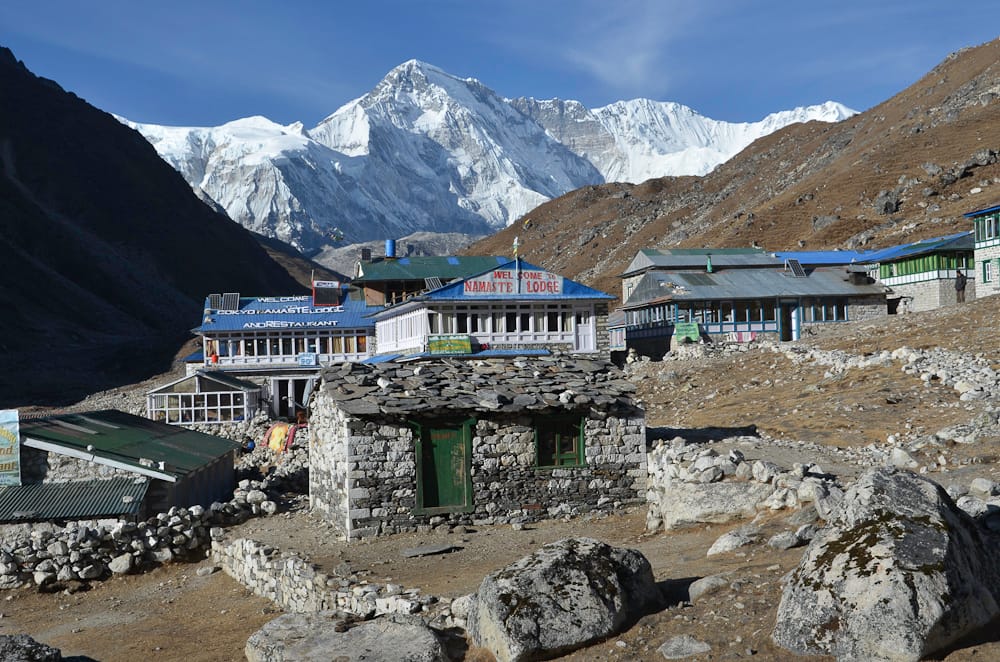
Gokyo is a lakeside village on the shore of Dudh Pokhari, the third Gokyo lake, beside the Ngozumpa Glacier. It is the main base for climbing Gokyo Ri and exploring the upper lakes. Gokyo is the hub of the western Khumbu, linked to Everest Base Camp by the Cho La and to Thame by the Renjo La.
Read place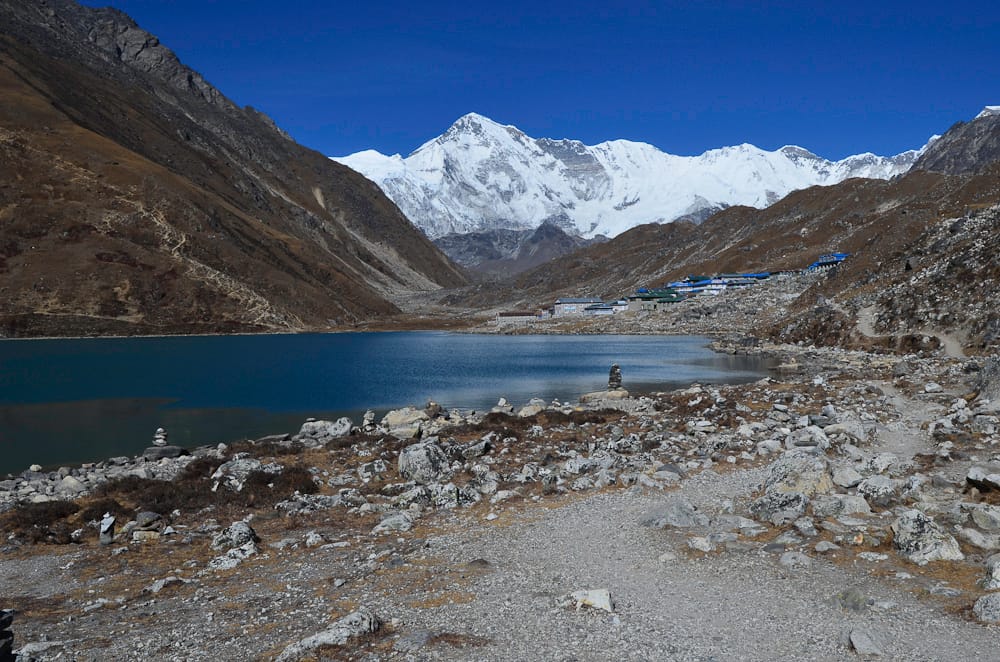
Mountain peak
Cho Oyu
चो ओयु
8,188 m
Cho Oyu, the “turquoise goddess”, is the sixth-highest mountain in the world at 8,188 m, on the Nepal–Tibet border west of Everest. It towers over the head of the Gokyo valley. Trekkers see it at its best from Gokyo, Gokyo Ri and the Ngozumpa Glacier.
Read place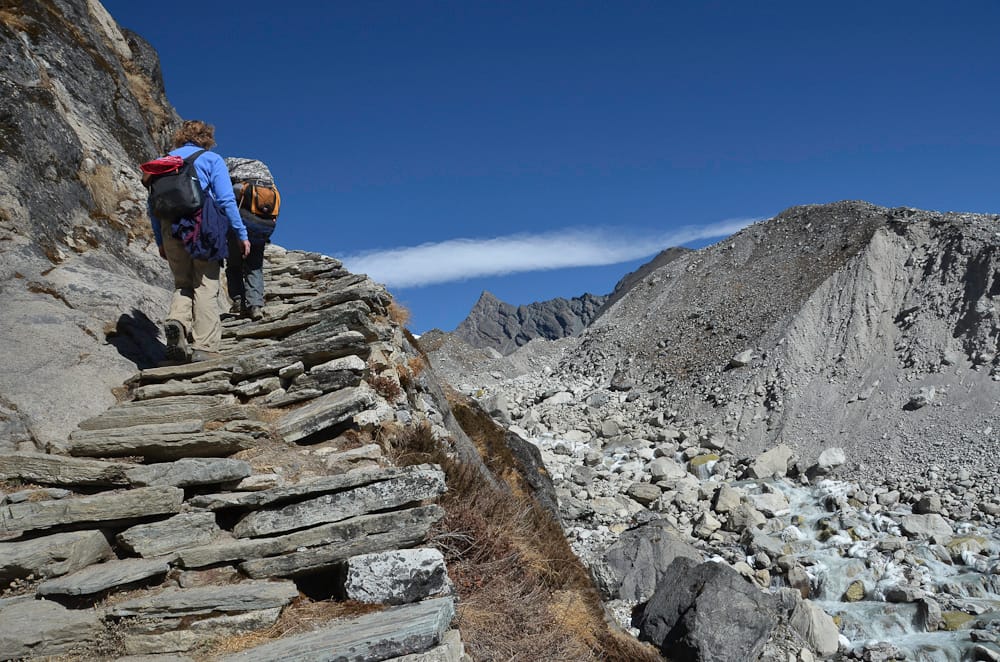
Lake
Gokyo Lakes
गोक्यो ताल
4,700 m
The Gokyo Lakes are a chain of six turquoise glacial lakes in the upper Dudh Koshi valley, among the highest freshwater lake systems in the world. They were designated a Ramsar wetland in 2007 and are sacred to both Hindus and Buddhists.
Read place