

Village
Gokyo
गोक्यो
Gokyo is a lakeside village on the shore of Dudh Pokhari, the third Gokyo lake, beside the Ngozumpa Glacier. It is the main base for climbing Gokyo Ri and exploring the upper lakes. Gokyo is the hub of the western Khumbu, linked to Everest Base Camp by the Cho La and to Thame by the Renjo La.
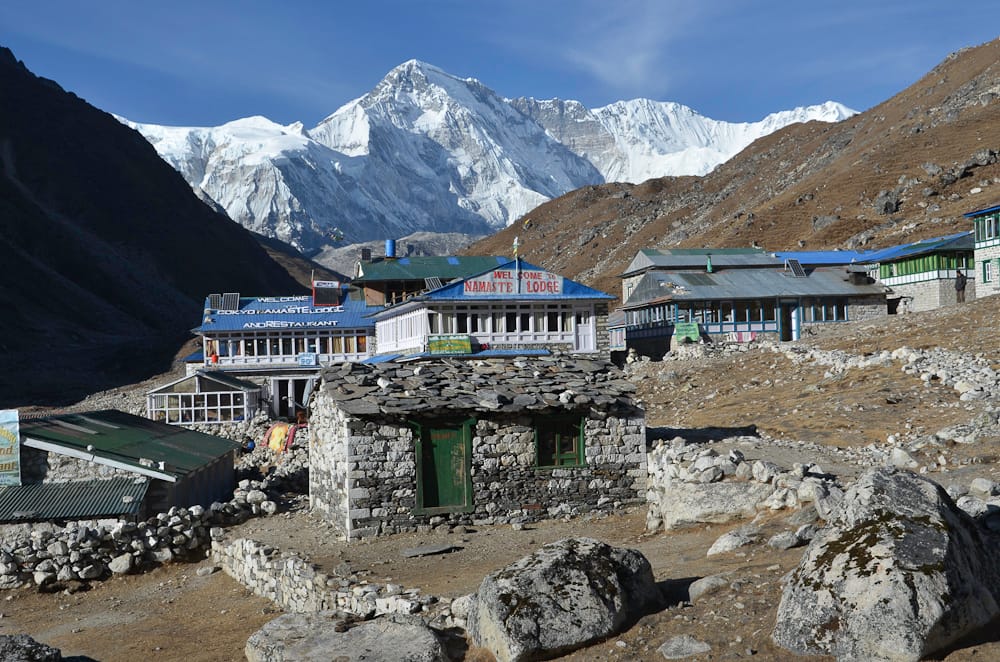
- Elevation: ~4,790 m / 15,715 ft
- Type: Village
- Region: Everest Region
- District: Solukhumbu
- Treks: Gokyo Lakes Trek, Gokyo Lakes Renjo La Pass Trek
About Gokyo
Gokyo is a beautiful high-altitude Sherpa settlement in the western part of the Khumbu region of Nepal. Situated beside the turquoise Third Gokyo Lake, also known as Dudh Pokhari, the village lies at approximately 4,750 metres (15,584 feet) above sea level within Sagarmatha National Park. It is one of the main destinations of the famous Gokyo Lakes Trek and is surrounded by some of the most spectacular glacial landscapes in the Everest region.
Gokyo is renowned for its sacred alpine lakes, the enormous Ngozumpa Glacier and panoramic Himalayan views. From the village, trekkers can see Cho Oyu and surrounding mountain ranges, while a hike to Gokyo Ri provides a magnificent panorama of Everest, Lhotse, Makalu and other Himalayan giants. The peaceful settlement, traditional tea houses and dramatic natural scenery make Gokyo a memorable destination for trekkers seeking an alternative to the classic Everest Base Camp route.
Location and Altitude
- Location: Gokyo Valley, Khumbu region, Solukhumbu District, Nepal
- Altitude: Approximately 4,750 m (15,584 ft)
- Province: Koshi Province, northeastern Nepal
- National Park: Sagarmatha National Park
- Nearby settlements: Machhermo, Dole and Dragnag (Thangnak)
- Main lake: Third Gokyo Lake, also known as Dudh Pokhari
- Famous viewpoint: Gokyo Ri, approximately 5,357 m
- Major natural landmark: Ngozumpa Glacier
Gokyo's reported elevation varies slightly between sources, generally around 4,750–4,790 metres.
Gokyo lies northwest of Namche Bazaar in the upper Dudh Koshi Valley. The usual trekking approach passes through Dole and Machhermo before reaching the lakeside village.
Treks That Pass Through Gokyo
Gokyo is a major destination and connecting point for several trekking routes in the Everest region.
- Gokyo Lakes Trek: The classic route travels from Lukla through Phakding, Namche Bazaar, Dole and Machhermo before reaching Gokyo. Trekkers explore the lakes and climb Gokyo Ri before returning through the same valley.
- Everest Three Passes Trek: This challenging circuit includes Gokyo and may connect the valley with the Everest Base Camp route through Renjo La, Cho La and Kongma La.
- Gokyo to Everest Base Camp via Cho La Pass: Trekkers can cross Cho La Pass from the Gokyo Valley towards Dzongla and Lobuche, continuing to Everest Base Camp.
- Gokyo to Thame via Renjo La Pass: This scenic high-altitude route crosses Renjo La and descends towards Lungden and Thame, offering wide views of the surrounding mountains.
The walk from Machhermo to Gokyo generally takes around 3–5 hours, depending on walking speed, weather and trail conditions.
Tea Houses and Accommodation in Gokyo
Gokyo has several tea houses and mountain lodges, most of which are concentrated around the shore of the Third Gokyo Lake. These establishments provide essential accommodation and food for trekkers exploring the lakes and climbing Gokyo Ri.
- Accommodation: Basic private and shared rooms with beds, mattresses and blankets. Rooms are generally simple, and a warm sleeping bag is recommended.
- Food and Meals: Common meals include dal bhat, fried rice, noodles, soups, potatoes, eggs, porridge and hot drinks.
- Dining Areas: Most lodges have communal dining rooms where trekkers can eat, rest and warm themselves around a stove.
- Facilities: Some tea houses offer hot showers, electricity, charging facilities and Wi-Fi, often for additional fees. Availability can vary.
- Trekking Services: Lodges can help visitors arrange meals, basic supplies and local information about lake excursions and Gokyo Ri.
- Seasonal Operations: Most accommodation is busiest in spring and autumn. Some lodges may close during winter or periods of poor weather.
Because Gokyo is remote and supplies must be transported into the valley, prices are generally higher than in lower villages such as Namche Bazaar. Trekkers should carry sufficient cash and essential personal supplies.
Nature and Landscape of Gokyo
Gokyo is surrounded by an extraordinary high-altitude landscape featuring turquoise glacial lakes, rocky mountain slopes, glaciers, alpine meadows and snow-covered Himalayan peaks. The area is part of the Gokyo wetland system, which is recognised for its ecological and cultural importance.
- Gokyo Lakes: A series of beautiful high-altitude freshwater lakes with striking blue and turquoise colours. The lakes are among the most recognisable natural attractions in the Everest region.
- Ngozumpa Glacier: Nepal's longest glacier stretches beside the Gokyo Valley, creating a dramatic landscape of ice, moraine and glacial formations.
- Alpine Vegetation: Hardy grasses, mosses, small flowering plants and other high-altitude vegetation grow in the valley, where the growing season is short.
- Mountain Environment: The surrounding peaks include Cho Oyu and the Himalayan ranges extending towards Everest, Lhotse and Makalu.
- Wetland Wildlife: The lakes provide important habitat for migratory and high-altitude birds, including ruddy shelducks, also known as Brahminy ducks.
- Mountain Wildlife: The wider Sagarmatha National Park supports species such as musk deer, Himalayan tahr and snow leopard, although sightings are uncommon.
The Gokyo Lakes and associated wetlands were designated a Ramsar site in 2007, recognising their international importance as a high-altitude wetland ecosystem.
Best Time to Visit Gokyo
The best seasons to visit Gokyo are spring (March to May) and autumn (September to November). These periods generally provide better trekking conditions, clearer mountain views and more reliable access to the high-altitude trails.
- Spring (March–May): Pleasant daytime conditions, longer daylight hours and generally good opportunities to enjoy the lakes and surrounding mountains.
- Autumn (September–November): One of the most popular trekking seasons, with clear skies, excellent visibility and relatively stable weather.
- Winter (December–February): Extremely cold temperatures, snowfall and possible trail difficulties. Some tea houses may close.
- Monsoon (June–August): Cloudy conditions, rain and slippery trails can affect trekking and mountain visibility.
For the best panoramic views from Gokyo Ri, early mornings during spring and autumn are particularly rewarding.
Main Attractions in Gokyo
Gokyo offers a combination of natural attractions, mountain viewpoints, glacial landscapes and cultural experiences.
- Third Gokyo Lake (Dudh Pokhari): The beautiful lake beside Gokyo village is one of the area's most recognisable landmarks. Its turquoise water and surrounding mountains create an exceptional Himalayan landscape.
- Gokyo Ri: Rising to approximately 5,357 metres, this famous viewpoint offers panoramic views of Mount Everest, Lhotse, Makalu, Cho Oyu and the Gokyo Lakes. The climb is steep and demanding because of the altitude.
- First and Second Gokyo Lakes: These lakes lie along the trekking route towards Gokyo and provide beautiful views of the surrounding alpine landscape.
- Fourth and Fifth Gokyo Lakes: Located farther north in the valley, these lakes offer quieter surroundings and impressive views of the Ngozumpa Glacier and nearby mountains.
- Ngozumpa Glacier: Nepal's longest glacier is a spectacular natural attraction, with extensive ice formations, rocky moraine and glacial terrain.
- Scenic Mountain Views: Gokyo provides beautiful views of Cho Oyu and the surrounding Himalayan ranges, while Gokyo Ri offers a particularly impressive panorama of several of the world's highest mountains.
- Traditional Tea Houses: The village's mountain lodges provide opportunities to experience local hospitality and traditional trekking life.
Gokyo Lakes and Their Religious Significance
The Gokyo Lakes are sacred to both Hindu and Buddhist communities. Local people and pilgrims regard the lakes as spiritually important, and religious visitors traditionally come to the area for prayer and ritual bathing.
The lake system consists of several glacial lakes, with six commonly recognised as the main Gokyo Lakes. The Third Lake, Dudh Pokhari, is particularly famous because Gokyo village sits beside its shore.
The lakes are also environmentally important. Their high-altitude wetland ecosystem supports migratory birds and other wildlife. The Gokyo and associated lakes were officially recognised as a Ramsar wetland site in September 2007.
Gokyo Ri Viewpoint
Gokyo Ri is one of the most famous viewpoints in Nepal's Everest region. Standing at approximately 5,357 metres, it rises above Gokyo village and offers an extraordinary panorama of the surrounding Himalayan mountains and glacial lakes.
The climb usually begins early in the morning to take advantage of clearer weather and sunrise views. Although the trail does not normally require technical climbing equipment, the steep ascent, rocky terrain and high altitude make it physically demanding.
From the summit, trekkers can enjoy views of:
- Mount Everest (8,848.86 m)
- Mount Lhotse (8,516 m)
- Mount Makalu (8,485 m)
- Mount Cho Oyu (8,188 m)
- Ngozumpa Glacier
- The turquoise Gokyo Lakes
Gokyo Ri is considered one of the finest viewpoints in the Everest region for seeing several major Himalayan peaks together.
Where is Gokyo?
The exact point on the Himalaya trail, with nearby places for context.
On this map
Nearby places
Lake
Gokyo Lakes
गोक्यो ताल
4,700 m
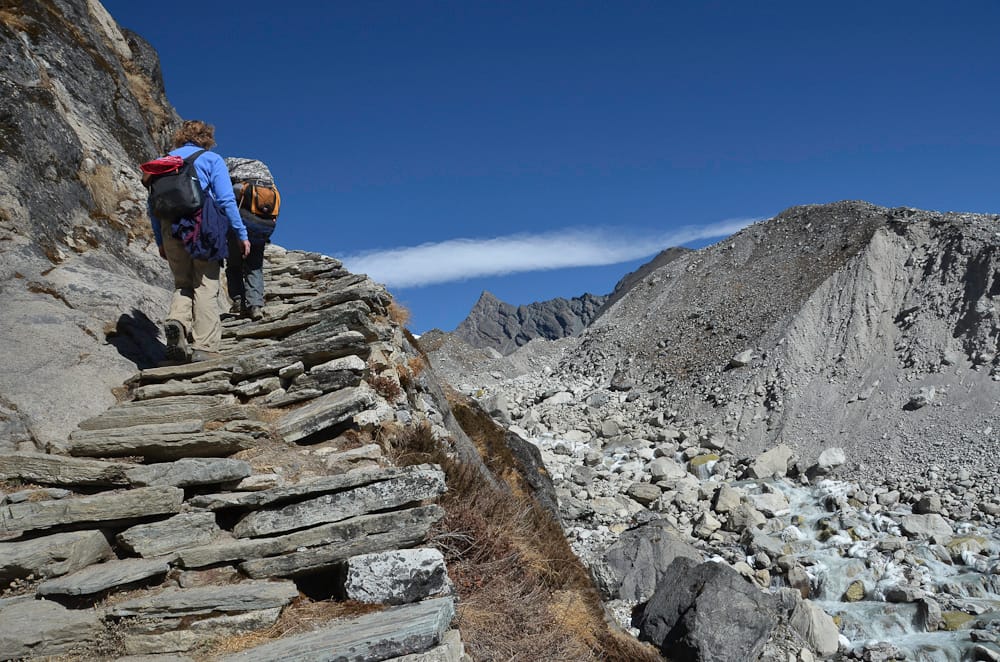
The Gokyo Lakes are a chain of six turquoise glacial lakes in the upper Dudh Koshi valley, among the highest freshwater lake systems in the world. They were designated a Ramsar wetland in 2007 and are sacred to both Hindus and Buddhists.
Read place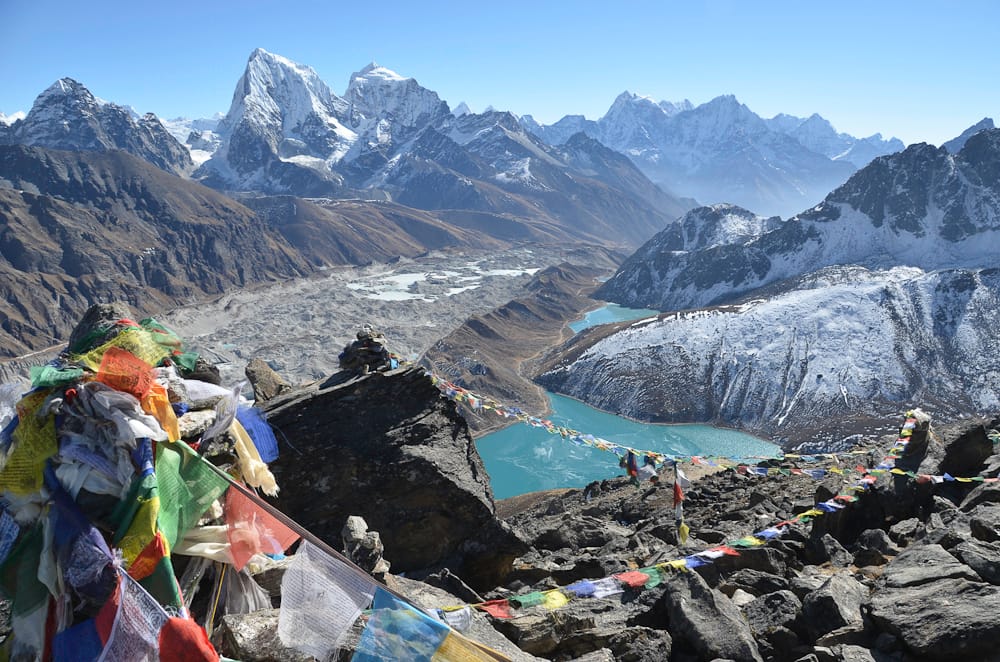
Viewpoint
Gokyo Ri
गोक्यो री
5,357 m
Gokyo Ri is the summit above Gokyo village, reached in a steep two- to three-hour climb. Its panorama takes in four 8,000 m peaks: Everest, Lhotse, Makalu and Cho Oyu. Below, the Gokyo lakes and the vast Ngozumpa Glacier make it one of the finest viewpoints in Nepal.
Read place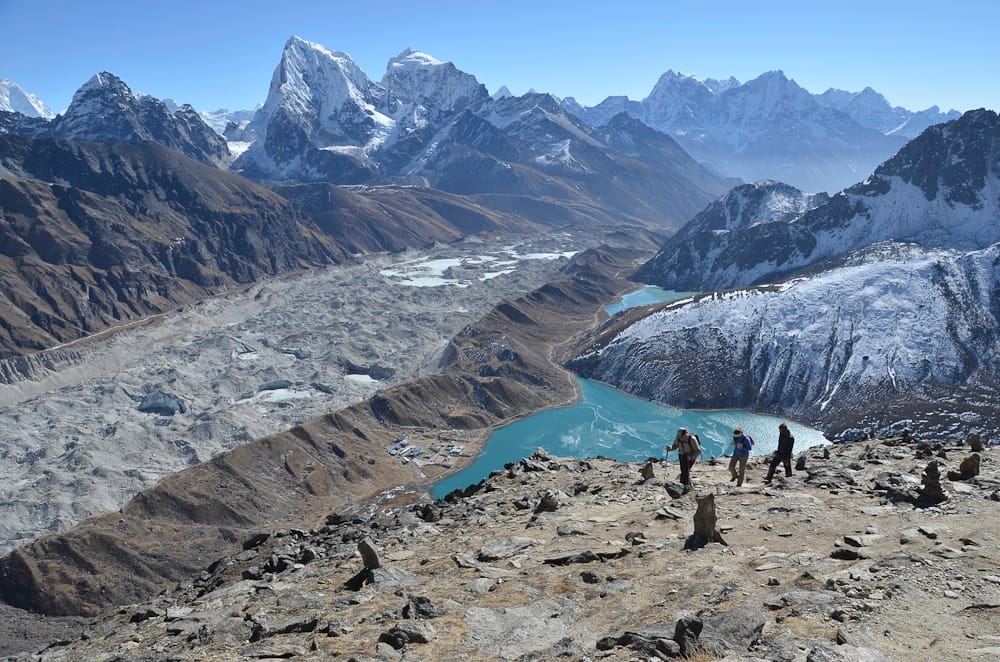
Glacier
Ngozumpa Glacier
ङोजुम्पा हिमनदी
4,600 m
The Ngozumpa Glacier is the longest glacier in Nepal, flowing about 36 km south from Cho Oyu. Its rubble-covered surface lies right next to Gokyo village. Trekkers crossing between Gokyo and the Cho La walk across the glacier on a shifting rocky trail.
Read place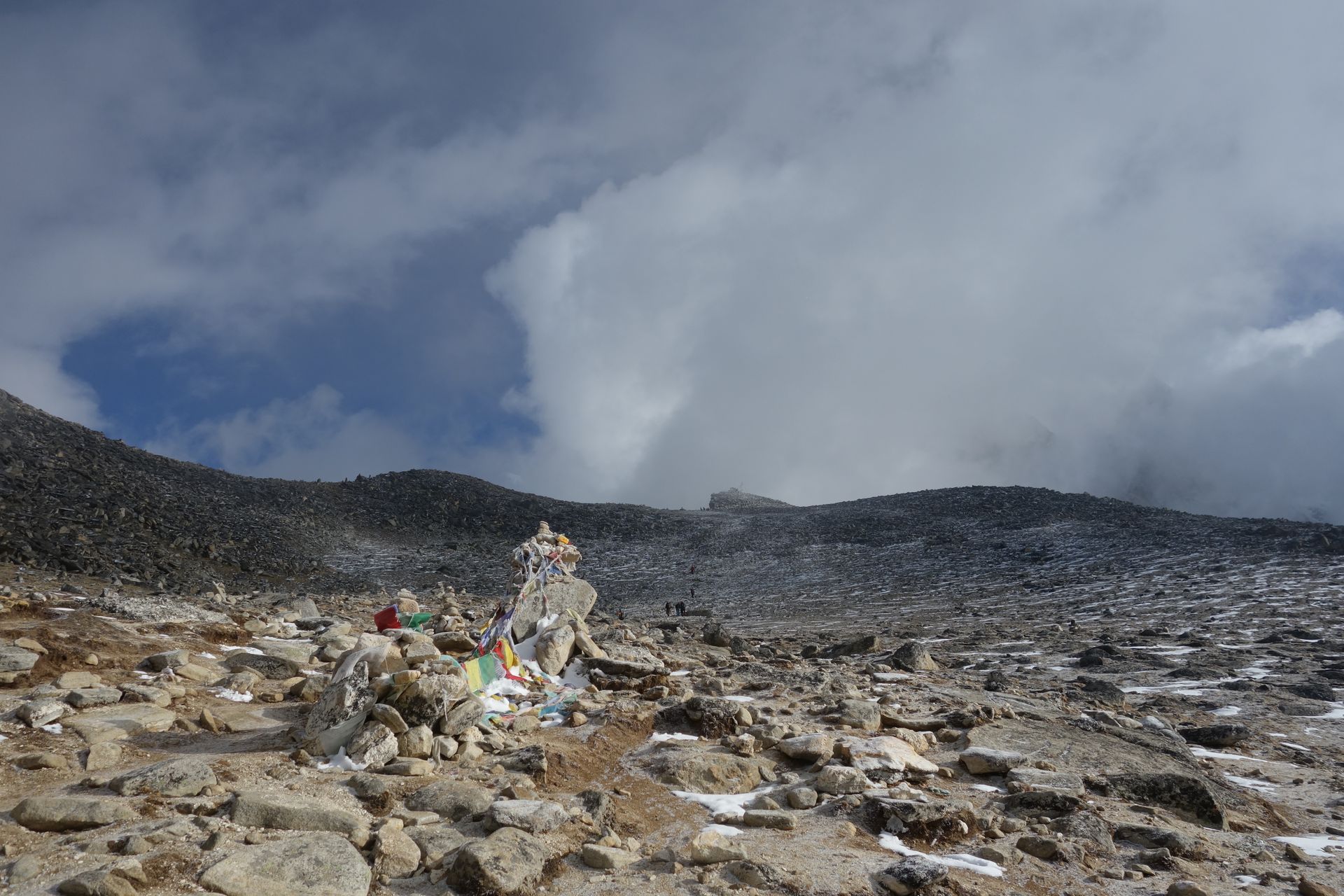
Pass
Renjo La Pass
रेन्जो ला
5,360 m
Renjo La is the westernmost of the three passes, connecting Gokyo with Lungden and the Bhote Koshi valley. Many consider its summit view the finest in the Khumbu, looking over Gokyo Lake and the Ngozumpa Glacier to Everest and Makalu.
Read place