

Pass
Renjo La Pass
रेन्जो ला
Renjo La is the westernmost of the three passes, connecting Gokyo with Lungden and the Bhote Koshi valley. Many consider its summit view the finest in the Khumbu, looking over Gokyo Lake and the Ngozumpa Glacier to Everest and Makalu.
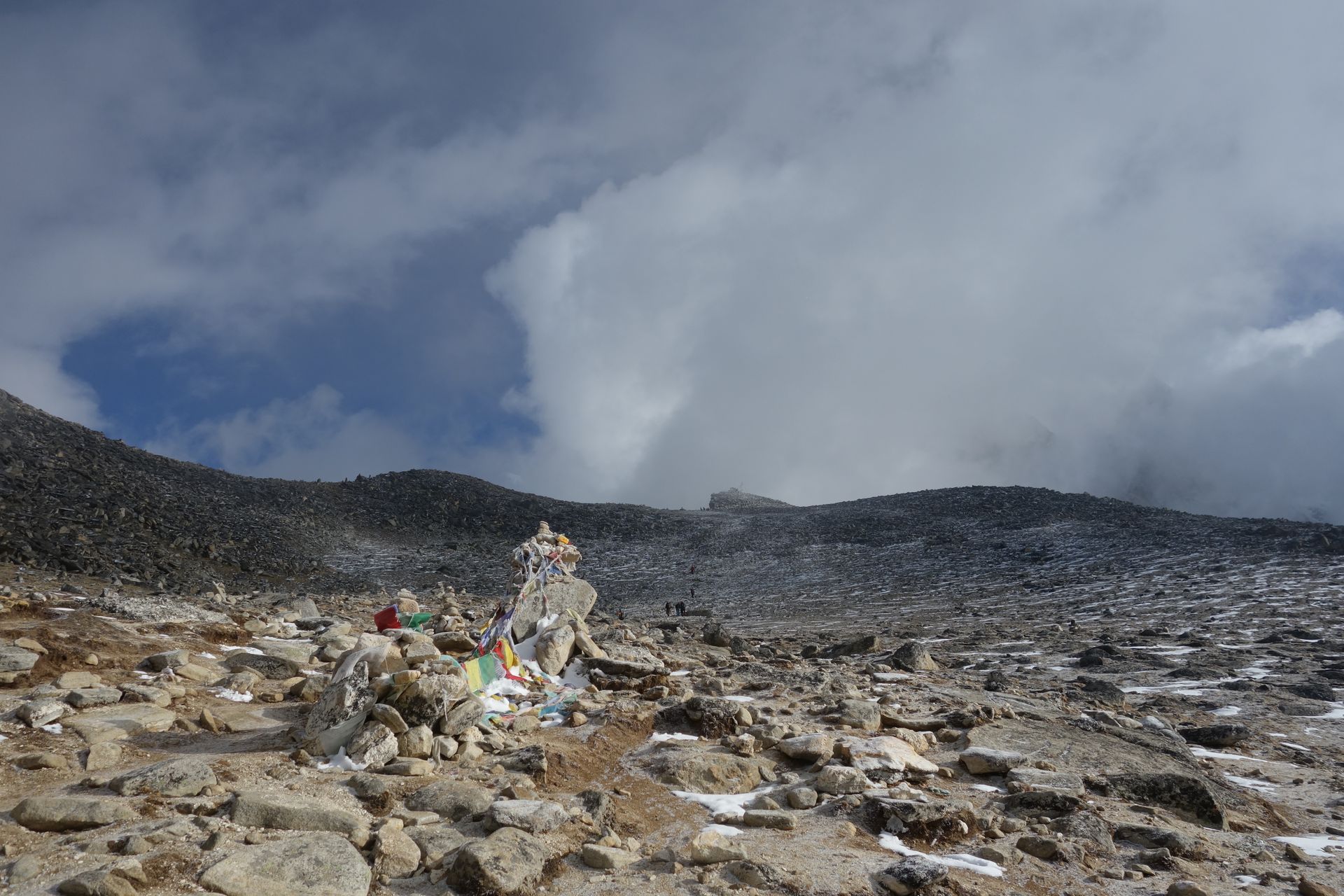
- Elevation: ~5,360 m / 17,585 ft
- Type: Mountain pass
- Region: Everest Region
- District: Solukhumbu
- View over Gokyo Lakes to Everest
- Treks: Everest Three Passes Trek, Gokyo Lakes Renjo La Pass Trek
About Renjo La Pass
Renjo La Pass is a spectacular high-altitude mountain pass in Nepal's Everest region, situated at approximately 5,360 metres (17,585 feet) above sea level. It is the westernmost of the three major passes on the famous Everest Three Passes Trek, connecting the beautiful Gokyo Valley with the remote Bhote Koshi Valley and the traditional Sherpa settlements around Lungden and Thame.
Renowned for its breathtaking Himalayan panorama, Renjo La offers one of the finest viewpoints in the Khumbu region. From the prayer-flag-decorated summit, trekkers can enjoy magnificent views of Mount Everest, Lhotse, Makalu, Cho Oyu, the turquoise Gokyo Lakes and the enormous Ngozumpa Glacier. Compared with Kongma La and Cho La, Renjo La is generally considered less technical in normal conditions, but its high altitude and long trekking day still make it a demanding mountain crossing.
Location and Altitude
Renjo La Pass is located in the Khumbu region of Solukhumbu District, Koshi Province, Nepal, within Sagarmatha National Park. It lies on the mountain ridge between the Gokyo Valley and the Bhote Koshi Valley.
- Location: Khumbu region, Solukhumbu, Nepal
- Altitude: Approximately 5,360 metres (17,585 feet)
- Mountain range: Mahalangur Himal
- Eastern side: Gokyo Valley
- Western side: Bhote Koshi Valley
- Nearest settlements: Gokyo and Lungden
- Nearby Sherpa village: Thame
- National park: Sagarmatha National Park
- Famous for: Everest Three Passes Trek and panoramic Himalayan views
Treks That Pass Through Renjo La Pass
Renjo La is an important mountain crossing on trekking routes connecting the Gokyo Lakes with the traditional Sherpa settlements of the western Khumbu.
- Everest Three Passes Trek: Renjo La is the westernmost of the three major passes, alongside Kongma La and Cho La. It is commonly crossed between Gokyo and Lungden as part of the full trekking circuit.
- Gokyo Lakes Trek via Renjo La: Trekkers can explore the beautiful Gokyo Lakes and Gokyo Ri before crossing Renjo La and descending towards Lungden and Thame.
- Gokyo to Thame Trek: This route connects the Gokyo Valley with the historic Sherpa village of Thame through a high mountain crossing and the quiet Bhote Koshi Valley.
- Everest High Passes Circuit: Experienced trekkers combine Renjo La with Cho La and Kongma La to complete the challenging high-altitude circuit through the Everest region.
The crossing between Gokyo and Lungden generally takes around 6–8 hours, depending on direction, fitness, weather and trail conditions.
Tea Houses and Accommodation Near Renjo La Pass
There are no permanent tea houses, lodges or accommodation facilities at Renjo La Pass itself. Trekkers normally stay in Gokyo before crossing and continue to Lungden or nearby settlements after reaching the other side.
Gokyo: The village beside the famous Gokyo Lakes has several mountain lodges and tea houses. Visitors can find basic rooms, dining areas, shared bathrooms and meals such as dal bhat, noodles, soups, rice and potatoes. Hot tea and coffee are also commonly available.
Lungden: This quiet settlement in the Bhote Koshi Valley has basic mountain accommodation for trekkers descending from Renjo La. Lodges provide simple rooms and meals, although facilities are more limited than in larger trekking villages.
Marlung and Thame: Further down the valley, these traditional Sherpa settlements provide additional accommodation options. Thame is particularly interesting for visitors wanting to experience Sherpa culture and local mountain life.
Trekkers should carry enough water, snacks, packed food and warm clothing for the entire crossing because there are no reliable food or accommodation services along the pass.
Nature and Landscape of Renjo La Pass
Renjo La Pass is surrounded by a magnificent Himalayan environment featuring glacial lakes, rocky mountain ridges, alpine valleys and snow-covered peaks. Its elevated position offers an exceptional view across the Gokyo Valley and the distant mountains of the Everest region.
One of the most remarkable sights is the enormous Ngozumpa Glacier, which stretches through the Gokyo Valley beneath surrounding Himalayan peaks. The turquoise waters of the Gokyo Lakes create a striking contrast with the glacier's grey moraines and the white mountain summits.
The landscape around the pass includes rocky slopes, loose scree, stone steps and seasonal snow. The western descent passes near beautiful high-altitude lakes, including Angladumba Tsho and Relama Tsho, before reaching the open valley leading towards Lungden.
The area has very limited vegetation because of its extreme elevation. Lower sections of the Bhote Koshi Valley have more alpine vegetation and seasonal grazing areas. Wildlife in the wider Sagarmatha National Park includes Himalayan tahr, musk deer and the elusive snow leopard, although sightings near the pass are rare.
Best Time to Visit Renjo La Pass
The best seasons to cross Renjo La Pass are spring (March to May) and autumn (September to November). These seasons generally offer better visibility, more stable weather and favourable trekking conditions.
- Spring (March–May): A popular trekking season with longer daylight hours and gradually warmer temperatures. Snow may remain on the upper trail, especially in early spring.
- Autumn (September–November): Often the best period for clear skies, excellent mountain views and relatively stable weather.
- Winter (December–February): Very cold temperatures and heavy snowfall can make the pass difficult or inaccessible.
- Monsoon (June–August): Rain, cloud and poor visibility can affect the trekking experience and trail conditions.
Starting early in the morning is recommended to allow enough time for the climb and descent. Weather can change quickly at this altitude, even during the main trekking seasons.
Main Attractions of Renjo La Pass
Panoramic Mount Everest Views: The summit offers a remarkable view of Mount Everest alongside Lhotse, Makalu and Cho Oyu. It is considered one of the finest mountain viewpoints in the Khumbu region.
Gokyo Lakes: The turquoise glacial lakes below the pass are among the most beautiful natural attractions in the Everest region. Their striking colours create an unforgettable Himalayan landscape.
Ngozumpa Glacier: This enormous glacier dominates the Gokyo Valley and provides spectacular views of glacial ice, rocky moraines and surrounding mountains.
Prayer Flags and Summit Viewpoint: Colourful Buddhist prayer flags and stone cairns mark the high mountain saddle, creating a memorable setting for photography and mountain views.
Angladumba Tsho and Relama Tsho: These high-altitude lakes on the descent towards Lungden add to the natural beauty of the Renjo La route.
Lungden Village: This quiet settlement offers a peaceful mountain atmosphere and a glimpse of traditional life in the remote Bhote Koshi Valley.
Thame Village: A historic Sherpa settlement known for its cultural heritage, traditional houses and Buddhist monastery.
Everest Three Passes Trek: Crossing Renjo La is a major highlight of this challenging trekking circuit, offering an opportunity to explore the quieter western part of the Khumbu region.
Sherpa Culture and Local Life
The western Khumbu region around Renjo La is home to traditional Sherpa settlements, including Lungden, Marlung and Thame. These villages reflect the region's long-standing Buddhist culture, mountain lifestyle and connection with yak herding and Himalayan trade routes.
Thame is particularly significant for its traditional Sherpa heritage and historic monastery. The surrounding settlements offer a quieter experience compared with busy trekking centres such as Namche Bazaar and the main Everest Base Camp route.
Visitors can observe traditional stone houses, prayer flags, mani walls, chortens and Buddhist monasteries along the valley trails. Respecting local customs and walking clockwise around religious monuments are important ways to show appreciation for Sherpa culture.
Trekking Difficulty and Safety
Renjo La is generally considered the least technical of the three Everest high passes, but it remains a strenuous high-altitude crossing. The trail involves a long ascent, steep stone steps, rocky terrain and a demanding descent towards Lungden.
Unlike Cho La, the normal Renjo La route does not require crossing a glacier. However, snow and ice can cover sections of the trail, particularly during winter and early spring.
Important safety recommendations include:
- Start early in the morning to allow sufficient time for the crossing.
- Hire an experienced local guide familiar with the route and mountain conditions.
- Allow enough time for acclimatization before attempting elevations above 5,000 metres.
- Carry sufficient drinking water, snacks and a packed lunch.
- Wear sturdy trekking boots, warm layers and waterproof clothing.
- Use trekking poles for balance on steep and rocky sections.
- Carry microspikes when icy conditions are expected.
- Check weather and trail conditions before leaving Gokyo or Lungden.
- Avoid crossing during heavy snowfall, strong winds or poor visibility.
Altitude sickness is a serious concern at approximately 5,360 metres. Headaches, nausea, dizziness and unusual tiredness may indicate altitude illness. If symptoms worsen, descending to a lower elevation is essential.
Where is Renjo La Pass?
The exact point on the Himalaya trail, with nearby places for context.
On this map
Nearby places
Village
Gokyo
गोक्यो
4,790 m
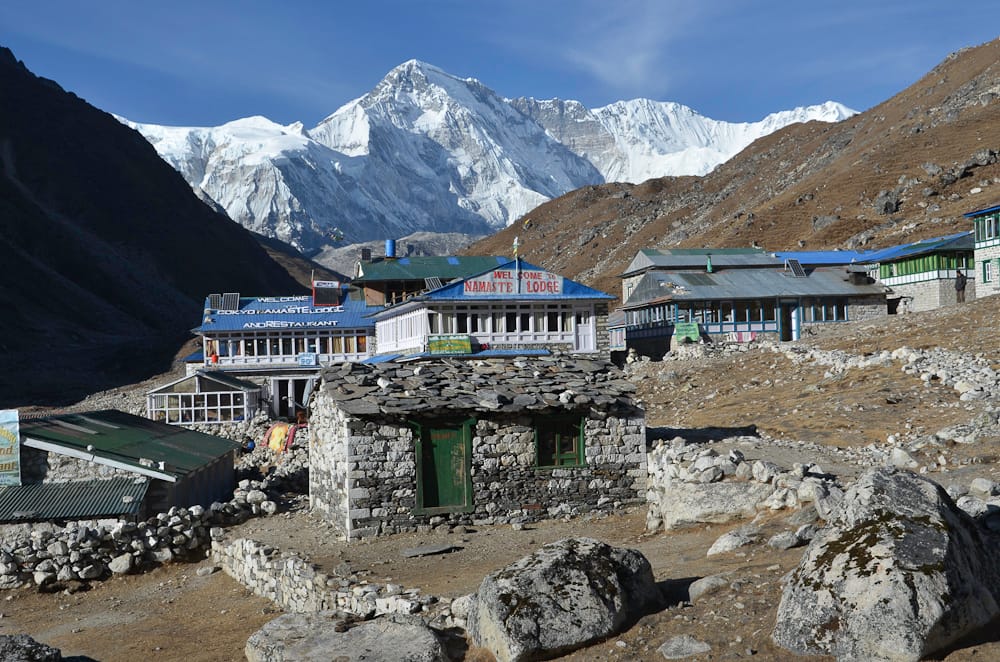
Gokyo is a lakeside village on the shore of Dudh Pokhari, the third Gokyo lake, beside the Ngozumpa Glacier. It is the main base for climbing Gokyo Ri and exploring the upper lakes. Gokyo is the hub of the western Khumbu, linked to Everest Base Camp by the Cho La and to Thame by the Renjo La.
Read place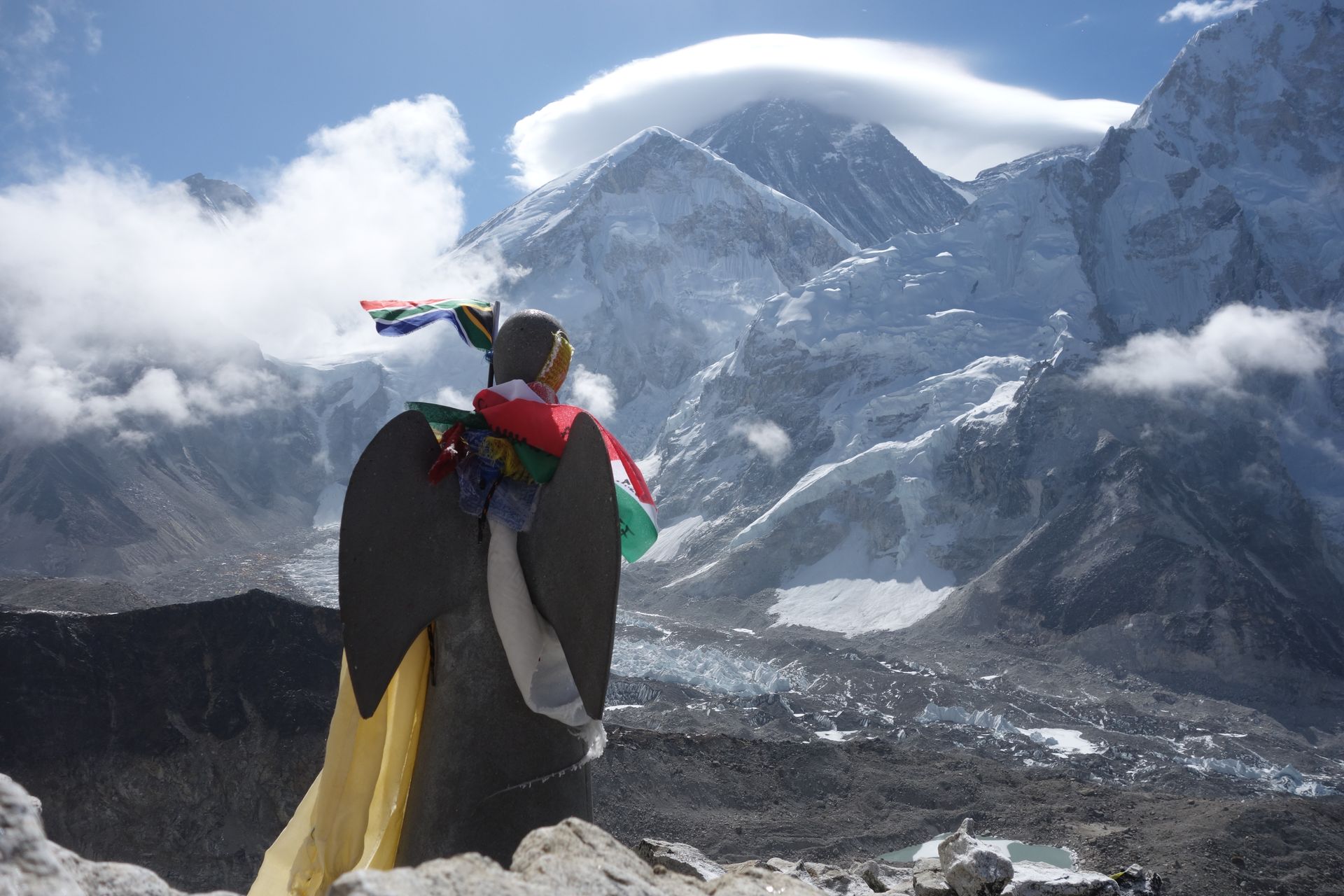
Village
Lungden
लुङदेन
4,380 m
Lungden is a small group of lodges in the upper Bhote Koshi valley and the overnight stop before or after the Renjo La. The valley above leads towards the Nangpa La, an old trade pass to Tibet. It is remote and quiet, with only a few lodges.
Read place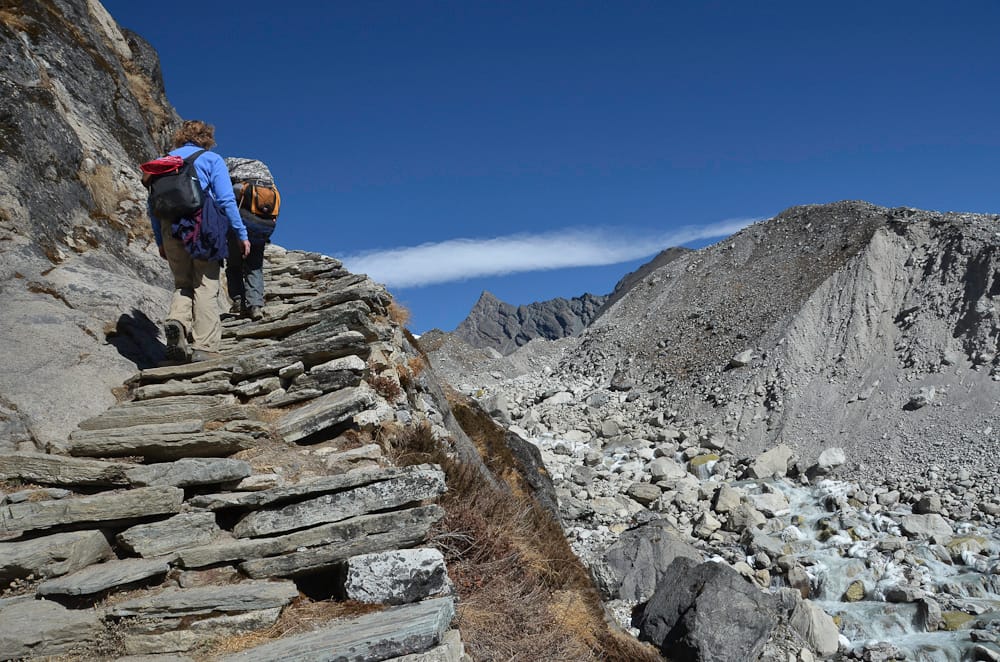
Lake
Gokyo Lakes
गोक्यो ताल
4,700 m
The Gokyo Lakes are a chain of six turquoise glacial lakes in the upper Dudh Koshi valley, among the highest freshwater lake systems in the world. They were designated a Ramsar wetland in 2007 and are sacred to both Hindus and Buddhists.
Read place