

Base camp
Everest Base Camp
सगरमाथा आधार शिविर
Everest Base Camp on the Khumbu Glacier is the goal of Nepal’s most famous trek. In spring it becomes a tent village of climbing expeditions preparing to tackle the Khumbu Icefall on the South Col route.
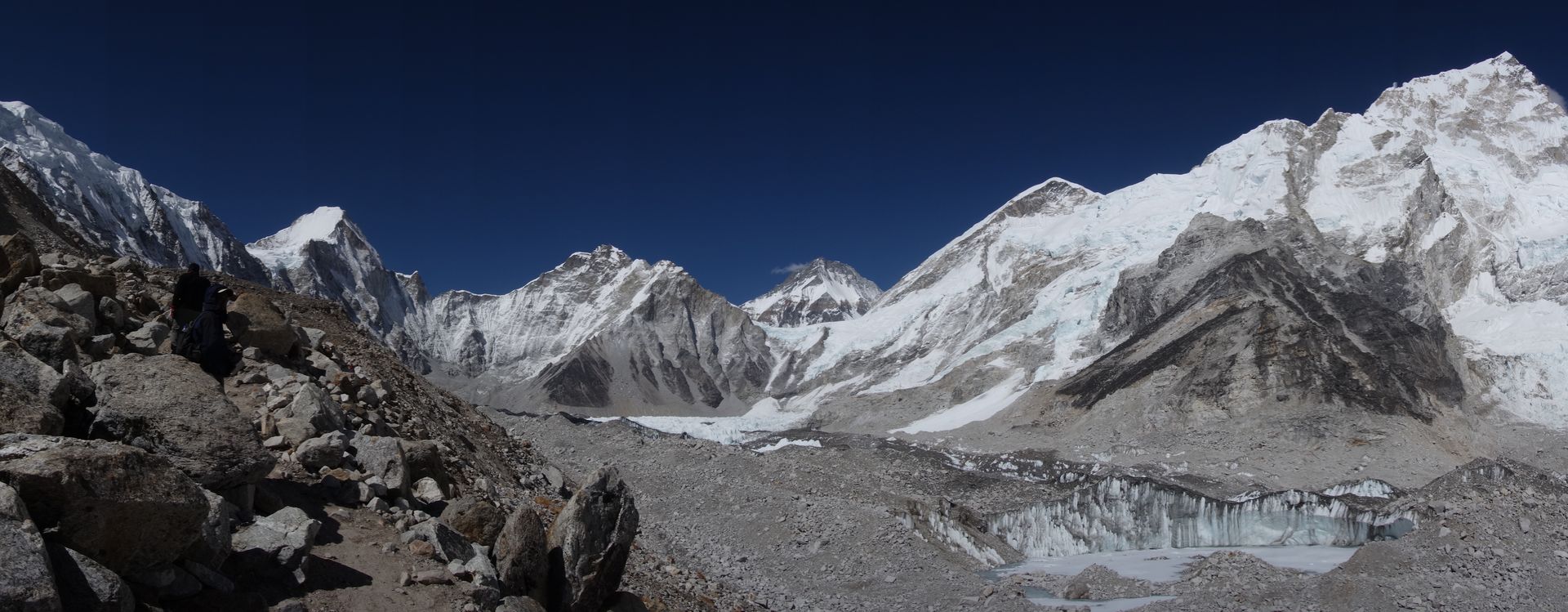
- Elevation: ~5,364 m / 17,598 ft
- Type: Base camp
- Region: Everest Region
- District: Solukhumbu
- Khumbu Icefall views
- Expedition season: April–May
- Treks: Everest Base Camp Trek, Everest Three Passes Trek, EBC Gokyo Lakes Trek
About Everest Base Camp
Everest Base Camp (EBC) is one of the most famous trekking destinations in the world, located on the southern side of Mount Everest in the Khumbu region of Nepal. Situated at approximately 5,364 metres above sea level, it lies on the Khumbu Glacier at the foot of the mighty Khumbu Icefall, inside Sagarmatha National Park.
Everest Base Camp is the traditional starting point for mountaineering expeditions attempting to climb Mount Everest from Nepal. For trekkers, reaching the base camp is an unforgettable Himalayan adventure, offering spectacular views of glaciers, ice formations, towering mountain walls and the surrounding alpine landscape. The journey also provides an opportunity to experience Sherpa culture, Buddhist monasteries and traditional mountain villages along the way.
Location and Altitude
Everest Base Camp is located in the upper Khumbu Valley of Solukhumbu District, Koshi Province, Nepal. It lies on the Khumbu Glacier, beyond Gorak Shep, and is reached by trekking through the high-altitude settlements of the Everest region.
- Location: Khumbu, Solukhumbu District, Koshi Province, Nepal
- Altitude: Approximately 5,364 metres (17,598 feet)
- Region: Everest / Khumbu
- Coordinates: Approximately 28.001° N, 86.853° E
- Nearest settlement: Gorak Shep
- Nearby attractions: Khumbu Icefall, Kala Patthar and Khumbu Glacier
- National Park: Sagarmatha National Park
- Main significance: Base camp for expeditions climbing Mount Everest from Nepal
Treks That Pass Through Everest Base Camp
- Everest Base Camp Trek: The classic trekking adventure from Lukla through Phakding, Namche Bazaar, Tengboche, Dingboche, Lobuche and Gorak Shep before reaching Everest Base Camp.
- Everest Three Passes Trek: A challenging circuit through Kongma La, Cho La and Renjo La, with Everest Base Camp included in many itineraries.
- Gokyo Lakes and Everest Base Camp Trek: Combines the beautiful turquoise Gokyo Lakes, Gokyo Ri viewpoint and Everest Base Camp through the high mountain trails.
- Everest Base Camp and Kala Patthar Trek: Combines a visit to base camp with an early-morning hike to Kala Patthar for panoramic views of Mount Everest.
- Lobuche East Peak Climbing: Mountaineering itineraries in the area may combine Lobuche East climbing with an Everest Base Camp trekking experience.
The classic trek generally takes around 12–14 days from Lukla and back, depending on acclimatization days, weather and the chosen itinerary.
Tea Houses and Accommodation at Everest Base Camp
Everest Base Camp itself does not have commercial tea houses, hotels or permanent guesthouses because it is located on an active glacier. Ordinary trekkers usually stay overnight in Gorak Shep, the last settlement with regular trekking accommodation before base camp.
- Gorak Shep Tea Houses: Basic mountain lodges provide accommodation, meals and warm dining areas for trekkers visiting Everest Base Camp.
- Food and Meals: Trekkers can generally find dal bhat, noodle soup, rice, potatoes, pasta, eggs, tea, coffee and simple snacks in Gorak Shep.
- Expedition Tents: During the spring climbing season, mountaineering expeditions establish temporary tent camps on the glacier.
- Basic Facilities: Accommodation in Gorak Shep is simple, with limited heating, shared facilities and potentially unreliable internet and electricity.
- Camping: Expedition camping at base camp is arranged for climbing teams and is not ordinary tourist accommodation.
Visitors should plan to walk from Gorak Shep to Everest Base Camp and return to Gorak Shep for the night.
Nature and Landscape of Everest Base Camp
Everest Base Camp is surrounded by an extraordinary high-altitude environment shaped by glaciers, icefalls, rocky moraines and some of the world's highest mountains. The landscape is largely barren, with little vegetation due to the extreme altitude and freezing conditions.
- Khumbu Glacier: The base camp is situated on the Khumbu Glacier, an enormous river of ice flowing down from the Everest region.
- Khumbu Icefall: One of the most dramatic natural features nearby, this constantly changing mass of ice contains towering ice blocks, deep crevasses and unstable seracs.
- Himalayan Mountains: The surrounding mountain scenery includes Nuptse, Pumori, Lingtren, Khumbutse and other impressive peaks.
- Rocky Moraine: The glacier is surrounded by gravel, boulders and rocky deposits created by glacial movement.
- Alpine Environment: Vegetation is extremely sparse, with hardy plants found mainly at lower elevations.
- Himalayan Wildlife: The wider Sagarmatha National Park supports wildlife such as snow leopards, Himalayan tahr, musk deer and red pandas, although sightings at base camp itself are unlikely.
- Extreme Mountain Climate: Cold temperatures, strong winds, thin air and rapidly changing weather define the natural environment.
One important detail for visitors is that Mount Everest's summit is not clearly visible from Everest Base Camp because the mountain's West Shoulder and surrounding ridges obstruct the view. Kala Patthar is a much better viewpoint for seeing Everest's summit.
Best Time to Visit Everest Base Camp
The best seasons for trekking to Everest Base Camp are spring and autumn, when weather conditions are generally more favourable and mountain visibility is often better.
- Spring (March to May): One of the most popular seasons, with active mountaineering expeditions, temporary expedition camps and lively trekking trails.
- Autumn (September to November): Known for clear mountain views, crisp air and generally favourable trekking conditions.
- Winter (December to February): Extremely cold temperatures, snow and icy trails make the trek more challenging.
- Monsoon (June to August): Rain, clouds and changing weather can affect visibility, trail conditions and flights to Lukla.
Spring is particularly interesting for visitors who want to experience the atmosphere of Everest mountaineering expeditions at base camp.
Main Attractions at Everest Base Camp
- Khumbu Icefall: Observe the spectacular ice formations and towering seracs at the beginning of the traditional South Col climbing route.
- Khumbu Glacier: Explore the impressive glacial landscape and rocky terrain surrounding the base camp.
- Everest Expedition Camps: During the spring climbing season, visitors may see colourful expedition tents spread across designated areas of the glacier.
- Mount Pumori: Admire the striking mountain scenery around the base camp, including the impressive pyramid-shaped Pumori.
- Nuptse Mountain: Enjoy views of the dramatic mountain walls rising above the Khumbu Glacier.
- Everest Base Camp Rock: Visit the famous landmark rock where trekkers take photographs to celebrate reaching their destination.
- Kala Patthar: Take an additional hike to this famous viewpoint for one of the best panoramic views of Mount Everest and the surrounding Himalayan peaks.
- Himalayan Glacial Landscape: Experience the unique combination of ice, rocks, snow-covered mountains and rugged alpine terrain.
History and Mountaineering Significance of Everest Base Camp
Everest Base Camp has played an important role in the history of Himalayan mountaineering. It serves as the main staging area for expeditions attempting to climb Mount Everest from the Nepalese side. Climbers and their support teams use the camp to organize equipment, supplies, acclimatization and preparations for travelling through the dangerous Khumbu Icefall.
During the spring climbing season, the glacier becomes a temporary expedition settlement, with colourful tents, climbing equipment and support facilities. Outside the main climbing season, most expedition infrastructure is removed, leaving the glacier in its natural high-altitude environment.
For trekkers, reaching Everest Base Camp is a major achievement, even though the final summit of Mount Everest remains far above the camp.
Important Travel and Safety Information
Everest Base Camp is located at an extreme altitude, where the low oxygen level can affect even physically fit trekkers.
- Acclimatization: Include sufficient rest and acclimatization days in your trekking itinerary.
- Altitude Sickness: Watch for headaches, nausea, dizziness, unusual tiredness and breathing difficulties. Do not continue ascending if symptoms develop.
- Hydration: Drink sufficient safe water and eat regular meals throughout the trek.
- Weather Preparation: Carry warm layers, gloves, sunglasses, sunscreen and suitable trekking equipment.
- Local Guidance: Consider trekking with an experienced guide who understands the route and high-altitude conditions.
- Trail Conditions: Follow marked routes and local guidance when walking across glacial and moraine terrain.
Where is Everest Base Camp?
The exact point on the Himalaya trail, with nearby places for context.
On this map
Nearby places
Village
Gorak Shep
गोरखशेप
5,164 m
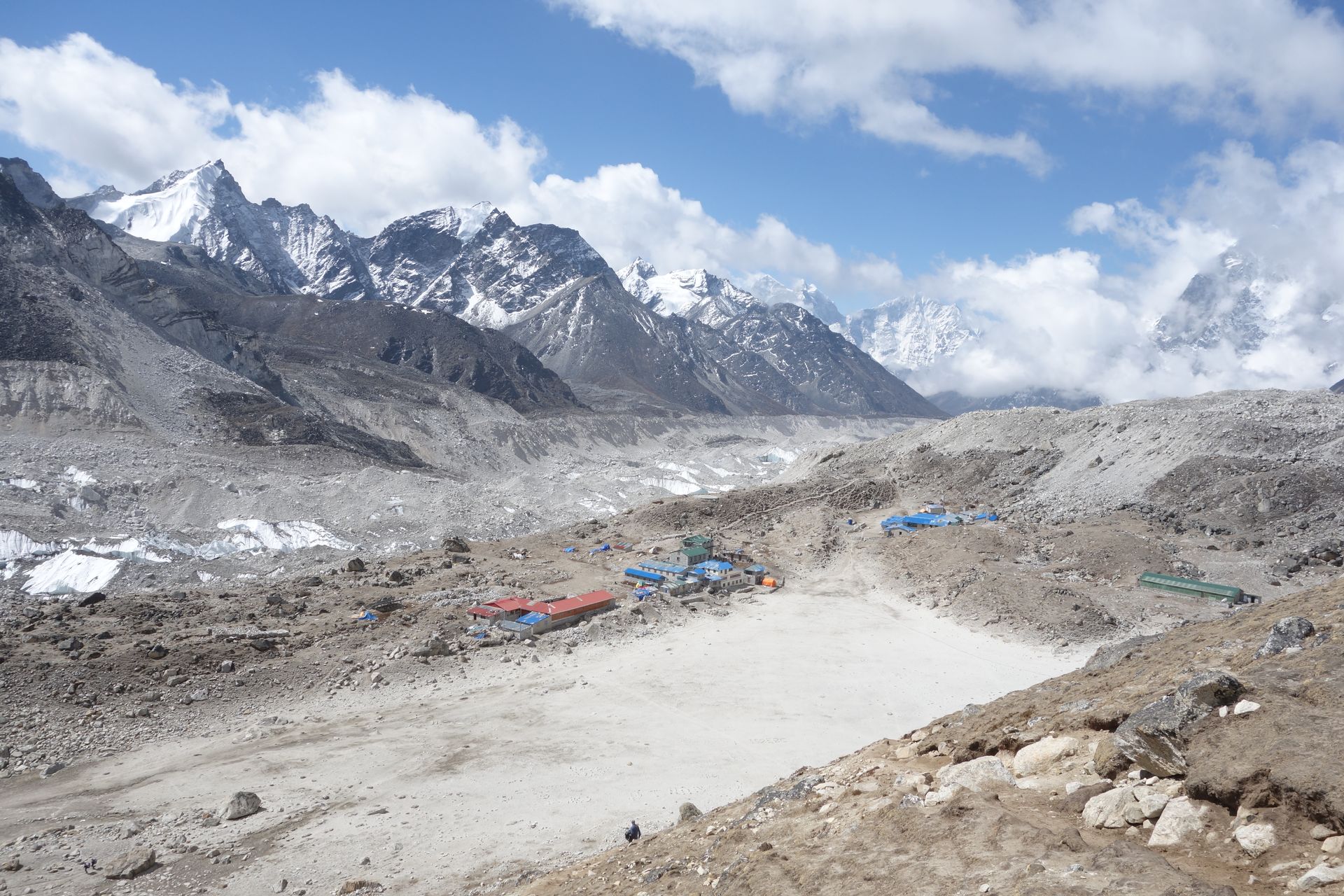
Gorak Shep is a frozen lakebed with a handful of lodges and the final overnight stop on the Everest Base Camp trek. From here trekkers walk to Base Camp and climb Kala Patthar. It was the site of the original 1953 Everest expedition’s base camp.
Read place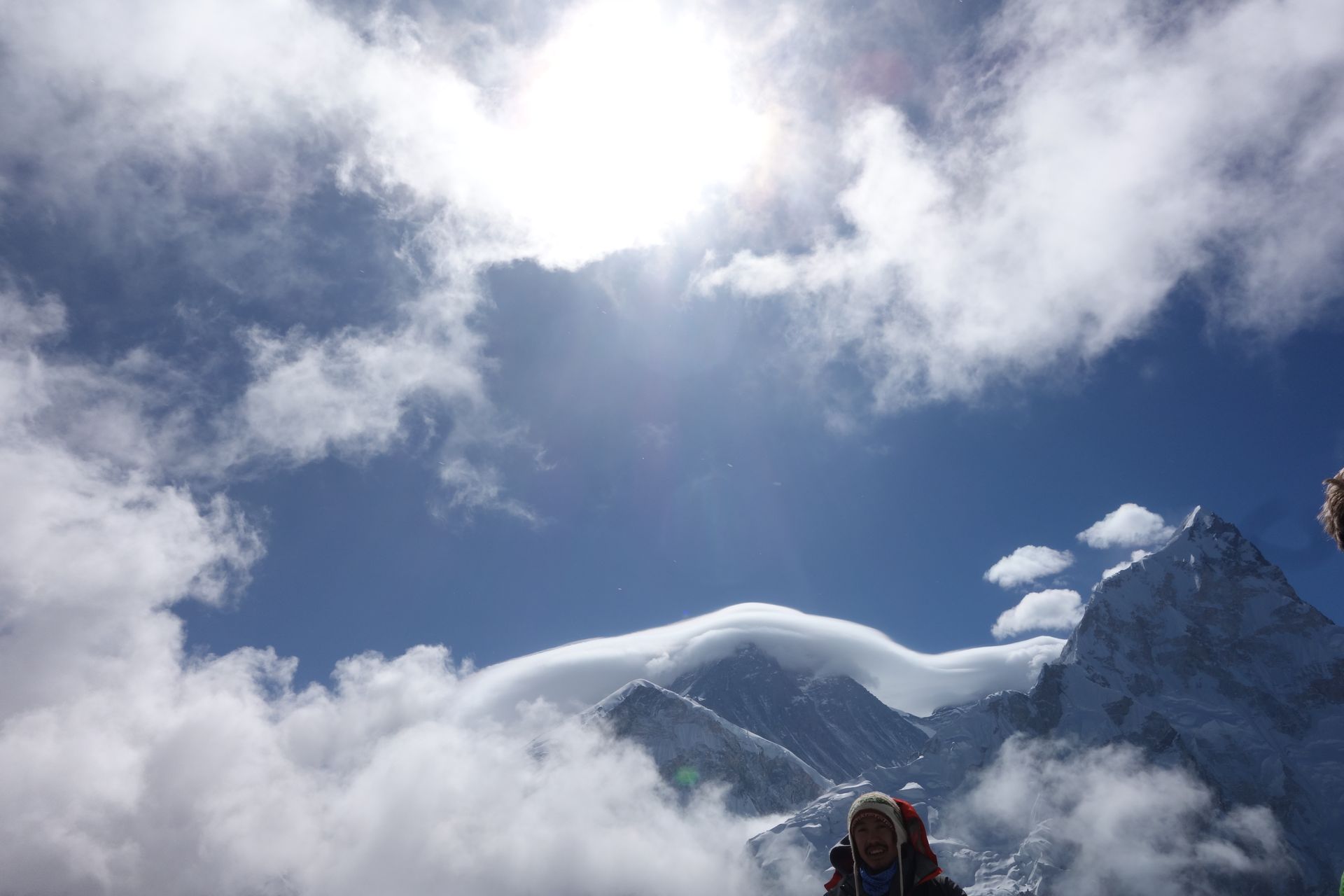
Viewpoint
Kala Patthar
काला पत्थर
5,545 m
Kala Patthar, meaning “black rock”, is a brown ridge above Gorak Shep and the highest point of most Everest Base Camp treks. It gives the closest full view of Everest’s summit pyramid available to trekkers.
Read place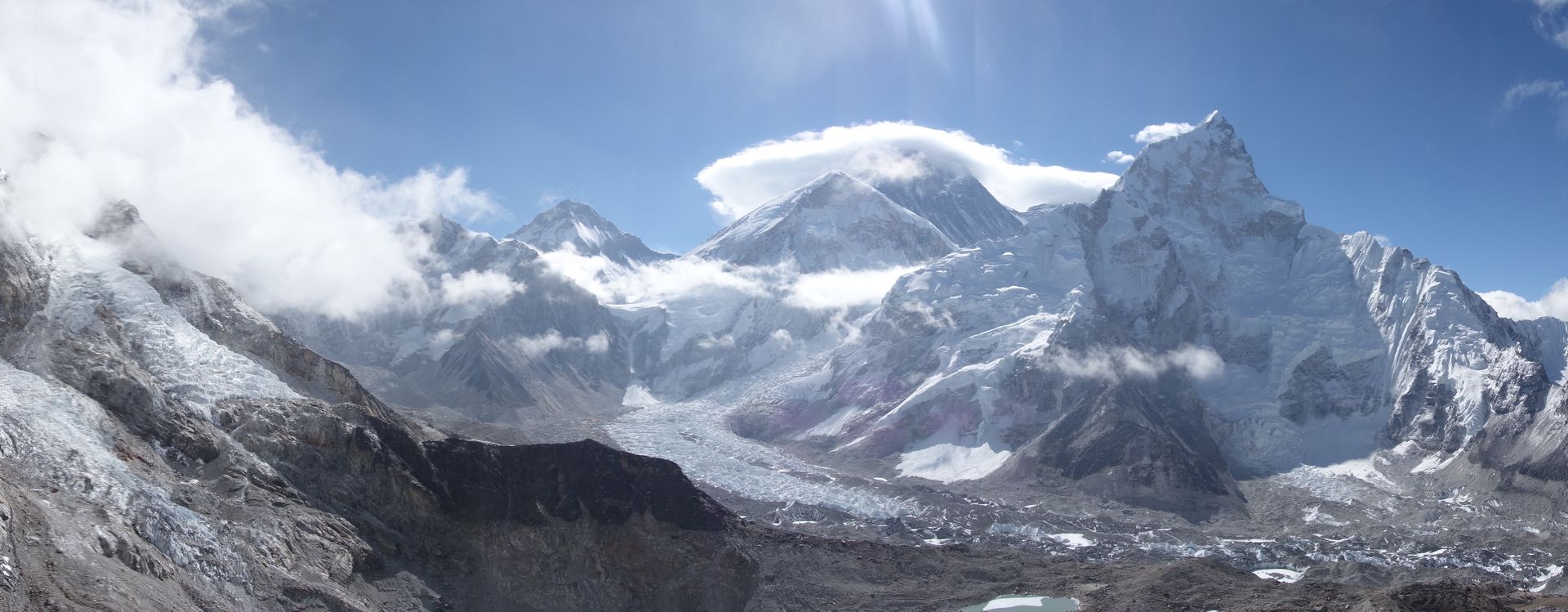
Glacier
Khumbu Glacier
खुम्बु हिमनदी
4,900 m
The Khumbu Glacier flows down from the Western Cwm of Everest, over the Khumbu Icefall and past Everest Base Camp. It is the highest glacier of its size in the world. The EBC trail follows its lateral moraine from Thukla to Gorak Shep, and Base Camp sits on its surface.
Read place