

Glacier
Khumbu Glacier
खुम्बु हिमनदी
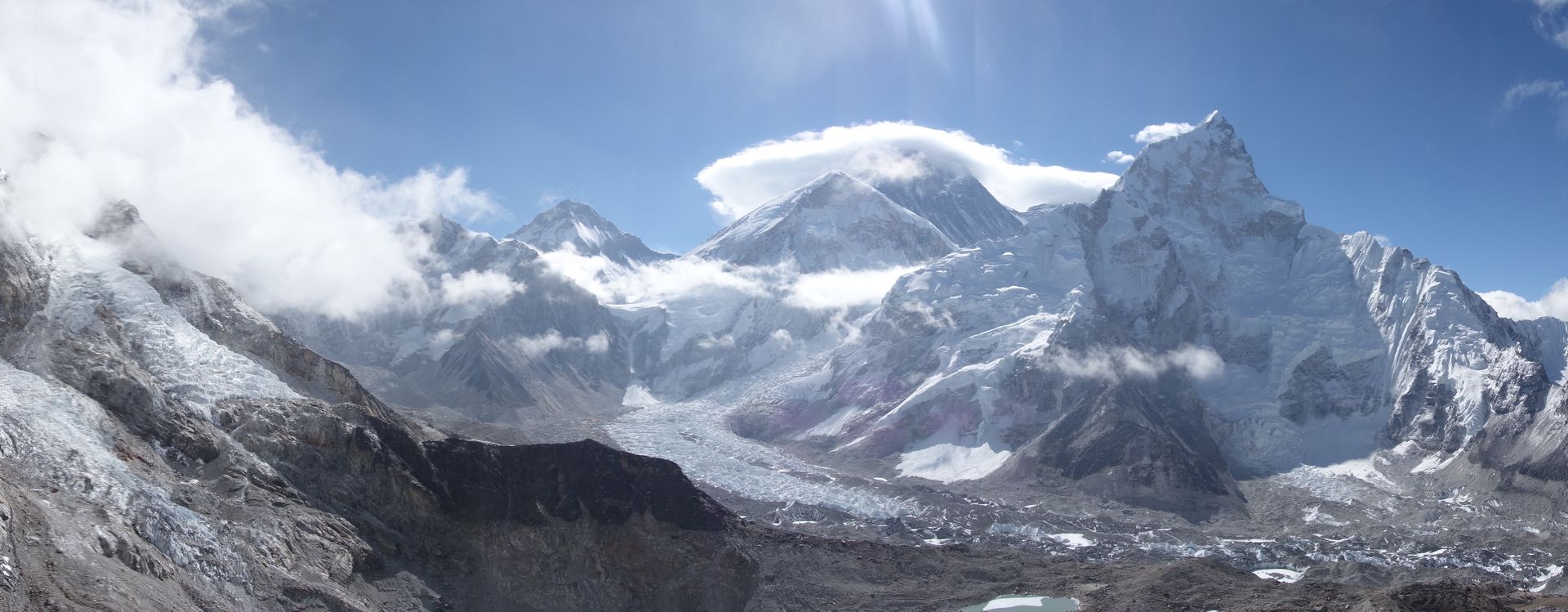
The Khumbu Glacier flows down from the Western Cwm of Everest, over the Khumbu Icefall and past Everest Base Camp. It is the highest glacier of its size in the world. The EBC trail follows its lateral moraine from Thukla to Gorak Shep, and Base Camp sits on its surface.
- Elevation: ~4,900–5,400 m
- Type: Glacier
- Region: Everest Region
- District: Solukhumbu
- Includes the Khumbu Icefall
- Treks: Everest Base Camp Trek, Everest Three Passes Trek, EBC Gokyo Lakes Trek
About Khumbu Glacier
Khumbu Glacier is one of the most famous glaciers in the Himalayas, located on the southern slopes of Mount Everest in Nepal's Khumbu region. Extending approximately 15–17 kilometres, it flows from the high mountain slopes and the Western Cwm below Everest, Lhotse and Nuptse towards the lower Khumbu Valley. Its vast ice formations, rocky moraines and dramatic glacial landscape make it one of the most recognisable natural features of the Everest region.
Khumbu Glacier is especially well known for the Khumbu Icefall, a constantly changing section of broken glacier ice that forms a major obstacle on the traditional southern climbing route to Mount Everest. The glacier also lies beside Everest Base Camp, making it an important landmark for trekkers and mountaineers. Its lower section is largely covered by rocks and sediment, while the upper glacier contains extensive areas of exposed ice and snow.
Location and Altitude
- Location: Upper Khumbu Valley, southern slopes of Mount Everest, Nepal
- District: Solukhumbu District
- Province: Koshi Province, Nepal
- Glacier Length: Approximately 15–17 km, depending on measurement and mapped glacier boundaries
- Area: Approximately 19–27 km², depending on the mapping method and inclusion of tributary glaciers
- Lower Terminus: Approximately 4,800–4,900 m
- Upper Glacier: Extends towards the high slopes and Western Cwm below Everest
- Nearby Landmarks: Everest Base Camp, Khumbu Icefall, Gorak Shep and Lobuche
- Protected Area: Sagarmatha National Park
Khumbu Glacier extends through the upper Khumbu Valley, with its lower terminus near the Gorak Shep and Everest Base Camp area. The glacier's upper reaches connect with the Western Cwm beneath the high Himalayan peaks.
Treks and Climbing Routes Around Khumbu Glacier
Khumbu Glacier is an important geographical feature along the Everest trekking and mountaineering routes.
- Everest Base Camp Trek: The classic trekking route passes through Namche Bazaar, Tengboche, Dingboche, Lobuche and Gorak Shep before reaching Everest Base Camp beside Khumbu Glacier.
- Everest Three Passes Trek: Trekkers encounter the glacier near the Everest Base Camp section of this challenging circuit, which also includes Kongma La, Cho La and Renjo La.
- Kala Patthar Hike: The popular viewpoint above Gorak Shep provides an excellent panorama of the Khumbu Glacier, Everest and surrounding peaks.
- Mount Everest South Col Expedition: Mountaineers follow the Khumbu Icefall and upper glacier towards Camp I, Camp II and the higher sections of the traditional southern climbing route.
Important distinction: Trekkers can view parts of Khumbu Glacier from established trails and viewpoints, but travelling across active glacier terrain is different from ordinary trekking and can involve serious hazards.
Tea Houses and Accommodation Near Khumbu Glacier
There are no permanent tea houses on the glacier itself. Trekkers visiting the lower glacier and Everest Base Camp usually stay in nearby settlements, especially Gorak Shep and Lobuche.
- Gorak Shep: The closest settlement with basic tea houses and lodges for trekkers visiting Everest Base Camp and Kala Patthar.
- Lobuche: Offers several mountain lodges and tea houses and is a common overnight stop before Gorak Shep.
- Accommodation: Basic rooms with beds, mattresses and blankets. A warm sleeping bag is recommended because temperatures can fall significantly at night.
- Food and Meals: Dal bhat, noodles, rice, soups, potatoes, eggs and hot drinks are commonly available.
- Facilities: Electricity, charging, Wi-Fi and hot showers may be available for additional fees, depending on the lodge and season.
- Expedition Camps: Mountaineering teams establish temporary tented camps at designated locations along the Everest climbing route.
Gorak Shep is generally the most convenient overnight base for trekkers who want to explore the area around Everest Base Camp and Khumbu Glacier.
Nature and Landscape of Khumbu Glacier
Khumbu Glacier features a dramatic landscape of ice, snow, rocky debris, crevasses, ice cliffs and glacial ponds. Its surroundings include some of the highest mountains on Earth, making it one of the most striking environments in Sagarmatha National Park.
- Exposed Glacial Ice: The upper glacier contains extensive areas of snow and ice, with broken ice formations and crevasses.
- Debris-Covered Surface: Much of the lower glacier is covered by rocks, gravel and sediment carried down from surrounding mountain slopes.
- Ice Cliffs and Ponds: Meltwater creates ponds and exposed ice cliffs across parts of the glacier's lower surface.
- Rocky Moraines: Large ridges of accumulated rock and sediment mark the glacier's edges and former positions.
- Mountain Surroundings: Everest, Lhotse, Nuptse and surrounding Himalayan peaks dominate the landscape.
- High-Altitude Wildlife: The wider Khumbu ecosystem supports Himalayan tahr, musk deer, snow leopard and mountain birds, although wildlife sightings directly on the glacier are uncommon.
Scientific studies describe Khumbu Glacier as a debris-covered Himalayan glacier with a complex lower surface, including ice cliffs and supraglacial ponds.
Best Time to Visit Khumbu Glacier
The best time to visit the Khumbu Glacier area is during spring (March to May) and autumn (September to November). These seasons generally offer more favourable trekking conditions and better opportunities to enjoy the surrounding mountain scenery.
- Spring: Popular for Everest expeditions and trekking, with longer daylight hours and generally favourable access to the upper Khumbu Valley.
- Autumn: Often provides clear mountain views, cooler temperatures and good trekking conditions.
- Winter: Very cold temperatures, snow and icy trails can make travel more difficult. Some accommodation services may close.
- Monsoon: Rain, cloud cover and slippery trails can reduce visibility and make trekking more challenging.
For photography, early mornings often provide clearer views of the surrounding mountains. Weather in the high Himalayas can change quickly, so visitors should check local conditions before travelling.
Main Attractions Around Khumbu Glacier
Khumbu Glacier is surrounded by several famous natural and trekking landmarks.
- Khumbu Icefall: A spectacular but dangerous section of moving glacier ice, with towering seracs, crevasses and shifting ice blocks. It forms part of the traditional southern Everest climbing route.
- Everest Base Camp: The famous mountaineering staging area beside the lower glacier, used by expeditions attempting Everest from Nepal.
- Kala Patthar: A renowned viewpoint above Gorak Shep offering impressive views of Everest, Nuptse and the surrounding glacier landscape.
- Western Cwm: A high glacial valley above the Khumbu Icefall, enclosed by Everest, Lhotse and Nuptse.
- Nuptse Mountain: A dramatic Himalayan mountain rising above the glacier and Everest Base Camp area.
- Lobuche and Gorak Shep: Important trekking settlements that provide access to the lower glacier and nearby attractions.
- Glacial Moraines: Large rocky ridges created by the movement and retreat of glacial ice, forming a distinctive part of the landscape.
Khumbu Icefall and Mount Everest Climbing Route
The Khumbu Icefall is one of the most famous and technically challenging sections of the traditional Mount Everest climbing route from Nepal. It lies near the head of Khumbu Glacier, between Everest Base Camp and the Western Cwm.
The icefall contains constantly changing crevasses, unstable ice towers known as seracs and deep cracks in the glacier. Everest expedition teams use fixed ropes and aluminium ladders to cross selected sections, with route preparation and maintenance carried out by specialist climbing teams.
The icefall is considered one of the most hazardous parts of the southern Everest route. Its unstable ice formations can shift or collapse without warning, so ordinary trekkers should never attempt to enter it independently.
Climate Change and Glacial Research
Khumbu Glacier is an important location for scientific research into Himalayan climate change and glacier behaviour. Researchers have studied its changing elevation, ice movement, debris cover and meltwater ponds to understand how the glacier responds to changing environmental conditions.
Its thick debris-covered lower section makes the glacier particularly interesting. Thick layers of rock can insulate the ice beneath, while exposed ice cliffs and glacial ponds can increase localised melting. Research has documented surface lowering and changes in the glacier's debris-covered area over several decades.
The glacier contributes meltwater to the upper Dudh Koshi river system, which forms part of the wider Koshi River basin. Its condition is therefore important for understanding water resources and environmental change in the Himalayas.
Safety Around Khumbu Glacier
Khumbu Glacier is a dynamic natural environment, and its surface can be unstable. Hidden crevasses, loose rocks, melting ice, steep ice cliffs and changing meltwater channels create serious hazards.
Visitors should:
- Observe the glacier from established trekking viewpoints and safe trails.
- Avoid walking onto glacier ice without appropriate equipment and experienced professional guidance.
- Follow local instructions and any temporary access restrictions.
- Keep a safe distance from ice cliffs and unstable moraine slopes.
- Carry warm clothing, water and appropriate footwear.
- Allow time for altitude acclimatization before visiting the upper Khumbu Valley.
The Khumbu Glacier area lies at high elevation, so trekkers should also watch for symptoms of altitude sickness and descend if their condition worsens.
Where is Khumbu Glacier?
The exact point on the Himalaya trail, with nearby places for context.
On this map
Nearby places
Base camp
Everest Base Camp
सगरमाथा आधार शिविर
5,364 m
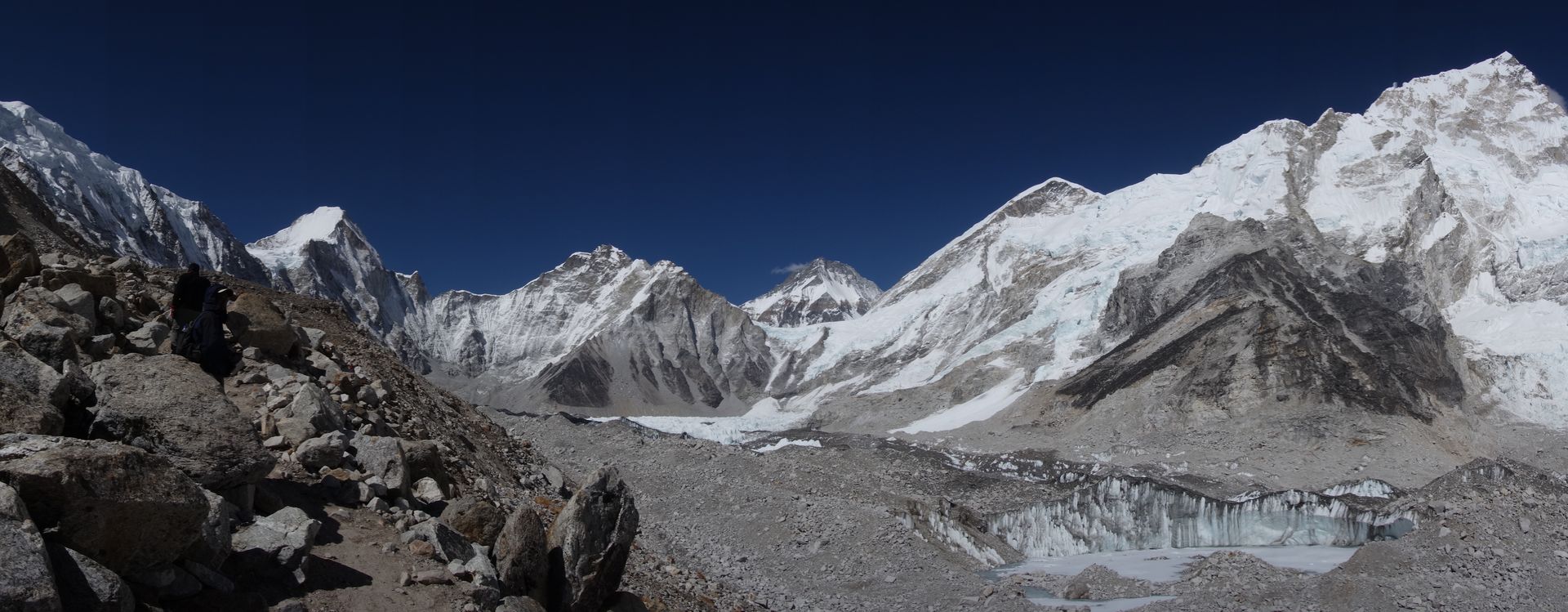
Everest Base Camp on the Khumbu Glacier is the goal of Nepal’s most famous trek. In spring it becomes a tent village of climbing expeditions preparing to tackle the Khumbu Icefall on the South Col route.
Read place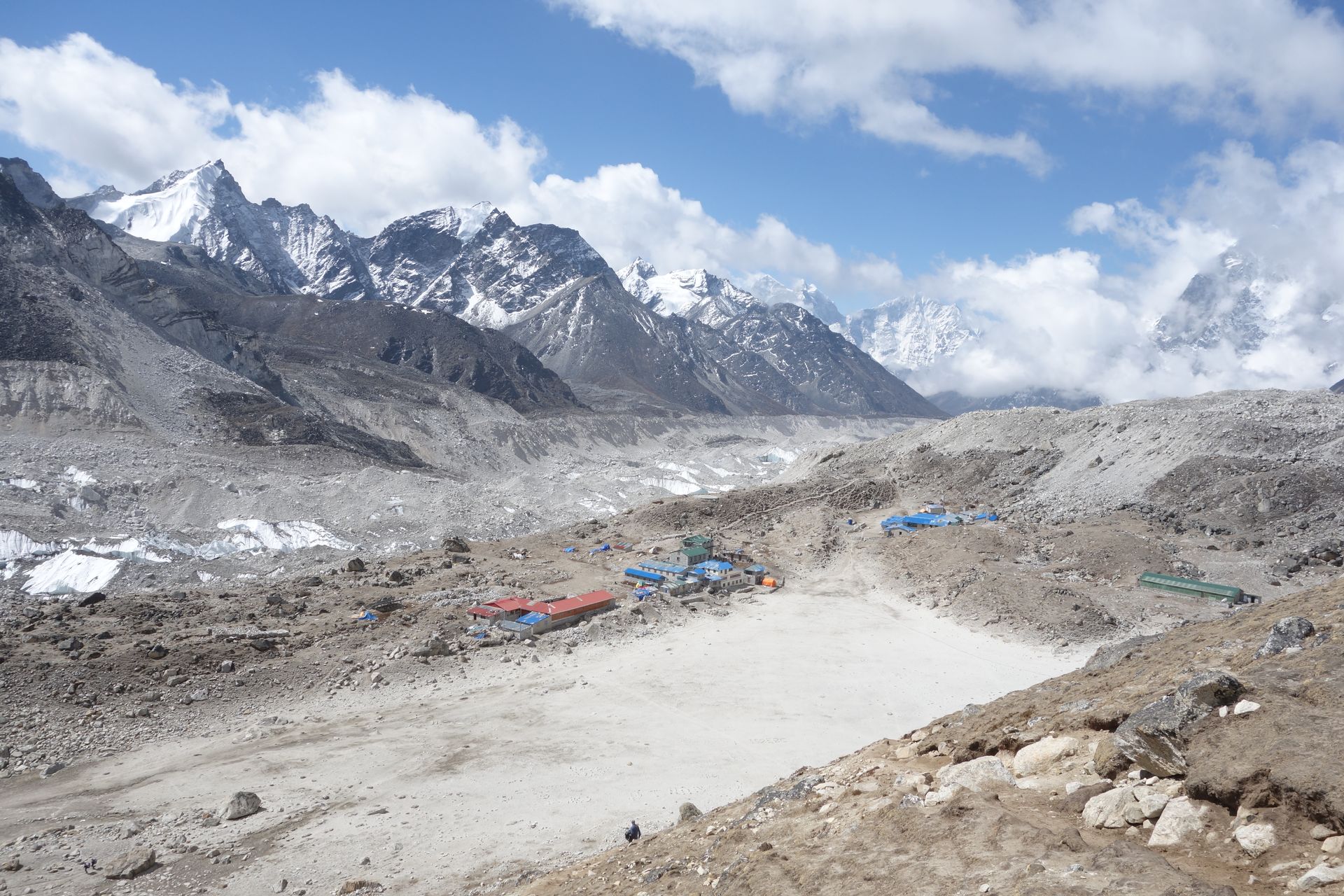
Village
Gorak Shep
गोरखशेप
5,164 m
Gorak Shep is a frozen lakebed with a handful of lodges and the final overnight stop on the Everest Base Camp trek. From here trekkers walk to Base Camp and climb Kala Patthar. It was the site of the original 1953 Everest expedition’s base camp.
Read place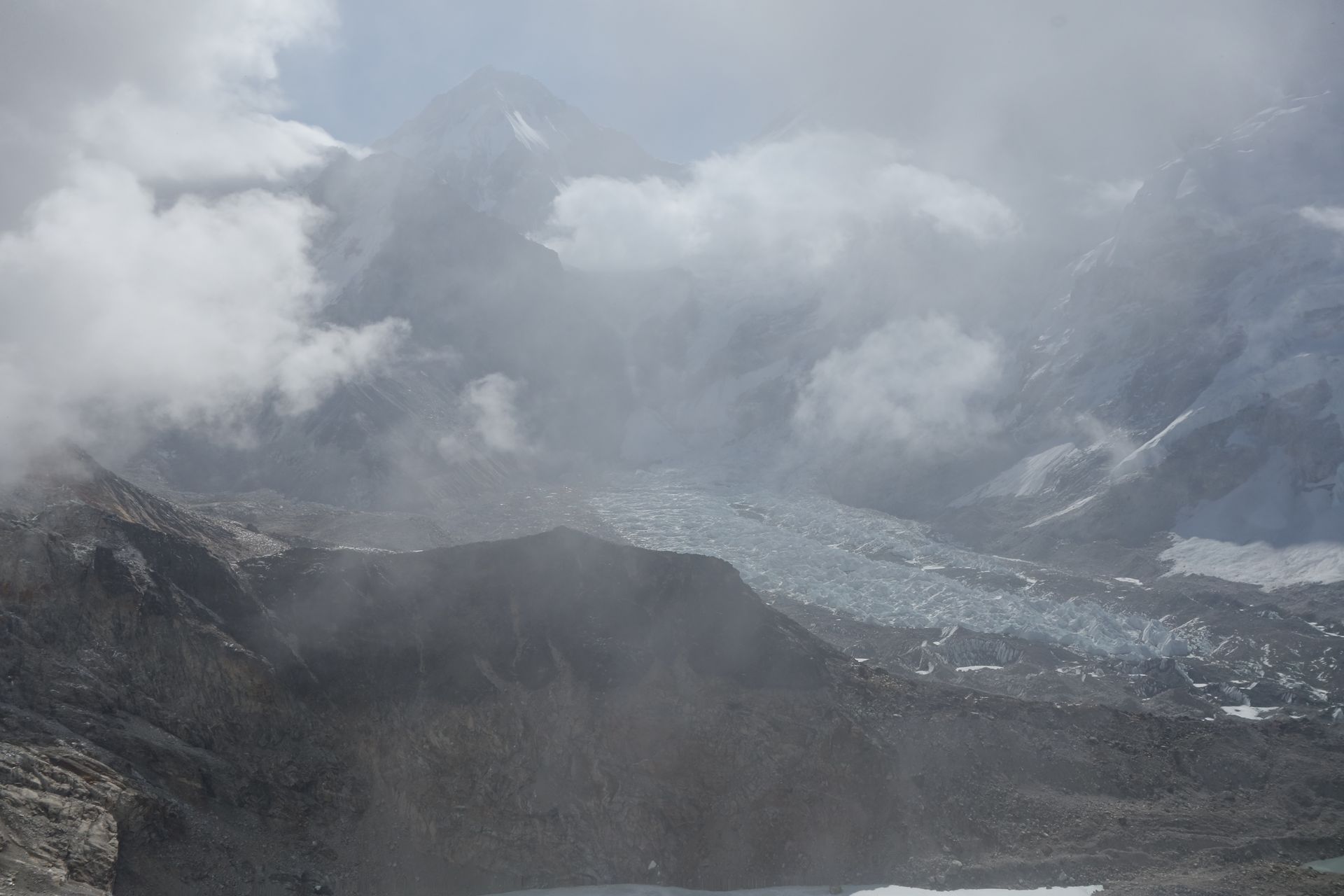
Village
Lobuche
लोबुचे
4,940 m
Lobuche is a cluster of lodges beside the Khumbu Glacier and the last overnight stop before Gorak Shep and Everest Base Camp. Nights here are very cold and many trekkers feel the altitude.
Read place