

Mountain peak
Pumori
पुमोरी
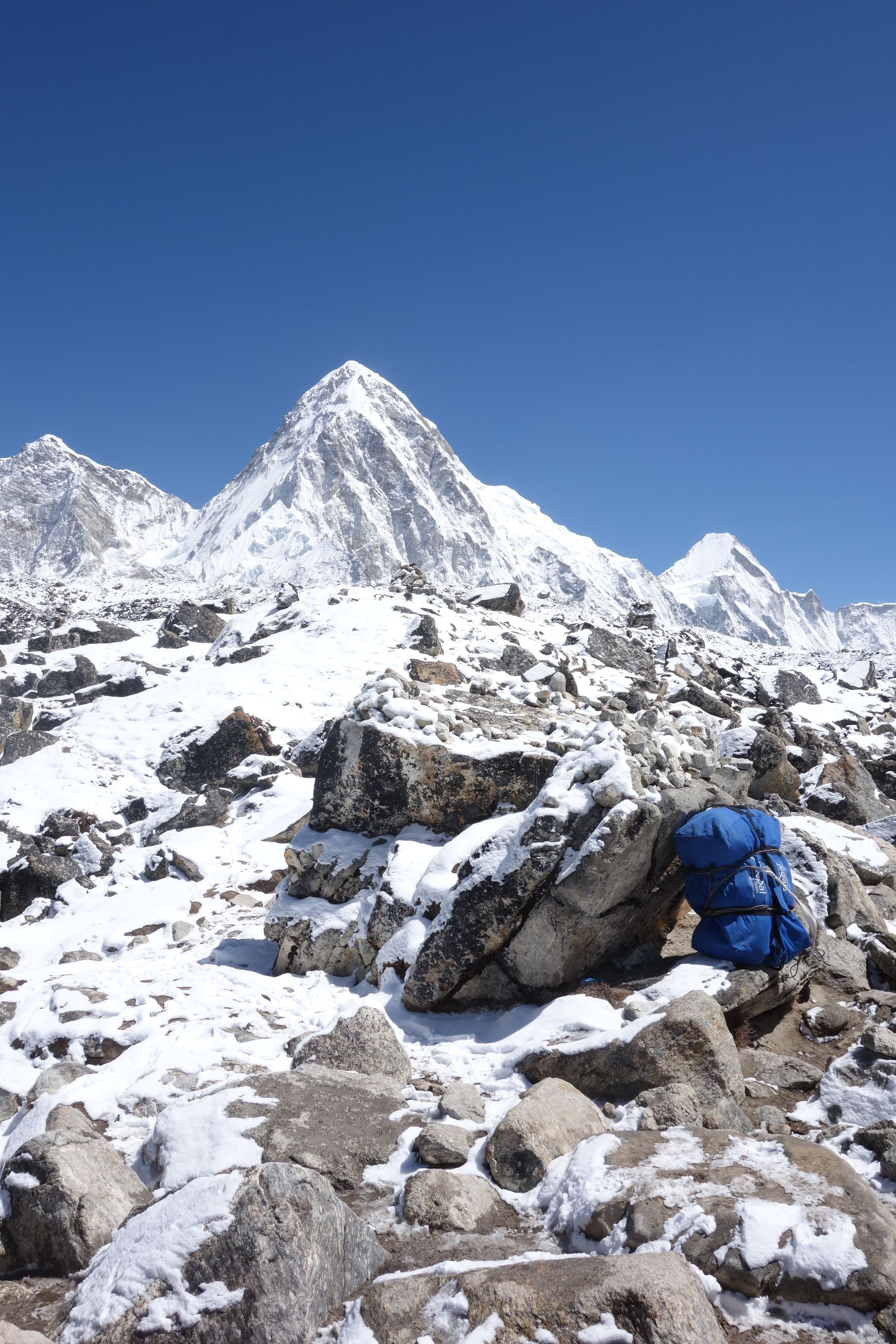
Pumori is a 7,161 m peak just west of Everest, its name meaning “unmarried daughter”, given by George Mallory. Kala Patthar is a spur of Pumori. Its steep pyramid towers above Gorak Shep.
- Summit: 7,161 m / 23,494 ft
- Type: Mountain
- Region: Everest Region
- District: Solukhumbu
- Treks: Everest Base Camp Trek, Everest Three Passes Trek, EBC Gokyo Lakes Trek
About Pumori
Pumori, also known as Pumo Ri, is a spectacular pyramid-shaped mountain in the Mahalangur Himal range of the Nepalese Himalayas. Rising to approximately 7,161 metres (23,494 feet) above sea level, it stands near the Nepal-China border, about 8 kilometres west of Mount Everest. The mountain is famous for its dramatic snow-covered slopes, sharp ridges and striking appearance above the Khumbu Glacier.
Often called the Daughter of Everest or Mountain Daughter, Pumori is one of the most recognisable peaks in the Everest region. Its impressive south face dominates the skyline around Gorak Shep and Kala Patthar, making it a favourite subject for mountain photography. Although trekkers can admire Pumori from nearby viewpoints, climbing to its summit is a serious high-altitude mountaineering challenge that requires technical skills, experience and expedition support.
Location and Altitude
- Location: Upper Khumbu region, Solukhumbu District, Nepal
- Mountain range: Mahalangur Himal, Himalayas
- Elevation: 7,161 m (23,494 ft)
- Coordinates: Approximately 28.0156° N, 86.8281° E
- International boundary: Nepal–China border region
- Protected area: Sagarmatha National Park
- Nearest settlements: Gorak Shep and Lobuche
- Nearby viewpoints: Kala Patthar and Everest Base Camp
- First ascent: 1962 by Gerhard Lenser
Geography and Mountain Formation
Pumori belongs to the Mahalangur Himal section of the Greater Himalayas. It rises above the upper Khumbu landscape, close to the enormous glaciers and high mountain walls surrounding Mount Everest. Its steep faces, snowfields and prominent ridgelines give it a distinctive pyramidal shape.
The mountain's landscape has been shaped by the tectonic processes that formed the Himalayas, as well as by long-term glacial erosion. Snow and ice cover much of its upper slopes, while the lower mountain connects with the rugged glacial terrain of the Khumbu region.
Meaning and History of the Name Pumori
The name Pumori comes from the Sherpa language. It is commonly translated as Mountain Daughter or Unmarried Daughter. British mountaineer George Mallory gave the mountain its name during the early Everest exploration period. Because of its close position to Mount Everest, climbers and travellers often refer to it as the Daughter of Everest.
First Ascent of Pumori
Pumori was first successfully climbed on 17 May 1962 by German mountaineer Gerhard Lenser, as part of a German-Swiss expedition. The team reached the summit through the southeast ridge, establishing an important milestone in the climbing history of the Khumbu Himalayas.
Since then, Pumori has attracted experienced mountaineers interested in climbing a technically demanding 7,000-metre Himalayan peak. Different climbing lines and variations have been attempted on its steep faces and ridges.
Climbing Pumori
Climbing Pumori is a demanding mountaineering expedition, not an ordinary trekking activity. The standard southeast ridge route involves high-altitude glacier travel, steep snow and ice slopes, exposed ridges and challenging climbing conditions.
Climbers generally approach the mountain through the Everest region and establish an expedition base camp in the upper Khumbu. The climb requires suitable technical equipment, experienced high-altitude guides, acclimatisation and careful planning. Avalanche danger, unstable snow, crevasses, extreme cold and rapidly changing weather are major hazards.
Important: Pumori should only be attempted by experienced mountaineers with professional expedition support. Trekkers should enjoy its scenery from established viewpoints rather than attempting the climbing route without the necessary skills and equipment.
Trekking Routes and Viewpoints Around Pumori
Although reaching the summit requires mountaineering experience, several popular trekking destinations offer magnificent views of Pumori.
- Kala Patthar: One of the best-known viewpoints in the Everest region, offering close views of Pumori, Everest and surrounding Himalayan peaks.
- Gorak Shep: A high-altitude settlement used as a base for visiting Everest Base Camp and Kala Patthar, with impressive views of Pumori.
- Everest Base Camp: The classic trekking destination on the Khumbu Glacier, where Pumori forms part of the surrounding mountain panorama.
- Lobuche: A popular overnight stop on the Everest Base Camp route, surrounded by dramatic mountain scenery.
- Pumori Base Camp: An expedition area used by mountaineers preparing for the climb. It is not a regular tea-house trekking destination.
Tea Houses and Accommodation Near Pumori
There are no permanent tea houses or hotels on Pumori itself because its upper slopes are covered by glaciers, snowfields and technical climbing terrain. Mountaineering teams establish temporary expedition camps, including tents and support facilities, during climbing expeditions.
Trekkers who want to admire Pumori generally stay in nearby settlements:
- Gorak Shep: The closest established settlement for trekkers visiting Everest Base Camp and Kala Patthar. It has basic high-altitude lodges and tea houses.
- Lobuche: Offers trekking lodges, dining facilities and overnight accommodation along the Everest Base Camp route.
- Dingboche: A larger trekking settlement with more accommodation options, used during acclimatisation before continuing towards Lobuche.
Facilities become increasingly basic at higher elevations. Visitors should prepare for cold temperatures, limited services and possible accommodation shortages during peak trekking seasons.
Nature and Landscape of Pumori
Pumori is surrounded by some of the most dramatic glacial scenery in the Everest region. Its snow-covered slopes, rugged ridges and neighbouring glaciers create a remarkable high-altitude landscape.
- Snow and Ice: Much of the upper mountain remains covered in snow and ice throughout the year.
- Khumbu Glacier: The enormous glacier lies within the surrounding upper Khumbu landscape.
- Glacial Valleys: Deep valleys and ice-shaped terrain define the mountain's surroundings.
- Alpine Environment: The lower slopes and nearby trekking areas feature sparse high-altitude vegetation, rocks and seasonal mountain plants.
- Himalayan Wildlife: The wider Sagarmatha National Park provides habitat for wildlife such as Himalayan tahr, musk deer and snow leopard.
- Mountain Views: Pumori offers a dramatic backdrop to the surrounding peaks, glaciers and trekking trails.
Best Time to Visit and Climb Pumori
The best seasons to view Pumori are generally spring (March to May) and autumn (September to November). These seasons usually offer better trekking conditions and clearer mountain views.
For mountaineering, spring is a particularly popular climbing season because expedition teams can take advantage of suitable weather windows. Autumn is another possible climbing period, although conditions must be assessed carefully by experienced expedition operators.
Winter brings extreme cold, strong winds and difficult climbing conditions. The summer monsoon can cause heavy precipitation, cloud cover and unstable mountain conditions. Climbers must always follow current weather forecasts and professional expedition advice.
Main Attractions of Pumori
- Pyramidal Mountain Summit: Admire the striking shape of one of the most recognisable peaks in the Everest region.
- Daughter of Everest: Learn about the mountain's famous Sherpa name and its connection with Mount Everest.
- Kala Patthar Viewpoint: Enjoy spectacular views of Pumori and the surrounding Himalayan giants.
- Khumbu Glacier Scenery: Explore the dramatic glacial environment surrounding the upper Khumbu.
- Mountaineering History: Discover the history of the first ascent and later climbing expeditions.
- Everest Region Photography: Capture the mountain's impressive snow-covered south face from nearby trekking viewpoints.
Nearby Mountains and Places to Explore
- Mount Everest: The world's highest mountain, located east of Pumori.
- Lobuche Peak: A popular trekking peak near the Everest Base Camp route.
- Nuptse: A massive Himalayan mountain forming part of the Everest massif.
- Kala Patthar: A famous viewpoint offering close views of Everest and Pumori.
- Gorak Shep: The last major settlement on the classic Everest Base Camp trekking route.
- Khumbu Glacier: One of the most important glaciers in the Everest region.
Where is Pumori?
The exact point on the Himalaya trail, with nearby places for context.
On this map
Nearby places
Viewpoint
Kala Patthar
काला पत्थर
5,545 m
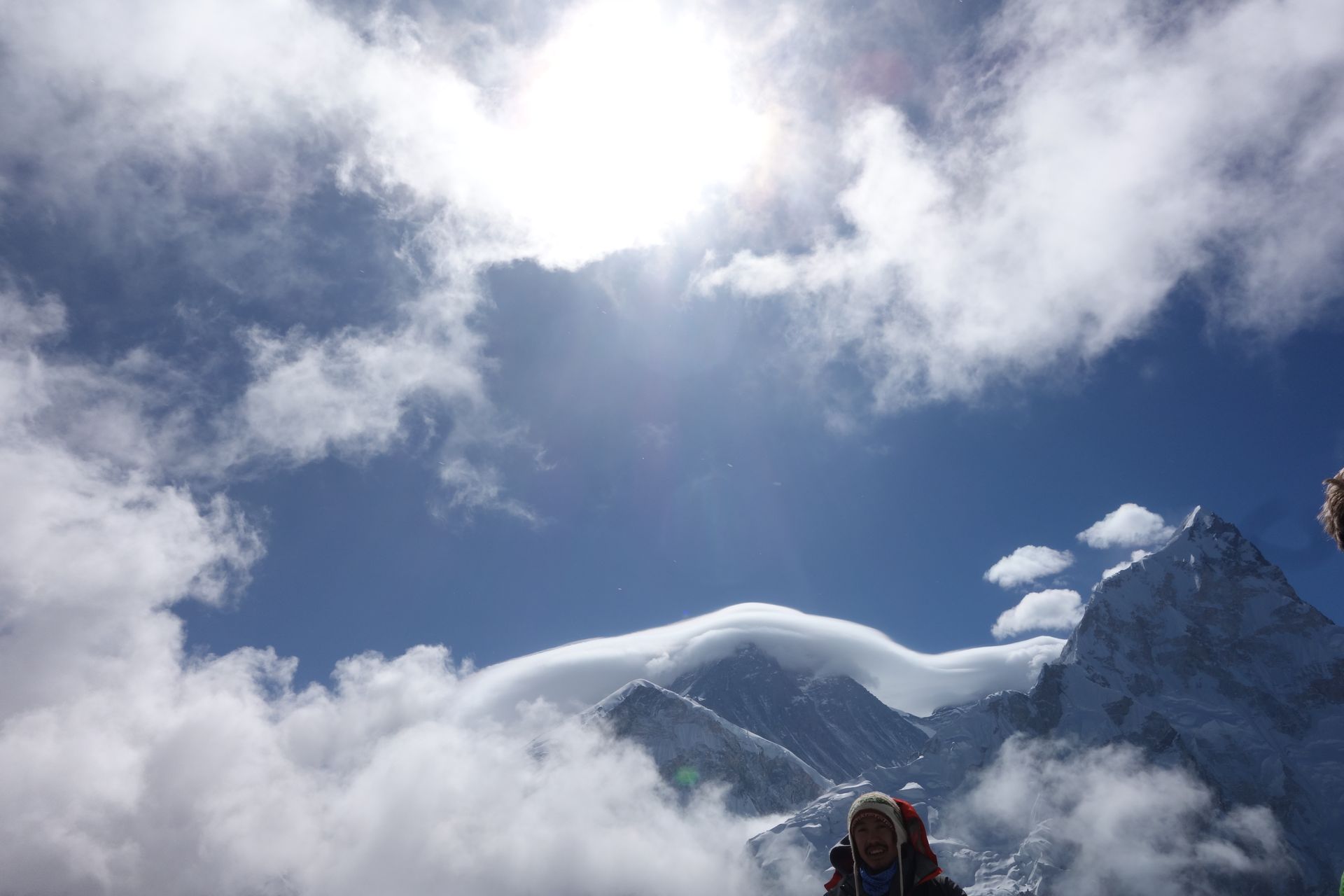
Kala Patthar, meaning “black rock”, is a brown ridge above Gorak Shep and the highest point of most Everest Base Camp treks. It gives the closest full view of Everest’s summit pyramid available to trekkers.
Read place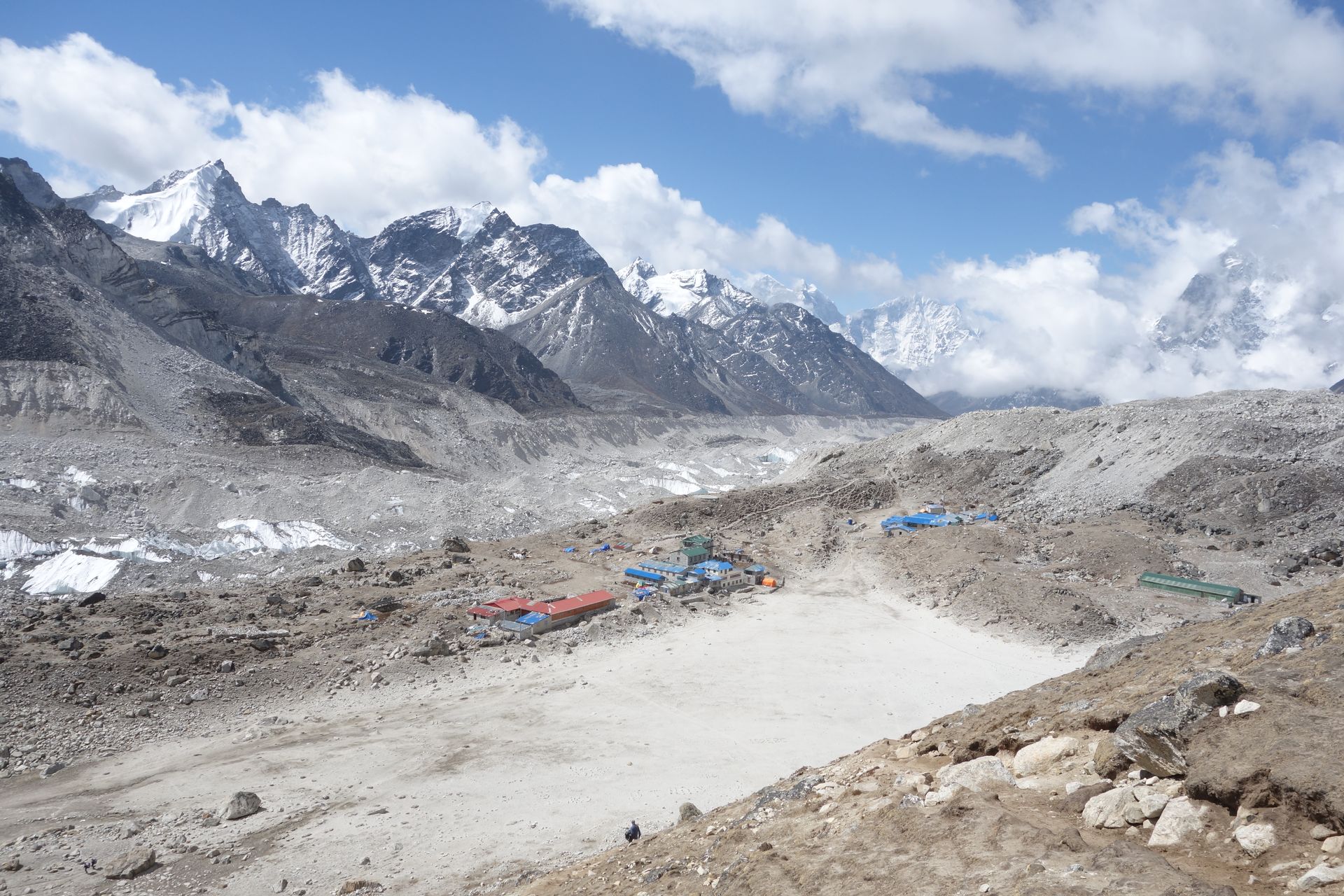
Village
Gorak Shep
गोरखशेप
5,164 m
Gorak Shep is a frozen lakebed with a handful of lodges and the final overnight stop on the Everest Base Camp trek. From here trekkers walk to Base Camp and climb Kala Patthar. It was the site of the original 1953 Everest expedition’s base camp.
Read place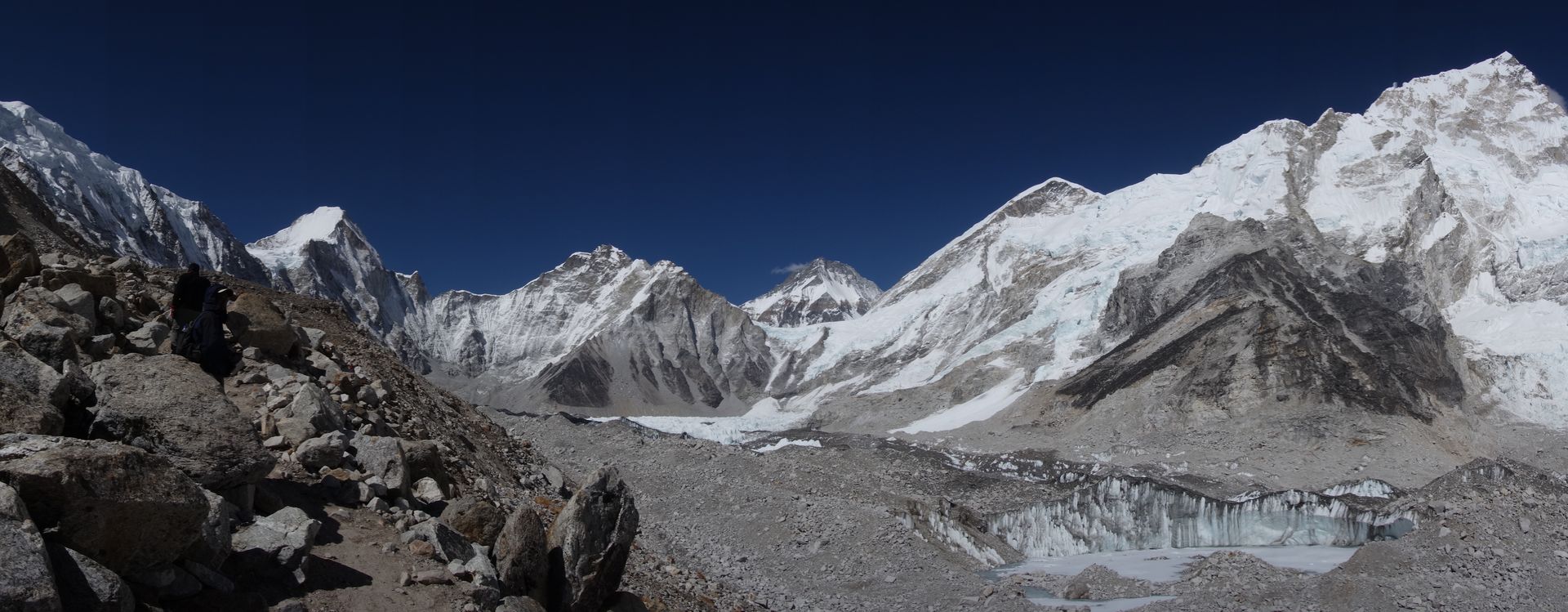
Base camp
Everest Base Camp
सगरमाथा आधार शिविर
5,364 m
Everest Base Camp on the Khumbu Glacier is the goal of Nepal’s most famous trek. In spring it becomes a tent village of climbing expeditions preparing to tackle the Khumbu Icefall on the South Col route.
Read place