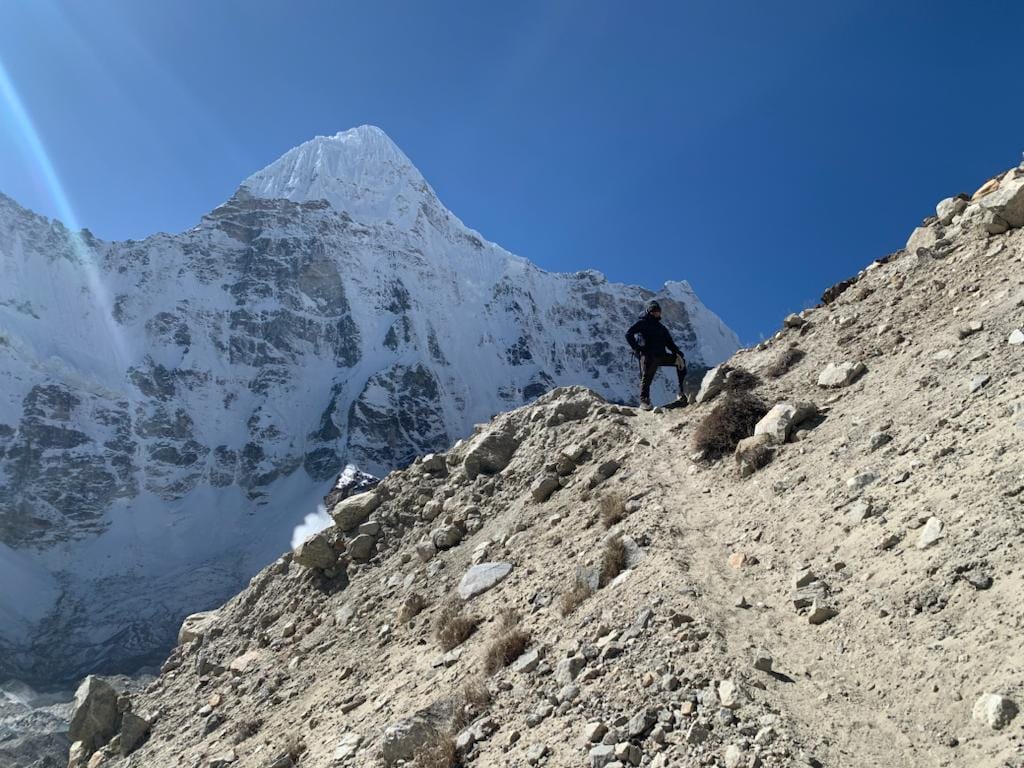
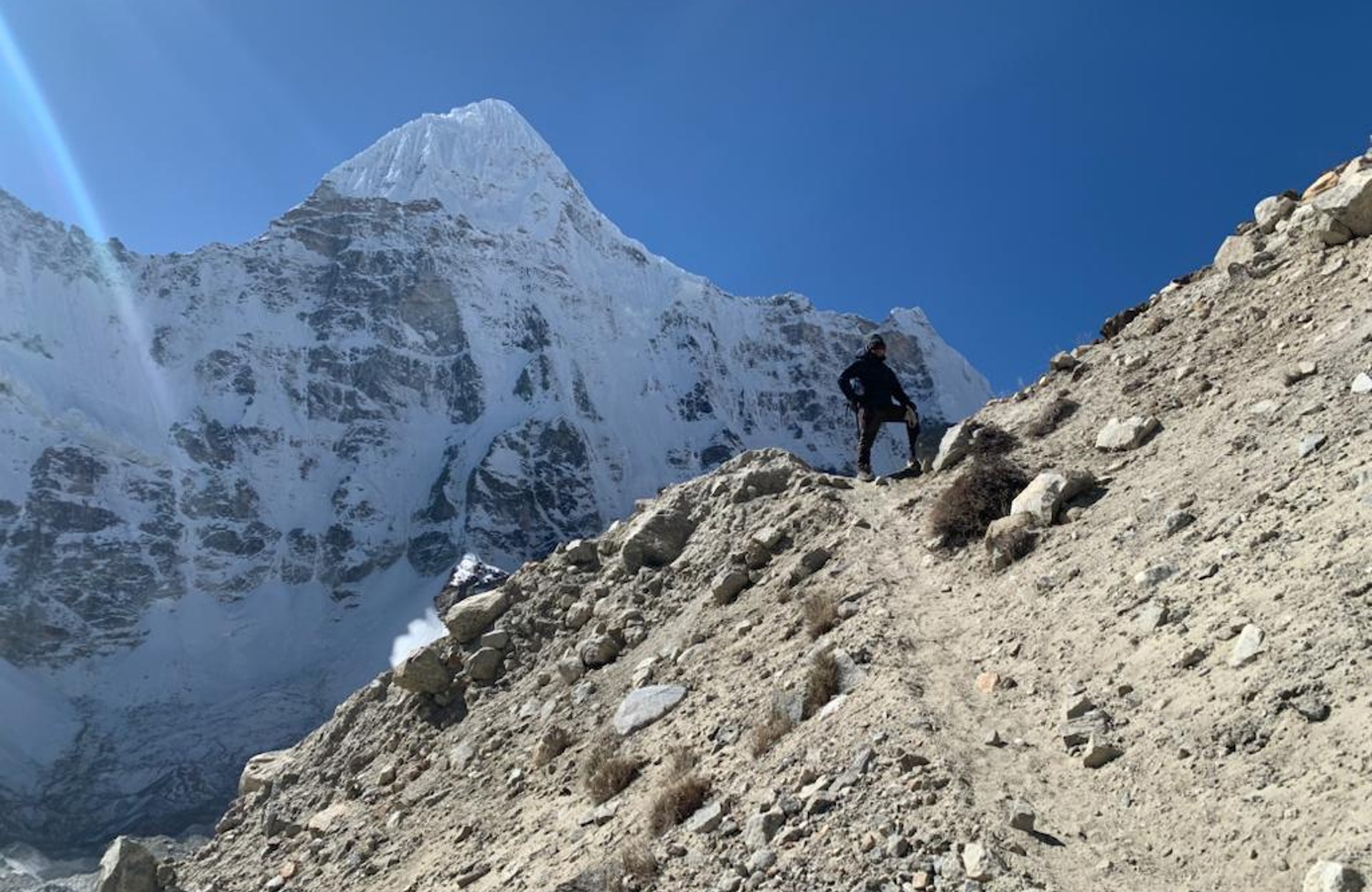
Trek through pristine forests and high alpine meadows to the base of Kanchenjunga, the world’s third tallest peak. This remote route offers untamed wilderness, cultural encounters with Limbu and Sherpa communities, and breathtaking views of towering glaciers.
The 23 days Kanchenjunga Base Camp Trek is an expedition into one of Nepal’s most isolated and unspoiled corners, offering a profound connection with nature far from the well-trodden trails. As you walk through ancient rhododendron forests and across high-altitude plateaus, the sheer scale of the Himalaya unfolds before you, culminating in the staggering presence of Kanchenjunga’s massive south face. This journey is not just a physical challenge but an immersion into a landscape where the rhythm of life is dictated by the seasons and the mountains themselves. With a maximum altitude of 5,143 meters reached at Pangpema, the trek demands a strong level of fitness and proper acclimatization over 23 days.
Beyond the raw beauty of the terrain, the trek weaves through villages where the Limbu and Sherpa cultures remain deeply rooted in tradition. You will be welcomed into stone homes, share stories over cups of butter tea, and witness a way of life that has harmonized with this rugged environment for centuries. Every step brings you closer to the base camp, where the silence is broken only by the thunder of distant avalanches and the creak of shifting glaciers, leaving you with an intimate understanding of why this region is considered one of Nepal’s last great wildernesses. The itinerary includes crossing the challenging Sele La Pass, Sinon La Pass and Mirgin La Pass offering panoramic Himalayan vistas, and traversing suspension bridges over roaring rivers, while rare wildlife like snow leopards and red pandas add a layer of excitement to each day’s hike.
Designated as a restricted area to preserve its fragile ecosystem, the Kanchenjunga region rewards those who venture here with a rare sense of discovery. Your route follows ancient salt-trading paths, crossing suspension bridges over milky glacial rivers and ascending through terraced fields before reaching the treeline. The biodiversity here is remarkable—dense forests of oak and pine give way to alpine scrub, while the chance of spotting a snow leopard or red panda adds a layer of excitement to each day’s hike. This is trekking at its most authentic, where the journey itself becomes the destination, and the memories you gather will be as unspoiled as the landscape itself.
For those looking to extend their adventure, consider exploring destinations such as the sacred Pathibhara Temple, a revered hilltop pilgrimage site offering breathtaking panoramic views of the eastern Himalayas. Nature lovers can also visit the peaceful Kechana and Mai Pokhari wetlands, known for their rich biodiversity, birdwatching opportunities, and tranquil walking trails. The historic town of Taplejung provides a glimpse into local life and serves as the gateway to the Kanchenjunga region. Together, these destinations beautifully complement the trek, allowing you to experience more of eastern Nepal’s natural beauty, cultural heritage, and spiritual significance without venturing far from the trail’s end.

Flight from Kathmandu to Bhadrapur & Drive to Taplejung (1820m)
Your journey begins with an early morning flight from Kathmandu to Bhadrapur, a scenic hour-long hop over verdant foothills. Upon landing, a private vehicle winds through subtropical valleys to Taplejung, a five-hour drive offering glimpses of local markets and terraced farms.
Arriving at 1,820 meters, Taplejung greets you with cool air and stone-paved streets. This gateway town offers distant snowy peaks and a bustling bazaar for last-minute supplies. As dusk paints the mountains gold, your guide briefs you on the trek ahead. Enjoy a warm dinner and retire early, ready for tomorrow's adventure.
Trek from Taplejung to Chirwa (1270m)
Your trek begins with a gentle descent into the lush Tamur River valley. The trail winds through terraced farmlands and scattered villages, where the air is thick with cardamom and the sound of rushing water. This gradual introduction takes about four to five hours, following a dirt path through dense sal and bamboo forests.
Your destination is Chirwa, perched at 1,270 meters, a typical Limbu village with stone-and-timber houses and warm local smiles. Spend the evening in a simple tea house, enjoying dal bhat while listening to the river below. As darkness falls, the forest comes alive with cicadas and distant animal calls.
Trek from Chirwa to Lelep (1860m)
Today’s walk from Chirwa leads through dense subtropical forest alongside the Tamor River, crossing suspension bridges above turquoise water. The trail alternates between gradual ascents and descents over five to six hours, eventually opening to terraced fields and stone houses as you approach Lelep.
Lelep sits at 1860 meters, a charming village where Limbu culture thrives in slate-roofed homes and carved wooden windows. This is your last settlement before deeper wilderness, offering time to rest and acclimatize by the monastery or river. Overnight at a local tea house, enjoy a warm meal as the quiet evening settles in.
Trek from Lelep to Aamjilasa (2500m)
Today’s trek from Lelep to Aamjilasa is a rewarding ascent through forests of oak and rhododendron, with the river’s constant roar as your companion. Walking five to six hours on a well-defined but steep trail, you earn occasional glimpses of distant snow-capped peaks.
Arriving at Aamjilasa, perched at 2,500 meters, you find a peaceful haven of welcoming lodges. Sip hot tea as the light fades over the hills, surrounded only by the rustle of leaves and bird calls. This quiet, isolated spot is perfect for rest and acclimatization before the trail climbs higher.
Trek from Amjilosa to Gyabla (2730m)
Your trek begins with a gentle descent through lush rhododendron and magnolia forests, following the milky glacial waters of the Simbuwa Khola. The path climbs steadily past terraced fields and suspension bridges, rising to 2,730 meters over five to six hours.
Approaching Gyabla, the forest opens to reveal traditional stone houses and prayer flags. This untouched Limbu village offers warm smiles as locals tend livestock or weave baskets. Listen for bird calls and watch for Himalayan griffons circling overhead.
You settle into a cozy tea house, sharing stories over a hearty dal bhat dinner. As stars emerge with remarkable clarity, the quiet is broken only by the distant river murmur.
Trek from Gyabla to Ghunsa (3595m)
Today’s walk climbs from Gyabla toward Ghunsa, about five to six hours through birch and rhododendron forests. The trail opens to reveal first glimpses of Kanchenjunga’s icy flanks, a thrilling preview of what lies ahead.
Ghunsa, a welcoming Sherpa village at 3,595 meters, is a natural acclimatization stop. Stone houses with wooden balconies cluster around a small gompa, prayer flags flutter, and your guide encourages a restful afternoon. Evening brings a hearty meal in a lantern-lit dining room, the deep remoteness settling in as stars emerge with startling clarity.
Acclimatization day in Ghunsa (3595m) and Kanchenjunga Conservation area
An acclimatization day in Ghunsa lets your body adjust at 3,595 meters while you explore serene pine and juniper forests. Visit the ancient monastery with prayer flags against snowy peaks, and watch for Himalayan tahr on distant slopes.
A short ridge hike reveals panoramic valley and glacier views feeding the Tamur River. Wander through rhododendron and birch groves, the distant avalanche rumble a reminder of the mountains' raw power. Return to your teahouse for a warm meal, feeling the rhythm of this remote Himalayan sanctuary.
Trek from Ghunsa to Khambachen (4050m)
Today you leave Ghunsa, climbing through a narrowing valley where birch and stunted shrubs replace the forest. Cross a suspension bridge over the glacier-fed river, then steepen toward your first intimate views of Kanchenjunga’s icefalls. Five to six hours of walking make each breath more valuable as altitude rises.
Approaching Khambachen at 4,050 meters, the valley opens into a rocky basin ringed by dramatic peaks and the immense snout of the Kanchenjunga Glacier. This remote settlement feels like the edge of the inhabited world—silence broken only by wind and distant avalanches. The staggering south face rewards the day’s effort, offering a place to rest deeply and acclimatize before the push toward Pangpema.
Acclimatization Day in Kambachen (4050m)
Your acclimatization day in Kambachen helps your body adjust to the 4,000-meter altitude. A short hike to a nearby ridge offers sweeping views of the Kanchenjunga massif while keeping you gently active, preparing you for the higher passes and base camp ahead.
This rest day lets you connect with remote Himalayan life. Visit a local monastery or simply watch clouds roll over the peaks as the profound silence is broken only by wind and chough calls. Your guide will monitor your health, making this a vital pause before the Sele La Pass.
Trek from Kambachen to Lhonak (4780m)
After breakfast in Kambachen, the trail climbs through a widening valley into stark, high-altitude wilderness. The Kanchenjunga Glacier roars beside you as you cross rocky moraines and sparse alpine pastures, with the immense north face of Kanchenjunga gradually revealing itself. Thin air calls for frequent pauses to absorb the unfolding panorama.
After four to five hours, you reach Lhonak at 4,780 meters, the last outpost before base camp. Views of Kanchenjunga and its neighboring peaks are breathtaking, with the glacier stretching like a frozen river below. The afternoon is free to rest and acclimatize in profound silence, and as the sun sets, the peaks catch golden light.
Hike to the North Base Camp of Kanchenjunga (5143m) & return to Lhonak
Today's demanding six-to-seven-hour hike leads to Kanchenjunga North Base Camp at Pangpema, 5,143 meters. The trail climbs through a barren, moon-like landscape of moraines, gradually revealing the immense north face of Kanchenjunga—a towering wall of ice and rock. Thin air makes every step deliberate.
At Pangpema, you stand face-to-face with the world's third highest peak, its glaciers groaning in the silence. Jannu and Wedge Peak form a dramatic ice amphitheater. After absorbing the mountain's raw power, you retrace your steps to Lhonak, descending with the profound memory of standing at the foot of a giant.
Trek from Lhonak back to Ghunsa (3595m)
From Lhonak, descend through the dramatic Kanchenjunga glacier valley, where morning light catches the north face’s seracs and icefalls. The trail follows the braided river across rocky moraines and pastures where blue sheep graze. This six-to-seven-hour walk brings a welcome drop in altitude, returning you to fragrant juniper and birch forests.
The landscape softens as you re-enter the lush Ghunsa valley, where stark high-altitude desert gives way to verdant meadows and pine forests. Ghunsa’s stone houses and whitewashed monastery offer a comforting sight. Explore the village, visit the Gompa, and share stories with your guides over a warm meal, reflecting on your journey to the world’s third highest peak.
Trek from Ghunsa to Sele La High Camp (4,290m)
The trail from Ghunsa climbs through pine and juniper forests, crossing suspension bridges and passing ancient mani walls. Over five to six hours, you follow the Ghunsa Khola river through moraine fields and past glacial lakes, with expanding views preparing you for the high pass ahead.
You arrive at Sele La High Camp, perched at 4,290 meters amid boulders and sparse alpine vegetation. Jagged ridges of the Kanchenjunga massif and distant glimpses of Jannu surround you, the profound silence broken only by wind and shifting ice. Your guide briefs you on tomorrow’s crossing of the 4,480-meter Sele La Pass as sunset paints the peaks gold, the brilliant stars a fitting prelude to dawn’s Himalayan panorama.
Cross Sele La & Mirgin La Passes to Cheram
Today you cross two of the trek’s most dramatic passes: Sele La at 4,290 meters and Mirgin La at 4,480 meters. The morning climb is steady and cold, rewarded at the crest with the full Kanchenjunga massif stretching before you. After a pause to take in the view, the trail descends then climbs again to Mirgin La, where prayer flags flutter against a silent, scree-covered landscape. The entire crossing takes seven to eight hours of careful, paced walking.
From Mirgin La, the descent leads through alpine meadows and a narrow gorge into Cheram, a cluster of stone houses by a rushing stream. This is the last permanent village before the upper Kanchenjunga wilderness, and its lodges offer a welcome place to rest, warm up by the stove, and ready yourself for the final push toward base camp.
Trek from Cheram to Ramche (4580m)
Today’s walk from Cheram to Ramche takes 4–5 hours through a stark high-altitude landscape of moraine and alpine scrub, with Kanchenjunga’s vast south face growing ever closer. Crossing glacial streams, you’ll feel the air thin as the valley opens to reveal the Kanchenjunga glacier and its towering icefalls.
Ramche is a remote seasonal campsite with no permanent settlements, offering profound silence and a true wilderness feel. The highlight is your proximity to the world’s third highest peak—watch for dramatic light on ice cliffs and spot blue sheep or griffons overhead before tomorrow’s ascent to Pangpema.
Day Hike to Yalung Base Camp (4840m) & Return to Cheram (3870m)
After an early breakfast, you hike toward Yalung Base Camp on a rewarding out-and-back journey from Cheram. The trail climbs through rocky terrain with the massive south face of Kanchenjunga growing ever more imposing. After three to four hours, you reach the base camp at around 4,840 meters, where profound silence and views of the Yalung Glacier create an unforgettable experience.
You will have time to absorb the landscape before the two-to-three-hour descent back to Cheram, offering new perspectives as light shifts across the valley. Arriving in the late afternoon, you relax and share stories with your guide, preparing for the next stage of this remote Himalayan expedition.
Trek from Cheram to Tortong (2995m)
From Cheram, the trail descends through misty rhododendron and bamboo forests along the Simbu Khola. The forest opens to pastures and herder huts as you approach Tortong, with warmer air and more vibrant vegetation as you lose altitude.
The walking day lasts five to six hours over roughly 12 kilometers. The well-defined trail can be muddy, crossing streams and passing stone-walled terraces where locals grow potatoes and buckwheat, with intimate hillside views of towering peaks through the canopy.
Tortong is a tiny cluster of stone houses and a basic tea house, an important rest stop en route to Kanchenjunga Base Camp. Evenings are quiet, with the river’s constant murmur and a remarkably clear, star-filled sky—a perfect place to appreciate the simplicity and solitude of this remote region.
Trek from Tortong to Yamphuding (2080m)
Today’s trek from Tortong descends gently through forested slopes, crossing streams and terraced fields along the Simbuwa Khola. After six to seven hours, the trail passes Cross Lasiya Bhanjyang at 3,310 meters, offering a final glimpse of the rugged terrain before the landscape transforms.
Your destination is Yamphuding, a ridge village with commanding views of the Kanchenjunga massif. The Limbu people’s hospitality awaits at a cozy tea house, where a hot meal and shelter provide the perfect reward before the adventures ahead. This day marks a gentle transition from high-altitude wilderness back into the warmth of village life.
Trek from Yamphuding to Khebang (1910m)
From Yamphuding, the trail winds through Limbu settlements and terraced farms before entering dense rhododendron and oak forests. Crossing wooden bridges over small streams, you gain altitude slowly over five to six hours—a gentle start for acclimatization. Occasional glimpses of distant snowy peaks appear as you follow the Kabeli River deeper into the valley.
Khebang is a cluster of stone-and-timber houses perched above the river. After checking into the teahouse and enjoying tea, explore the village or watch the sunset from the porch. A simple dal bhat dinner follows, and the profound quiet is broken only by the river’s murmur—a fitting introduction to the Kanchenjunga region.
Trek from Khebang to Khamdime (1500m)
From Khebang, the trail climbs along the Tamor River valley, passing terraced hillsides and small Limbu settlements. Four to five hours of walking rewards you with first sustained views of surrounding ridges and crossings over wooden bridges above the roaring river.
Approaching Khamdime, the valley widens among millet and buckwheat fields. This traditional Limbu village features stone houses with thatched roofs and a peaceful atmosphere. Your simple tea house offers a warm meal and rest.
In the evening, listen to the river and wind in the pines or chat with your guide about Limbu culture. As dusk falls, the northern peaks catch the last light, hinting at the grandeur ahead.
Drive from Khamdime to Ilam (1200m)
Drive from Khamdime to Ilam by private vehicle along winding mountain roads. The landscape shifts from terraced hillsides to lush tea gardens and dense subtropical forests, with the Kanchenjunga massif occasionally peeking through the clouds.
Arrive in Ilam, a charming hill station known for its sprawling tea estates and cool mornings. This rest day lets you explore colonial-era bungalows, sample Nepal’s finest orthodox tea, and enjoy panoramic Himalayan foothill views—a gentle transition before the trek intensifies. Relax and prepare for the journey ahead.
Exploration Day in Ilam Tea Gardens
From the high trails, descend into Ilam, Nepal’s premier tea region. Morning air carries the fragrance of terraced emerald gardens, with Himalayan peaks framing the view. Walk at a gentle pace, learning from local farmers about the orthodox tea varieties that made Ilam famous.
Pass through Limbu and Rai settlements, stopping at a tea-processing factory to see leaves withered, rolled, and dried. Enjoy a freshly brewed cup with your hosts before exploring forested hillsides where wild orchids bloom and bird calls echo—a cultural interlude before the high wilderness.
Drive from Ilam to Bhadrapur & fly back to Kathmandu (1400m)
Your final day begins with a scenic drive from Ilam’s tea gardens to Bhadrapur, passing terraced hills and lowland villages. The warm air and tropical greenery signal a gentle return from high-altitude wilderness to the plains, offering time to reflect on the trek.
A short flight to Kathmandu provides one last view of the Himalayan giants. Upon arrival, a Touch The Himalaya representative meets you at the airport and transfers you to your hotel.
$2,550
$2,055
$1,945
$1,860
$1,730
$1,650
Included
Not included
Before you go
Kanchenjunga Restricted Area Permit
Kanchenjunga Conservation Area Permit
Trekkers Information Management System (TIMS Card)
If you’re exploring the Kanchenjunga Region, these treks offer a similar blend of mountain scenery, cultural experience, and adventure with different durations and difficulty levels.
Secure Your Trek Today with Just a $30 Deposit
Only $30 due today · Free cancellation
Talk to a local expert
Our Kathmandu team is available 09:00–18:00 NPT
From
$1,650/ person
No fixed departures scheduled right now — we run private departures on any date.
Request a custom date →Genuine, human, physical challenge
“Thank you very much to Madan, and to Kedar for their kindness and professionalisms! we left for the trek of Manaslu but ill health forced me to be repatriated by helicopter to the hospital of Kathmandu.They accompanied me from the beginning to the end. I even had the chance to do a scooter trek to Kathmandu with Kedar and visit a part of the city when the form was there. I can only recommend this serious agency with a really attentive guide!!!it always feels good when you are away from yours to have someone who reassures you and who is always positive! Fun but very serious I highly recommend...you can go with your eyes closed Vincent”
Vincent
Highly recommended for anyone planning a trek in Nepal!
“We had the pleasure of doing the Manaslu Circuit trek with Touch The Himalaya Treks & Expedition and it was one of the best decisions of our trip to Nepal. From the very beginning, the terms of cooperation were clear and transparent. Communication via WhatsApp was fast and smooth, and everything was well organized, allowing us to fully focus on the trekking experience. We also had a porter who supported us throughout the trek, which made a big difference in comfort and allowed us to better enjoy the experience. Special thanks to our guide Roshan — he was professional, calm, and very attentive. At the same time, he was extremely positive and easy to talk to, always engaging with us and explaining what to expect each day of the trek. Thanks to him, we felt comfortable, safe, and well taken care of throughout the entire journey. The agency is reliable, well-organized, and truly cares about its clients. Everything went exactly as planned. ”
Elina Umarova
A 10 day trek including the Khopra Danda (ridge) and poon hill views
“Madan and team were less than guides and more like family during this trip. The tour itself was tiring at times (for a first time trekker) but beautiful, ever-changing and exciting all the way. Consider me a repeat customer and look forward to the first available opportunity to fly back and enjoy the beauty of Nepal and its caring people.”
Samir G
The whole experience was amazing!
“The whole experience was amazing! We were happy to have our guide with us, he was full of knowledge and we felt safe with him. He was almost like part of our family, we could talk honestly and have fun together. The whole trek was well planned and they happily agreed to change things if needed. I would advise Touch The Himalaya to anyone who wants to go trekking as it satisfied all of our expectations.”
michalpalik
Similar treks
Other treks in Kanchenjunga Region and nearby regions.